


2026-01-28



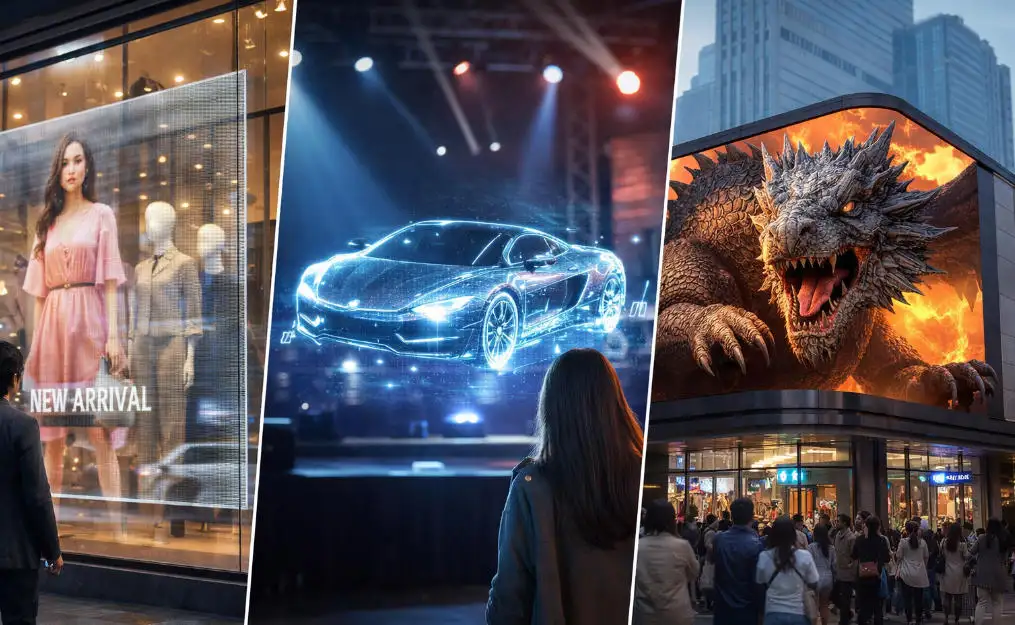
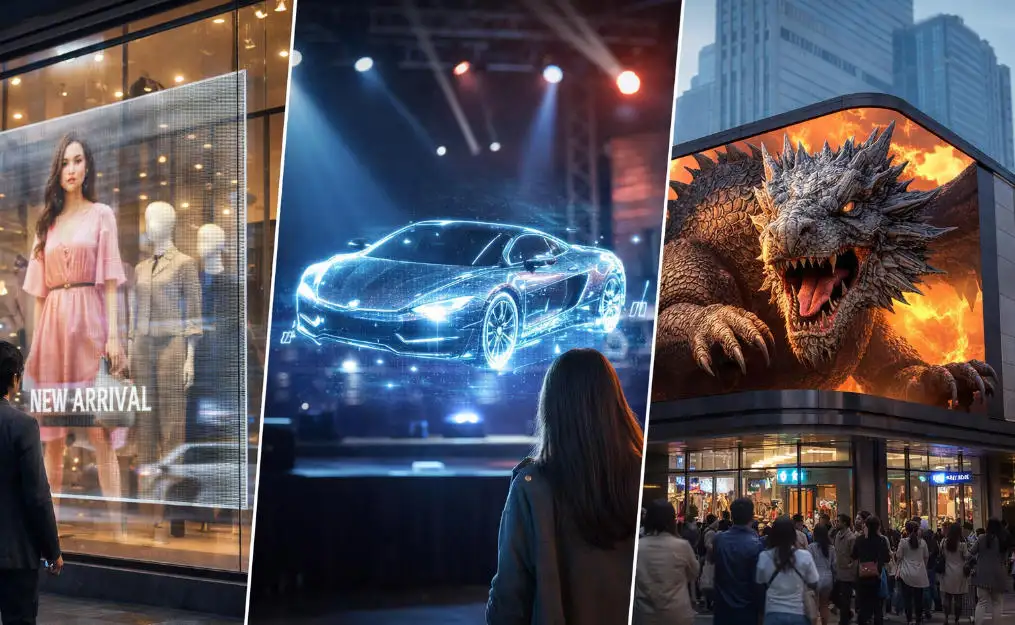
Display technology is no longer evolving only in terms of resolution or screen size. A much deeper shift is underway—one that focuses on how displays interact with physical space and human perception. Transparent displays, ホログラフィックスクリーンディスプレイ, and naked-eye 3D screens are leading this transition, turning traditional LED screens into immersive, spatial communication tools.
These future display formats are already appearing in retail storefronts, architectural installations, exhibitions, and DOOH LED technology projects. Rather than replacing the environment, they enhance it—blending digital content with real-world settings in a way that feels natural, intuitive, and visually compelling.
Transparent Displays: Digital Content Without Visual Barriers
Why Transparent Display Technology Is Gaining Momentum
Transparent display technology addresses a long-standing limitation of traditional screens: obstruction. Conventional LED displays dominate the viewer’s field of vision, while transparent LED displays allow digital visuals to coexist with glass, light, and physical objects behind the screen.
This makes transparent LED display solutions especially attractive for spaces where openness and aesthetics matter—such as high-end retail, commercial architecture, and public venues.
Practical Benefits in Real Installations
From a system integrator’s perspective, transparent LED displays offer several practical advantages:
- High transparency and light transmission, preserving natural lighting
- Reduced visual weight, especially compared to LCD-based solutions
- Flexible installation options, including film-type and modular transparent LED panels
Manufacturers like CheerLED (Ledcheer) have focused on developing lightweight, low-profile transparent LED screen systems that can be applied directly to glass surfaces. These solutions are increasingly used in shopping malls, showrooms, and building facades where standard LED screens would feel intrusive.
Typical Use Scenarios
Transparent LED signage is most effective in:
- Retail window displays that combine product visibility with dynamic content
- Corporate lobbies and exhibition halls
- Architectural glass walls used for digital storytelling
In these environments, transparency isn’t just a feature—it’s the core value of the display.
Holographic Screen Displays: Creating Depth and Attention
From Concept to Commercial Reality
Holographic screen displays have moved beyond novelty. Today’s holographic LED technology allows images to appear as if they are floating in space, without requiring special glasses or head-mounted devices. This visual depth immediately captures attention, especially in environments saturated with conventional flat displays.
What sets holographic displays apart is not brightness or resolution alone, but their ability to create perceived spatial presence.
Why Brands and Designers Use Holographic Displays
Modern holographic LED screens are designed to be:
- Ultra-thin and highly transparent when inactive
- Bright enough for commercial lighting conditions
- Modular, allowing creative LED screen solutions and custom layouts
CheerLED’s holographic and invisible LED display systems reflect this trend. These displays are often chosen for brand exhibitions, product launches, 美術館, and stage backgrounds—places where visual impact and emotional engagement are critical.
Best Applications for Holographic Screens
Holographic displays work best when:
- The goal is to attract immediate attention
- Content needs to feel premium, futuristic, or innovative
- Physical space is limited, but visual impact must be high
They complement, rather than replace, traditional LED display formats.
裸眼 3D スクリーン: Immersion Without Wearables
What Makes Naked-Eye 3D Different
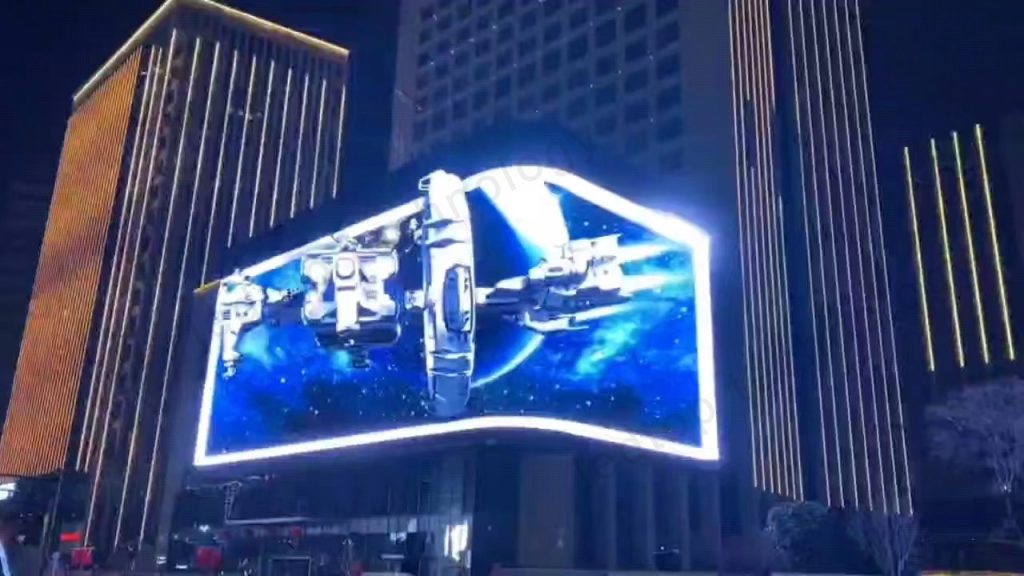
Naked-eye 3D screens deliver depth perception without glasses or external devices. Using advanced LED transparent display processing, parallax techniques, and content optimization, these screens create convincing three-dimensional effects directly on LED surfaces.
This technology has become particularly popular in large-scale LED installations and landmark DOOH projects.
Commercial Advantages of Naked-Eye 3D LED Displays
From an advertising and communication standpoint, naked-eye 3D LED screens offer:
- Longer viewer engagement time
- Higher recall compared to flat digital signage
- Strong visual differentiation in crowded urban environments
結果として, naked-eye 3D screens are increasingly deployed in shopping districts, 輸送ハブ, entertainment venues, and building exteriors. LED manufacturers like Ledcheer are now integrating naked-eye 3D capabilities into high-resolution LED display systems, making immersive visuals more accessible for commercial use.
The Role of LED Innovation in Future Display Formats
What connects transparent display technology, holographic screens, and naked-eye 3D displays is the rapid evolution of LED hardware and control systems.
Today’s advanced LED display platforms support:
- Transparent LED signage and film displays
- Flexible and creative LED screen structures
- Immersive LED displays optimized for 3D content
- Scalable DOOH LED technology for indoor and outdoor environments
CheerLED’s product ecosystem reflects this broader shift in the industry—moving from standard screens to integrated display solutions that adapt to architectural, commercial, and experiential needs.
Looking Ahead: Displays That Blend Into Everyday Space
The next phase of display innovation will focus less on visibility alone and more on integration. Future display formats will increasingly:
- Merge with architectural materials such as glass and metal
- Use holographic and naked-eye 3D effects for intuitive communication
- Serve as dynamic elements within smart commercial environments
As transparent LED displays and immersive LED display technologies mature, they will become a natural part of how spaces communicate information, brand identity, and atmosphere.
Transparent displays, ホログラフィックスクリーンディスプレイ, and naked-eye 3D screens represent a meaningful evolution in how visual technology is used. They move beyond traditional digital signage and create experiences that feel spatial, interactive, and human-centered.
With LED display manufacturers like CheerLED (Ledcheer) continuing to refine transparent LED display solutions, creative LED screen designs, and naked-eye 3D technologies, these future display formats are no longer experimental—they are practical tools shaping the next generation of digital communication.
