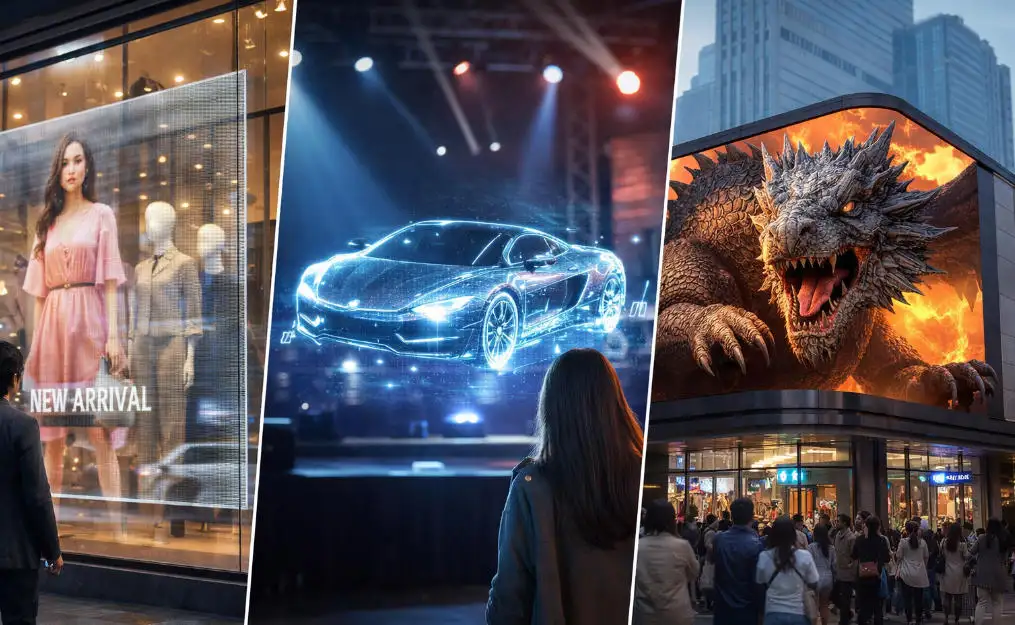
将来の表示フォーマット: 透明, ホログラフィック, および裸眼 3D スクリーン
Display technology is no longer evolving only in terms of resolution or screen size. A much deeper shift is underway—one that focuses on how displays interact with physical space and human perception. Transparent displays, ホログラフィックスクリーンディスプレイ, and naked-eye 3D screens are leading this transition, turning traditional LED screens into immersive, spatial communication tools. These future display formats are already appearing in retail storefronts, architectural installations, exhibitions, and DOOH LED technology projects. Rather than replacing the environment, they enhance it—blending digital content with real-world settings in a way that feels natural, intuitive, and visually compelling. Transparent Displays: Digital Content Without Visual Barriers Why Transparent Display Technology Is Gaining Momentum Transparent display technology addresses a long-standing limitation of traditional screens: obstruction. Conventional LED displays dominate the viewer’s field of vision, while transparent LED displays allow digital visuals to coexist with glass, light, and physical objects behind the screen. This makes transparent LED display solutions especially attractive for spaces where openness and aesthetics matter—such as high-end retail, commercial architecture, and public venues. Practical Benefits in Real Installations From a system integrator’s perspective, transparent LED displays offer several practical advantages: Manufacturers like CheerLED (Ledcheer) have focused on developing lightweight, low-profile transparent LED screen systems that can be applied directly to glass surfaces. These solutions are increasingly used in shopping malls, showrooms, and building facades where standard LED screens would feel intrusive. Typical Use Scenarios Transparent LED signage is most effective in: In these environments, transparency isn’t just a feature—it’s the core value of the display. Holographic Screen Displays: Creating Depth and Attention From Concept to Commercial Reality Holographic screen displays have moved beyond novelty. Today’s holographic LED technology allows images to appear as if they are floating in space, without requiring special glasses or head-mounted devices. This visual depth immediately captures attention, especially ...
もっと詳しく知る