


2024-12-30



EUTelas LED internas de pequeno alcance: Aplicativos e diretrizes de instalação
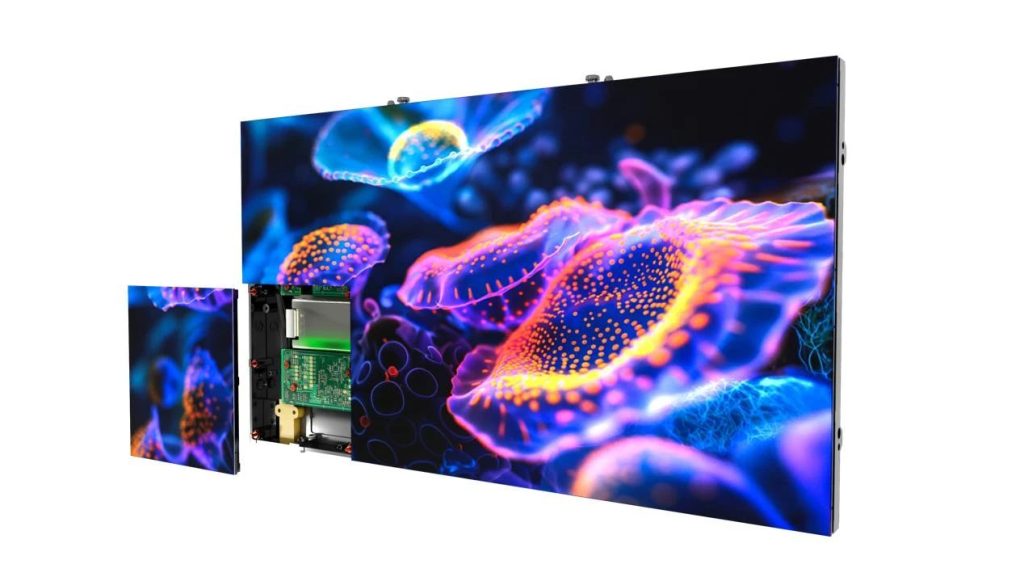
Telões LED internos de pequena distância estão ganhando popularidade por sua alta resolução, excelente qualidade de imagem, e adaptabilidade. Essas telas, com densidade de pixel menor que 2 mm, estão transformando vários setores, especialmente para aplicações internas. Este artigo explora seus usos e fornece diretrizes importantes para instalação.
1. Aplicações de telas LED internas de pequeno porte
As telas LED de pequena distância se destacam por fornecer imagens vívidas em distâncias de visualização próximas. Sua versatilidade os torna uma ferramenta essencial em todos os setores.
1.1 Centros Corporativos e de Controle
As empresas usam telas LED de pequena distância para exibir dados em tempo real, notícias, e imagens de segurança. Essas telas fornecem imagens nítidas, permitindo comunicação e tomada de decisões eficazes. Gerentes e operadores se beneficiam da alta resolução, especialmente ao visualizar telas de perto.
1.2 Estúdios de transmissão
As estações de televisão contam com esses monitores para imagens no ar, transmissões ao vivo, e imagens de fundo. Sua qualidade de imagem nítida atende aos rigorosos padrões da indústria de radiodifusão.
1.3 Varejo e shopping centers
Os varejistas usam telas LED para promover produtos e envolver os clientes. Posicionado em vitrines ou locais ao nível dos olhos, essas telas atraem a atenção com seus visuais nítidos, tornando-os ideais para visualização de perto.
1.4 Estádios e locais de eventos
Locais de eventos internos usam esses monitores para transmissões ao vivo, replays de vídeo, e anúncios. Seu alto brilho e resolução garantem imagens nítidas para públicos sentados próximos ou distantes.
1.5 Museus e Salas de Exposições
Os museus incorporam essas telas para exposições interativas e contação de histórias. Os visitantes desfrutam de conteúdo de alta qualidade enquanto se envolvem com conteúdo moderno, displays baseados em tecnologia.
2. Precauções de instalação
Embora os displays LED de pequena distância ofereçam inúmeras vantagens, a instalação adequada é crucial para otimizar o desempenho e a longevidade.
2.1 Conduza uma pesquisa completa do local
Antes de instalar o monitor, avaliar o espaço e seus desafios. Posicione a tela onde os espectadores possam desfrutar de ângulos ideais. Por exemplo, salas de reuniões exigem posicionamentos centralizados, enquanto os displays de varejo devem estar alinhados com o nível de visão do cliente.
2.2 Gerenciar energia e cabos
Ensure the power supply meets the screen's requirements without overloading circuits. Use técnicas adequadas de gerenciamento de cabos para evitar emaranhados e manter a qualidade do sinal.
2.3 Otimize a distância de visualização
Instale a tela na altura e ângulo corretos para uma visualização clara. As salas de controle se beneficiam de telas colocadas ao nível dos olhos, enquanto os displays de varejo devem acomodar espectadores em distâncias variadas.
2.4 Garanta ventilação adequada
Displays LED geram calor, especialmente em espaços fechados. Instale sistemas de refrigeração ou forneça fluxo de ar adequado para evitar superaquecimento. Esta etapa estende a vida útil da tela e mantém a qualidade da imagem.
2.5 Calibre e faça manutenção regularmente
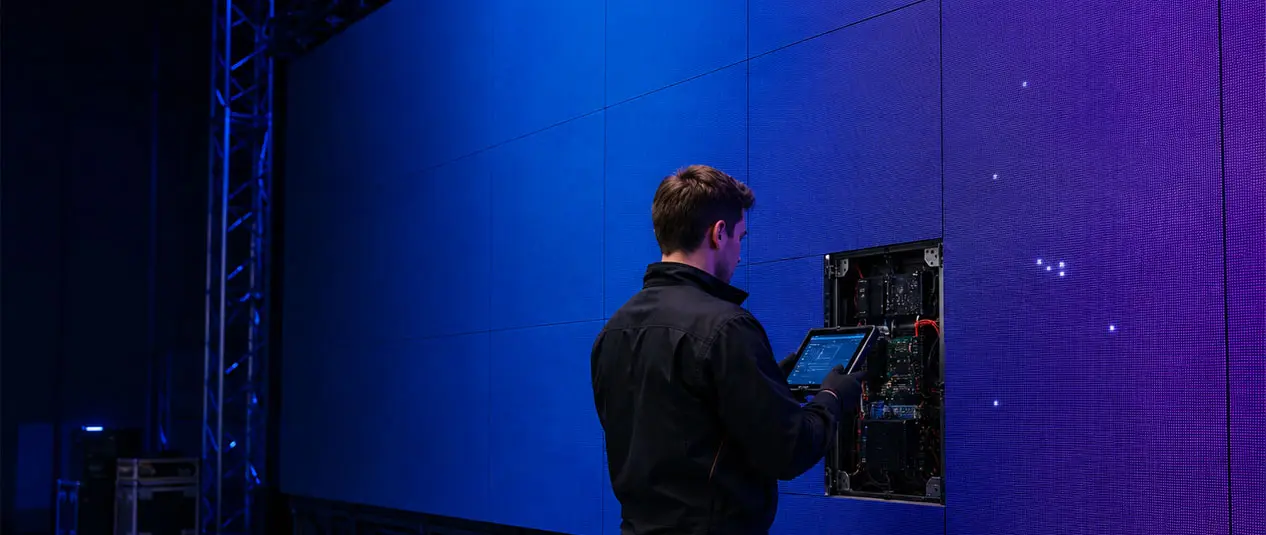
Calibre a tela após a instalação para obter brilho uniforme, Cor, e contraste. Faça manutenção regular, incluindo limpeza e atualizações de firmware, para garantir um desempenho consistente.
2.6 Siga os padrões de segurança
Aterre o equipamento adequadamente, especialmente em ambientes com uso intenso de energia elétrica. Siga todas as diretrizes de segurança para evitar riscos elétricos.
3. Conclusão
Telões LED internos de pequena distância estão transformando as indústrias com sua qualidade de imagem superior e versatilidade. Eles são amplamente utilizados em escritórios corporativos, salas de controle, espaços de varejo, e mais. Para maximizar seus benefícios, um planejamento cuidadoso é essencial durante a instalação. Pesquisas de site adequadas, gerenciamento de energia, ventilação, e a manutenção desempenham papéis fundamentais para garantir o desempenho ideal. Com a abordagem certa, esses monitores oferecem experiências visuais excepcionais e valor a longo prazo.
