


2026-02-18



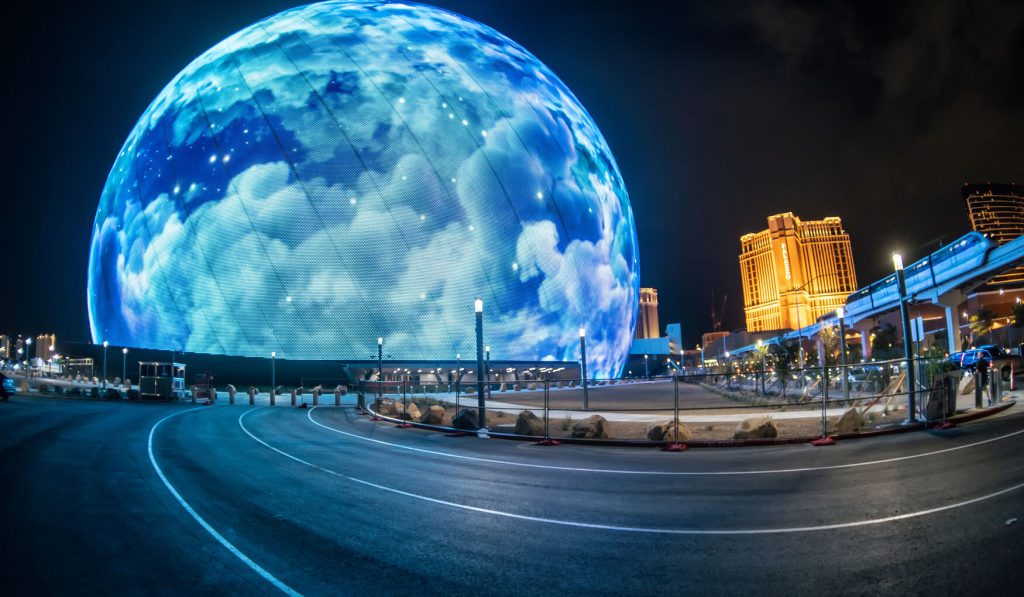
Tecnologias de exibição inovadoras estão remodelando a forma como o público experimenta o conteúdo digital – indo muito além das tradicionais telas planas de LED. Entre os desenvolvimentos mais marcantes estão displays LED de esfera e cúpula, capaz de proporcionar imersão, 360° visuais que chamam a atenção em ambientes de varejo, museus, locais de atração, espaços corporativos, e instalações públicas. Essas arquiteturas curvas de LED exigem abordagens de engenharia especializadas e estratégias de produção de conteúdo para desbloquear todo o seu impacto.
Este artigo explora o núcleo princípios de engenharia, desafios estruturais, considerações de conteúdo, e aplicações práticas de displays LED de esfera e cúpula, com insights extraídos de líderes do setor, como Explorando o Labcheer: Revolucionando experiências visuais com soluções avançadas de exibição de LED.
O que são displays LED de esfera e cúpula?
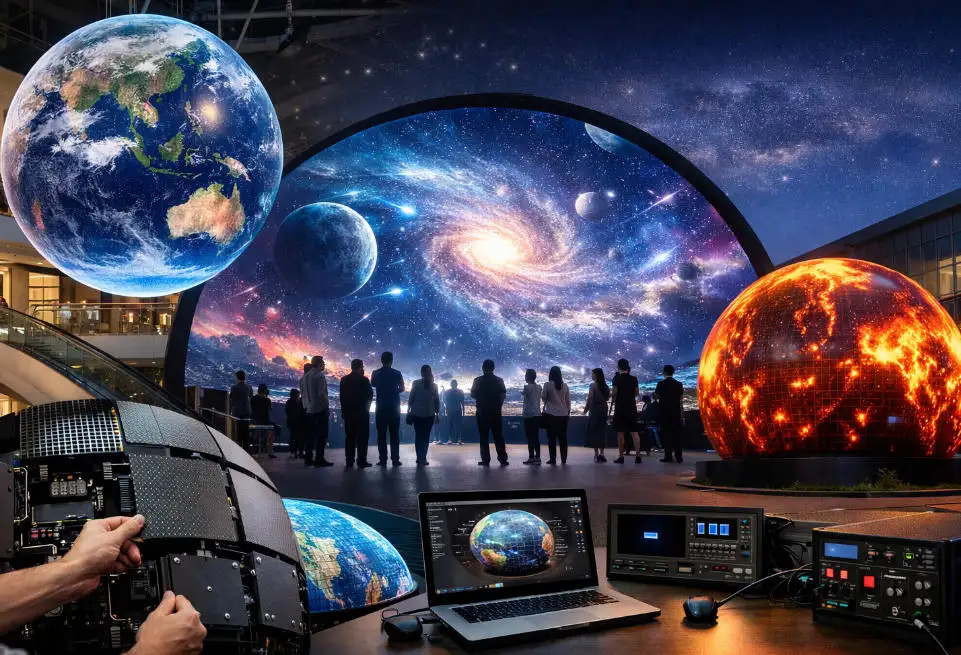
Ao contrário dos painéis LED planos convencionais, displays LED de esfera e cúpula use módulos de LED curvos ou totalmente esféricos montados em superfícies tridimensionais. O resultado é um 360° experiência de visualização—o conteúdo envolve um volume curvo, oferecendo visibilidade panorâmica de todos os ângulos. Implementações típicas incluem:
- Displays esféricos completos — esferas completas de 360°.
- Displays em cúpula — instalações hemisféricas ou de estilo esférico parcial.
- Geometria Curva Parcial ou Híbrida — combinando telas planas com curvatura para experiências visuais distintas.
Fabricantes como a LEDCheer oferecem produtos LED esféricos personalizáveis que suportam emenda perfeita, altas taxas de atualização (Por exemplo,, 3840Hz para movimento suave), e diâmetros personalizáveis para aplicações internas e externas.
Desafios e considerações de engenharia
Projetar telas LED de esfera e cúpula vai muito além de simplesmente dobrar um painel. Os engenheiros devem levar em conta vários aspectos mecânicos exclusivos, elétrica, e desafios ópticos:
1. Construção Modular Curva
Para formar uma esfera ou cúpula lisa, Os módulos LED são moldados em geometrias poligonais específicas (frequentemente perfis trapezoidais ou personalizados) que se encaixam como um quebra-cabeça 3D. Este design modular deve garantir:
- Emenda perfeita sem lacunas visuais ou distorções.
- Preciso mapeamento de pixels para brilho e cor uniformes em toda a superfície.
- Opções flexíveis de montagem estrutural sem comprometer a rigidez.
A engenharia avançada e o controle de qualidade são essenciais para alinhar os módulos com costuras visíveis mínimas e manter uma qualidade de imagem consistente em toda a curvatura.
2. Gestão Térmica
Telas curvas têm inerentemente menos área de superfície exposta em relação a matrizes planas, fazendo dissipação de calor gestão mais complexa. Soluções eficazes incluem:
- Dissipadores de calor com estrutura de alumínio
- Projete layouts que promovam o fluxo de ar natural
- Materiais especializados ou soluções de encapsulamento
Para esferas externas, como os oferecidos pela LEDCheer com impermeabilização IP67 e encapsulamento protetor em gel de silicone, a vedação ambiental deve coexistir com o design térmico para manter a durabilidade e o desempenho.
3. Suporte Estrutural e Montagem
A engenharia de luminárias confiáveis para instalações de LED de esfera e cúpula exige precisão. Dependendo do tamanho e peso, monitores podem exigir:
- Estruturas de suporte interno para distribuir uniformemente a carga
- Sistemas de suspensão para instalações suspensas ou em átrios
- Suportes de piso para grandes esferas independentes
- Montagens personalizadas com base na arquitetura do local
O projeto mecânico correto garante segurança, estabilidade, e facilidade de manutenção.
4. Sistemas de fornecimento e controle de energia
Uma estrutura de LED de 360° aumenta a complexidade elétrica:
- A distribuição de energia segmentada garante tensão consistente entre os módulos.
- Suporte para controle remoto de energia e reprodução síncrona de conteúdo.
- Hardware de controle avançado para sincronizar conteúdo sem interrupções ou latência.
Plataformas de controle inovadoras garantem altas taxas de atualização e entrega estável de conteúdo em toda a superfície para resultados visualmente fluidos.
Estratégia de conteúdo e planejamento visual
As instalações de LED de esfera e cúpula exigem criação de conteúdo abordagens que diferem significativamente dos fluxos de trabalho de tela plana.
1. Mapeando conteúdo para geometria curva
Padrão 16:9 ou vídeos quadrados não serão mapeados corretamente em superfícies curvas. As equipes de conteúdo devem:
- Usar mapeamento esférico ou equirretangular técnicas.
- Ajuste para distorções de curvatura que ocorrem com conteúdo plano tradicional.
- Projete conteúdo que flua em 360° sem interrupções visuais bruscas.
Ferramentas como software de renderização 3D e suítes de mapeamento de LED personalizadas ajudam os produtores a gerar recursos visuais especificamente para telas esféricas ou em formato de cúpula.
2. Criando experiências imersivas
O conteúdo para exibições esféricas deve aproveitar todos os ângulos de visão:
- Visuais panorâmicos que envolvem os usuários, não importa onde eles estejam.
- Uso de elementos em camadas e movimento que envolve o espectador.
- Áudio espacial e gatilhos interativos podem melhorar a imersão.
Conteúdo bem produzido torna essas instalações memoráveis e eficazes para a marca, entretenimento, ou compromissos experienciais.
3. Design de conteúdo focado no público
Considere visualizar o contexto e a distância:
- Tamanhos de pixel de alta resolução garantir clareza de perto.
- Para locais maiores, o conteúdo pode enfatizar padrões em negrito, tipografia grande, e gráficos de alto contraste que permanecem legíveis de longe.
- Feeds de dados interativos ou ao vivo podem tornar as exibições dinâmicas e relevantes.
Luz gradiente, dicas de profundidade, e loops animados otimizados para orientação esférica melhoram o envolvimento do espectador.
Aplicações do mundo real
Os displays LED de esfera e cúpula são cada vez mais populares em todos os setores:
- Varejo e Shopping Centers: As esferas suspensas chamam a atenção para eventos especiais ou campanhas sazonais.
- Exposições e Museus: Narrativa envolvente, experiências educacionais, ou instalações artísticas.
- Locais de entretenimento: Tetos abobadados em planetários ou atrações temáticas.
- Espaços Públicos e Marcos: Outdoors esféricos em grande escala ou peças de arte digital.
O perfeito, A natureza panorâmica dessas exibições ajuda marcas e designers a se destacarem em mercados visuais lotados.
Tendências Futuras em Displays Esféricos e Dome
Avanços na tecnologia LED, incluindo:
- Micro-LEDs com maior densidade de pixels
- Aprimorado algoritmos de uniformidade de cores
- Geração de conteúdo assistida por IA para superfícies curvas
estão todos ultrapassando os limites do que é possível em instalações LED imersivas. Estas inovações contribuem para uma maior fidelidade visual e soluções mais eficientes em termos energéticos.
Os displays LED de esfera e cúpula representam uma nova fronteira em tecnologia visual imersiva. Sua engenharia requer design modular sofisticado, planejamento térmico e elétrico, e sistemas de controle integrados. Igualmente importante é uma estratégia de conteúdo que respeite a geometria curva e maximize o envolvimento de todos os ângulos.
Com avanços de fabricantes como LEDCheer e parceiros da indústria impulsionando a inovação em formas criativas, emenda perfeita, e desempenho robusto, instalações esféricas de LED estão preparadas para definir experiências de próxima geração em áreas comerciais, cultural, e ambientes de entretenimento.
