


 Casa » Blog » Notícias comapny »
2026-04-23



Telas LED flexíveis são projetados para fazer mais do que parecer impressionante. Eles precisam permanecer brilhantes, estável, e confiável ao longo do tempo, mesmo quando eles são curvados, instalado em formas criativas, ou usado em ambientes exigentes. É por isso que o valor real de um display não está apenas no seu desempenho visual desde o primeiro dia., mas também por quanto tempo ele pode continuar funcionando bem.
Se você estiver comparando opções para um projeto comercial, instalação de evento, espaço de varejo, ou design de palco criativo, compreender os fatores por trás da vida útil flexível do display LED pode ajudá-lo a fazer uma escolha mais inteligente. Uma tela bem construída pode proporcionar anos de uso confiável, enquanto um mal conservado pode perder brilho, desenvolver pixels mortos, ou sofrer danos estruturais muito mais cedo do que o esperado.
Neste artigo, veremos os principais fatores de confiabilidade do display LED que afetam a vida útil, explique o que reduz a durabilidade da tela LED, e compartilhe dicas práticas de manutenção de telas LED que podem ajudá-lo a obter uma vida longa Solução de display LED para o seu negócio.
Por que a vida útil do display LED flexível é importante
Um display LED flexível é frequentemente escolhido por sua liberdade de design. Pode ser curvado, envolto, instalado em superfícies irregulares, e adaptado a diferentes layouts criativos. Mas essa flexibilidade também significa que o produto deve equilibrar materiais finos, tensão de flexão repetida, gerenciamento de calor, e desempenho elétrico estável.
Quando as pessoas perguntam sobre a vida útil flexível do display LED, eles estão realmente fazendo uma pergunta maior: por quanto tempo a tela permanecerá brilhante, uniforme, e seguro de usar sem grandes custos de reparo?
A resposta depende de vários fatores técnicos e ambientais. Alguns estão relacionados à qualidade do produto, enquanto outros dependem da instalação, hábitos operacionais, e manutenção.
1. Qualidade do chip LED
O chip LED é um dos maiores fatores que afetam a vida útil. Chips de alta qualidade geralmente oferecem melhor estabilidade de brilho, Consistência de cor, e resistência ao calor. Chips de qualidade inferior podem funcionar bem no início, mas seu desempenho pode cair mais rapidamente com o tempo.
Um chip confiável ajuda a melhorar a durabilidade da tela LED porque pode operar continuamente com menos degradação. Isto é especialmente importante para monitores flexíveis usados em ambientes comerciais onde a tela pode funcionar por muitas horas todos os dias.
2. Projeto de Dissipação de Calor
O calor é um dos principais inimigos de qualquer produto LED. O calor excessivo pode reduzir a vida útil do componente, reduzir o brilho, e aumentar o risco de falha. Um display LED flexível bem projetado deve ter dissipação de calor eficiente incorporada em sua estrutura.
Um bom gerenciamento térmico ajuda a proteger os LEDs, condução de ICs, e outros componentes eletrônicos. Se o calor não for controlado adequadamente, a tela pode envelhecer mais rápido do que o esperado, mesmo que o painel em si pareça bom por fora.
Para quem procura uma solução de display LED de longa duração, o design térmico nunca deve ser esquecido.
3. Estabilidade da fonte de alimentação
A energia estável é essencial para a confiabilidade da exibição. Flutuações de tensão, fontes de alimentação de baixa qualidade, ou sistemas elétricos instáveis podem afetar a vida útil de um display LED flexível.
Se a fonte de alimentação não corresponder bem à tela, a tela pode apresentar cintilação, superaquecimento, ou operação inconsistente. Ao longo do tempo, isso pode reduzir o desempenho e aumentar a chance de danos aos componentes.
Um sistema de energia confiável é um dos fatores mais importantes de confiabilidade do display LED porque suporta operação consistente e protege o display contra estresse desnecessário.
4. Qualidade de instalação
Mesmo um monitor de última geração pode falhar precocemente se for mal instalado. Painéis LED flexíveis são projetados para dobrar e se adaptar, mas eles ainda precisam de suporte mecânico adequado e métodos de instalação corretos.
A má instalação pode levar a tensões desiguais no painel, conexões fracas, ou danos ao substrato flexível. Em alguns casos, dobrar demais ou montar incorretamente pode reduzir drasticamente a vida útil da tela.
A instalação correta ajuda a preservar a durabilidade da tela LED e garante que a tela mantenha seu formato, brilho, e estabilidade estrutural ao longo do tempo.
5. Ambiente Operacional
O ambiente onde a tela é usada tem uma grande influência na vida útil. Temperatura, umidade, Poeira, vibração, e a luz solar direta podem afetar o desempenho.
Um telão LED flexível usado em ambientes fechados em um espaço de varejo controlado geralmente dura mais do que um exposto a altas temperaturas, humidade, ou movimento físico frequente. Aplicações externas ou semi-externas exigem proteção mais forte e manutenção mais cuidadosa.
O estresse ambiental pode acelerar o desgaste dos componentes internos, portanto, a exibição deve sempre corresponder ao caso de uso correto. Escolher o produto certo para o ambiente certo é uma das formas mais inteligentes de proteger o seu investimento.
6. Horas de uso e nível de brilho
Quanto tempo a tela dura por dia também é importante. Uma tela usada por algumas horas com brilho moderado geralmente durará mais do que uma tela funcionando continuamente com brilho máximo.
Alto brilho cria mais calor e coloca mais pressão nos LEDs. Ao longo do tempo, isso pode reduzir a uniformidade do brilho e encurtar a vida útil efetiva do painel.
Se o seu objetivo é a otimização flexível da vida útil do display LED, muitas vezes é melhor usar apenas o nível de brilho que você realmente precisa, em vez de pressionar a tela até a configuração máxima o tempo todo.
7. Qualidade do sistema de sinal e controle
O sistema de controle desempenha um papel silencioso, mas importante, na confiabilidade geral. Um cartão de recepção estável, enviando cartão, e o software de controle ajudam a manter a imagem suave e evitam erros de sinal.
Quando o sistema de controle não é confiável, o display pode mostrar cintilação, perda de imagem, ou comportamento inconsistente do módulo. Embora essas questões possam parecer menores à primeira vista, instabilidade repetida pode afetar o desempenho a longo prazo.
Um bom sistema de controle oferece suporte à qualidade visual e aos fatores de confiabilidade do display LED de longo prazo.
8. Frequência de manutenção
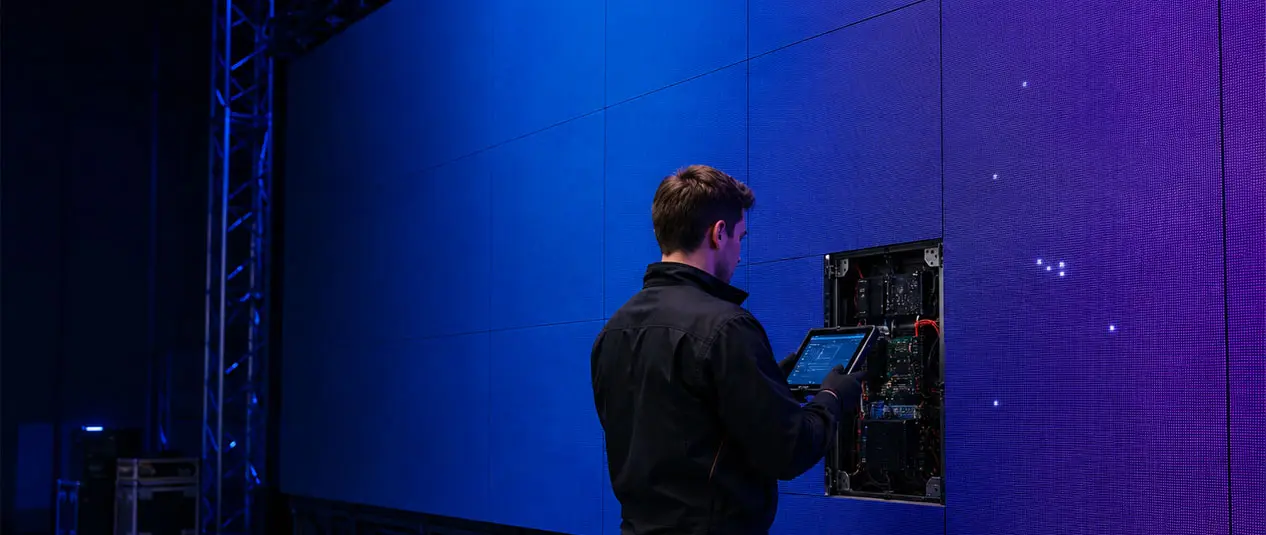
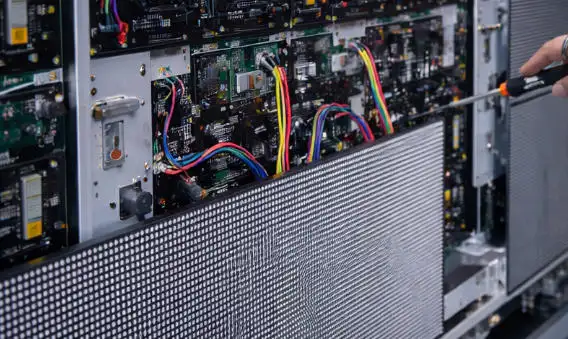
A manutenção regular é uma das maneiras mais práticas de prolongar a vida útil de um display. Acúmulo de poeira, conexões soltas, humidade, e módulos danificados podem levar a problemas maiores se ignorados.
Verificações simples de rotina podem fazer uma enorme diferença. Limpeza, inspeção, e a solução de problemas precoce ajuda a proteger as peças internas antes que pequenos problemas se tornem reparos caros.
Estas dicas de manutenção de telas LED são especialmente importantes para telas flexíveis, já que suas formas e instalações criativas podem dificultar a inspeção de algumas peças.
Dicas de manutenção de telas LED para uma vida mais longa
Se você deseja uma solução de display LED de longa duração, a manutenção deve fazer parte do plano desde o início. Aqui estão alguns hábitos práticos que ajudam a prolongar a vida útil:
Mantenha a tela limpa e livre de poeira.
Evite flexão excessiva além do raio de instalação recomendado.
Use fontes de alimentação estáveis e com classificação adequada.
Verifique os cabos, conectores, e montar estruturas regularmente.
Não execute a tela com brilho máximo, a menos que seja necessário.
Proteja a tela da umidade, aquecer, e impacto físico direto.
Desligue a tela corretamente em vez de cortar a energia repentinamente.
Agende inspeções periódicas, especialmente para instalações grandes ou de alto uso.
Essas pequenas ações podem melhorar significativamente a durabilidade da tela LED e ajudar a manter a consistência visual ao longo do tempo..
Razões comuns para telas LED flexíveis envelhecem mais rápido
Mesmo com um bom produto, certos erros podem encurtar a vida útil. Os mais comuns incluem:
Superaquecimento causado por má ventilação.
Estresse físico repetido devido a flexão inadequada.
Fonte de alimentação de baixa qualidade ou corrente instável.
Operação contínua com brilho muito alto.
Má manutenção e acúmulo de poeira.
Instalação em um ambiente para o qual a tela não foi projetada.
Usando módulos ou componentes de baixa qualidade desde o início.
Evitar esses problemas pode proteger a qualidade da imagem e a confiabilidade a longo prazo.
Como escolher um monitor com melhor potencial de vida útil
Nem todo display LED flexível é construído da mesma maneira. Se a longevidade é uma prioridade, olhe além da aparência inicial e pergunte sobre os detalhes por trás do produto.
Uma tela melhor geralmente oferece um forte gerenciamento de calor, design de energia estável, materiais flexíveis duráveis, e qualidade de módulo consistente. Ele também deve vir com orientações claras de instalação e recomendações de manutenção.
Em outras palavras, uma boa tela não é apenas visualmente atraente. Também é projetado para durar. Essa é a verdadeira diferença entre uma exibição de curto prazo e um investimento de longo prazo.
Considerações Finais
A vida útil de um display LED flexível depende de mais de um fator. Qualidade do chip LED, controle de calor, estabilidade de potência, método de instalação, ambiente operacional, nível de brilho, e manutenção trabalham juntos para determinar por quanto tempo a tela funcionará bem.
Se você está procurando uma vida útil flexível de display LED que suporte o uso comercial de longo prazo, a melhor abordagem é escolher um produto bem projetado e mantê-lo adequadamente. Um bom design dá à tela uma base sólida. Um bom cuidado ajuda a mantê-lo confiável por anos.
Para empresas que desejam maior durabilidade da tela LED e melhor valor a longo prazo, focar nesses fatores de confiabilidade do display LED é o lugar mais inteligente para começar.
