


 Дом » Блог » Комупионные новости »
2026-04-16



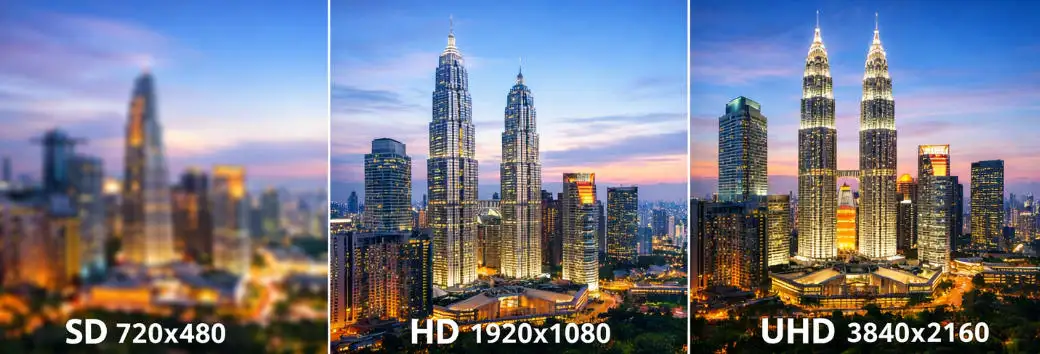
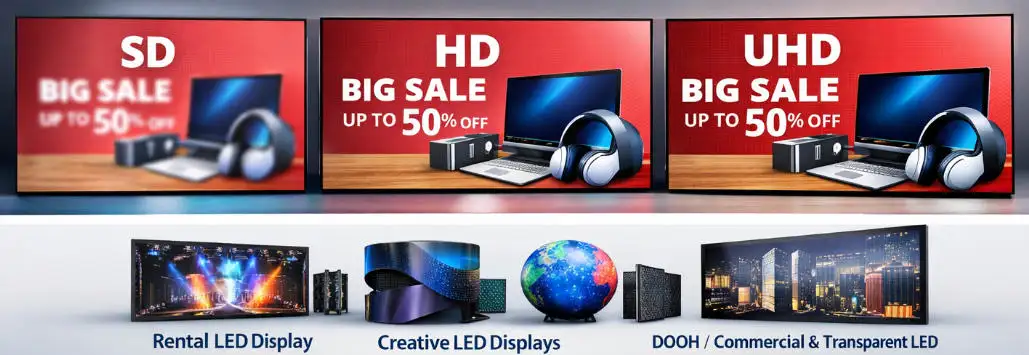
Когда люди сравнивают экраны дисплеев, разрешение обычно является одной из первых вещей, которые они замечают. UHD, HD, и SD – это не просто технические ярлыки; они напрямую влияют на то, как выглядит четкий текст, как выглядят детализированные изображения, и насколько профессионально ваш контент выглядит на экране. В исходной статье, UHD описывается как 3840×2160., HD как знакомый класс 1080p, и SD как более старый уровень стандартной четкости около 720×480..
На сегодняшний день цифровые вывески и светодиодный дисплей проекты, разрешение больше, чем число в спецификации. Экран с лучшим разрешением может отображать более четкие изображения продуктов., более чистые шрифты, и более плавное движение, что особенно важно в коммерческих помещениях, где зрители могут стоять близко к дисплею или проходить мимо всего несколько секунд..
Что такое UHD, HD, и среднее стандартное отклонение?
СД, или стандартное разрешение, является самым старым из трех форматов и обычно связан с меньшим количеством пикселей и меньшей детализацией изображения.. Он все еще может работать в базовых или устаревших приложениях., но он больше не идеален для современной рекламы или визуальной презентации премиум-класса..
HD, или высокое разрешение, является золотой серединой и остается наиболее практичным выбором для многих бизнес-витрин.. Он обеспечивает заметно лучшую четкость, чем SD., сохраняя при этом требования к оборудованию и доставке контента более управляемыми, чем UHD. В исходной статье, HD представлен как наиболее распространенный повседневный вариант для коммерческих экранов, поскольку он сочетает в себе качество изображения и эффективность..
UHD, или сверхвысокое разрешение, является самым высоким из трех и обычно используется, когда визуальные детали имеют наибольшее значение.. Благодаря гораздо большему количеству пикселей, UHD лучше подходит для рекламы премиум-класса., широкоформатный просмотр, и контент, который должен выглядеть ярким и изысканным на расстоянии.
Как сравниваются три формата в реальном использовании
Практическая разница между SD, HD, и UHD становится очевидным, когда вы отображаете один и тот же контент на каждом из них.. На SD-экранах, мелкий текст может выглядеть мягким или даже трудным для чтения. HD улучшает большую часть этого, фотографирую, Графика, и видео намного чище. UHD идет дальше, сохраняя мелкие детали, что помогает визуальному оформлению бренда выглядеть более современным и премиальным.. Вот почему для коммерческих вывесок часто предпочитаются экраны с более высоким разрешением., розничные дисплеи, и среды взаимодействия с клиентами.
Требования к пропускной способности и воспроизведению также возрастают по мере увеличения разрешения.. В исходной статье отмечается, что SD требует меньше всего данных., HD требует большего, и UHD требует максимально стабильной сети и производительности воспроизведения.. Это важно, когда экраны транслируют видео или обновляют динамический контент в режиме реального времени..
Какое разрешение выбрать?
Не существует единого «лучшего» разрешения для каждого проекта.. Правильный ответ зависит от расстояния просмотра, размер экрана, тип контента, и бюджет.
Если ваш экран используется для простой информации, внутренний обмен сообщениями, или более дешевые установки, HD может быть наиболее эффективным выбором. Он обеспечивает четкое изображение без слишком высоких затрат и системных требований..
Если ваш проект рассчитан на премиальный брендинг, элитная розничная торговля, выставки, или большие коммерческие помещения, UHD обычно является лучшим вариантом. Это помогает изображениям выглядеть более яркими, облегчает чтение текста, и создает более сильное визуальное впечатление.
SD теперь в основном является устаревшим вариантом.. Для большинства современных проектов светодиодных дисплеев, он не может обеспечить тот уровень ясности, которого ожидают сегодня клиенты..
Почему разрешение имеет значение для покупателей светодиодных дисплеев
Для покупателей светодиодных дисплеев, разрешение всегда должно соответствовать реальному приложению. Экран с высоким разрешением — это не только «выглядеть лучше». Это также способствует лучшей презентации бренда., более читабельные сообщения, и более совершенный клиентский опыт. Это особенно важно для этапов проката., коммерческая реклама, и креативные визуальные инсталляции, где экспозиция является частью впечатления о бренде..
Именно здесь CheerLED естественным образом вписывается в разговор.. CheerLED позиционирует себя как профессиональный производитель светодиодных дисплеев из Китая. с 15 многолетний опыт, Ассортимент продукции включает в себя прокатные и сценические светодиодные экраны., креативные светодиодные дисплеи, DOOH/коммерческие светодиодные дисплеи, Светодиодные дисплеи COB, гибкие светодиодные дисплеи, светодиодные дисплеи из прозрачной пленки, сферические светодиодные дисплеи, и индивидуальные светодиодные дисплеи.
Этот ассортимент продукции важен, поскольку для разных типов дисплеев часто требуются разные стратегии разрешения.. Например, экран на сцене аренды может иметь приоритет быстрой настройки и высокой яркости, в то время как коммерческий дисплей с мелким шагом может больше фокусироваться на деталях изображения и четкости изображения с близкого расстояния.. CheerLED также выделяет полностью индивидуальные варианты размера., форма, материал, и разрешение, что упрощает согласование экрана с конкретной средой проекта.
Заключительные мысли
Если вы выбираете между UHD, HD, и СД, начните с расстояния просмотра, тип контента, и бюджет проекта. HD часто является практичным средним вариантом, UHD — выбор премиум-класса для максимальной четкости, а SD – это в основном устаревший формат, который больше не подходит для большинства современных сценариев коммерческого использования..
Для компаний, которым нужно больше, чем стандартный экран, Светодиодный дисплей CheerLED линейка предлагает более широкий набор решений для аренды, Креативность, и коммерческие приложения. Это упрощает создание системы отображения, которая не просто отображает контент., но представляет его в нужном качестве для нужной аудитории.
