


* هناك76 مقالات
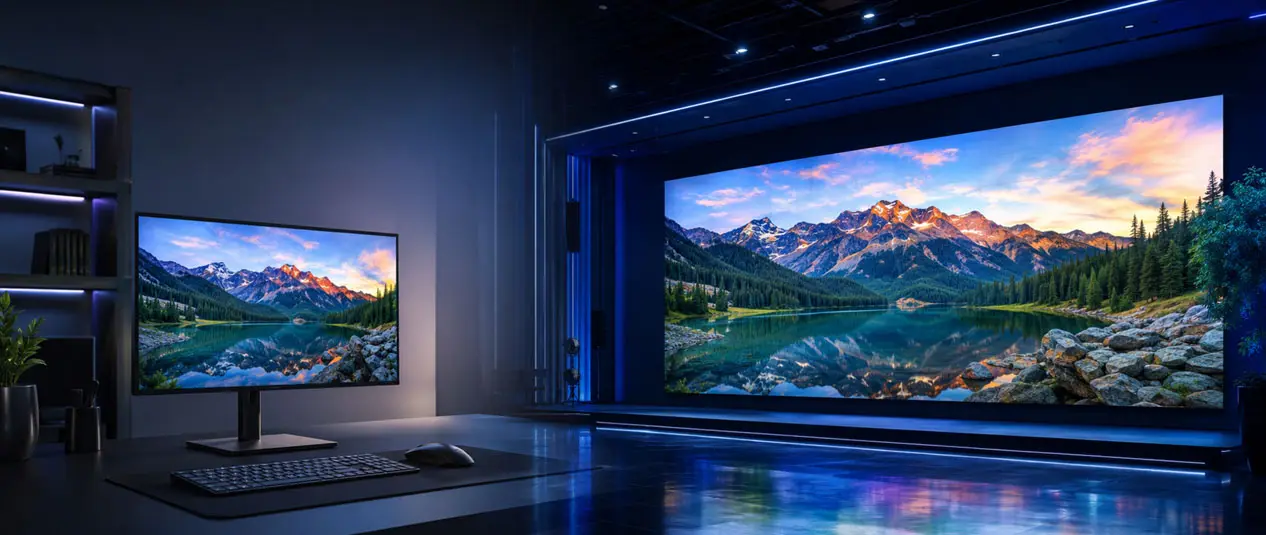
IPS مقابل شاشة LED: ما هو الفرق?
تتم عادة مقارنة شاشات IPS وLED عند اختيار الشاشات لقاعات المؤتمرات, متاجر البيع بالتجزئة, مراكز التحكم, المعارض وأماكن الترفيه. However, لا تصف هذه المصطلحات نفس النوع من التكنولوجيا. IPS هو نوع من تقنية لوحة LCD, بينما تقوم شاشة LED ذات الرؤية المباشرة بإنشاء صور باستخدام الثنائيات الفردية الباعثة للضوء. إن فهم هذا التمييز يساعد المشترين على اختيار الشاشة المناسبة بناءً على الحجم, سطوع, مسافة المشاهدة, بيئة التثبيت ومتطلبات الصيانة. ما هي شاشة IPS? IPS تعني التبديل داخل الطائرة. إنها نوع من شاشات العرض البلورية السائلة المصممة لتحسين تناسق الألوان وزوايا المشاهدة. لا تنتج شاشة IPS الضوء مباشرة من خلال البلورات السائلة. يستخدم عادةً إضاءة خلفية LED خلف لوحة LCD. تتحكم طبقة الكريستال السائل في مقدار الإضاءة الخلفية التي تمر عبر كل بكسل لإنشاء الصورة. تُستخدم لوحات IPS بشكل شائع في: تشمل نقاط القوة الرئيسية لـ IPS زوايا مشاهدة واسعة, ألوان ثابتة وصور واضحة على مسافات المشاهدة القريبة. ما هي شاشة LED ذات الرؤية المباشرة؟? تستخدم شاشة LED ذات الرؤية المباشرة اللون الأحمر, الثنائيات الباعثة للضوء الأخضر والأزرق لإنتاج الصورة. على عكس لوحة IPS LCD, لا يتطلب إضاءة خلفية منفصلة. يتم تثبيت وحدات LED داخل الخزانات, ويتم دمج الخزانات المتعددة لإنشاء شاشة بأي حجم مطلوب تقريبًا. هذا الهيكل المعياري يجعل شاشات LED مناسبة لقاعات المؤتمرات الكبيرة, مراحل, مساحات البيع بالتجزئة, مراكز التحكم, الإعلانات الخارجية والمنشآت المعمارية. تم تصميم المنتجات الدقيقة مثل شاشة LEDCHEER Ultra HD Fine Pixel Pitch LED للتطبيقات الداخلية التي تتطلب دقة عالية ومشاهدة أقرب. IPS مقابل شاشة LED: ميزة الاختلافات الرئيسية شاشة IPS شاشة LED ذات رؤية مباشرة تقنية العرض لوحة LCD مع إضاءة خلفية LED مصابيح LED RGB ذاتية الانبعاث حجم الشاشة النموذجي صغير إلى متوسط متوسط إلى كبير للغاية طبقات اللوحة مرئية عند دمج شاشات متعددة تقريبًا ...
بواسطةيهتف
2026-08-20
2026-08-20
16:9 شاشة LED لنسبة العرض إلى الارتفاع: مقاس, دليل القرار والتصميم
A 16:9 تتميز شاشة LED ذات نسبة العرض إلى الارتفاع بعلاقة بين العرض والارتفاع 16 وحدات ل 9 وحدات. إنه أحد تنسيقات الشاشات الأكثر استخدامًا على نطاق واسع لأنه يتوافق مع دقة الفيديو Full HD و4K الشائعة, شرائح العرض, البث المباشر والوسائط الرقمية. لقاعات المؤتمرات, قاعات الشركات, بيئات البيع بالتجزئة, مراكز التحكم ومراحل الحدث, اختيار أ 16:9 يمكن لشاشة LED تبسيط إنتاج المحتوى وتقليل الاقتصاص غير المرغوب فيه, حدود ممتدة أو فارغة. However, تحقيق صحيح 16:9 تتطلب شاشة LED أكثر من مجرد اختيار شاشة تبدو مستطيلة الشكل. الأبعاد المادية, تكوين مجلس الوزراء, درجة البكسل, يجب أن يعمل الدقة الإجمالية ومعالج الفيديو معًا. ماذا يفعل أ 16:9 نسبة الارتفاع إلى الارتفاع تعني? تصف نسبة العرض إلى الارتفاع العلاقة التناسبية بين عرض الشاشة وارتفاعها. A 16:9 الشاشة هي 16 وحدات واسعة لكل 9 وحدات عالية. يمكن حساب الأبعاد المادية باستخدام الصيغ التالية: عرض الشاشة = ارتفاع الشاشة × 16 ÷ 9 ارتفاع الشاشة = عرض الشاشة × 9 ÷ 16 على سبيل المثال, إذا كان ارتفاع الشاشة المطلوب هو 3 متر: العرض = 3 × 16 ÷ 9 = 5.33 متر وبالتالي يجب أن يكون قياس العرض المكتمل تقريبًا 5.33 × 3 متر للمحافظة على 16:9 شكل. شائع 16:9 دقة عرض LED: نسبة العرض إلى الارتفاع للشاشة ودقة الوضوح مرتبطان ولكنهما غير متطابقين. تصف نسبة العرض إلى الارتفاع شكل الشاشة, بينما تصف الدقة عدد وحدات البكسل المستخدمة لإنشاء الصورة. تنسيق القرار التطبيق المشترك 1280 × 720 عروض تقديمية أساسية عالية الدقة وشاشات عرض أصغر حجمًا 1920 × 1080 اجتماعات كاملة الوضوح, الأحداث والعروض التجارية 2560 × 1440 QHD تطبيقات بصرية داخلية مفصلة 3840 × 2160 4بث K UHD, غرف البيع بالتجزئة والتحكم المتميزة 7680 × 4320 8K UHD عمليات تثبيت كبيرة عالية الدقة تستخدم جميع هذه الدقة 16:9 نسبة الارتفاع. لا توفر الشاشة الفعلية الكبيرة دقة 4K تلقائيًا ...
بواسطةيهتف
2026-08-20
2026-08-20
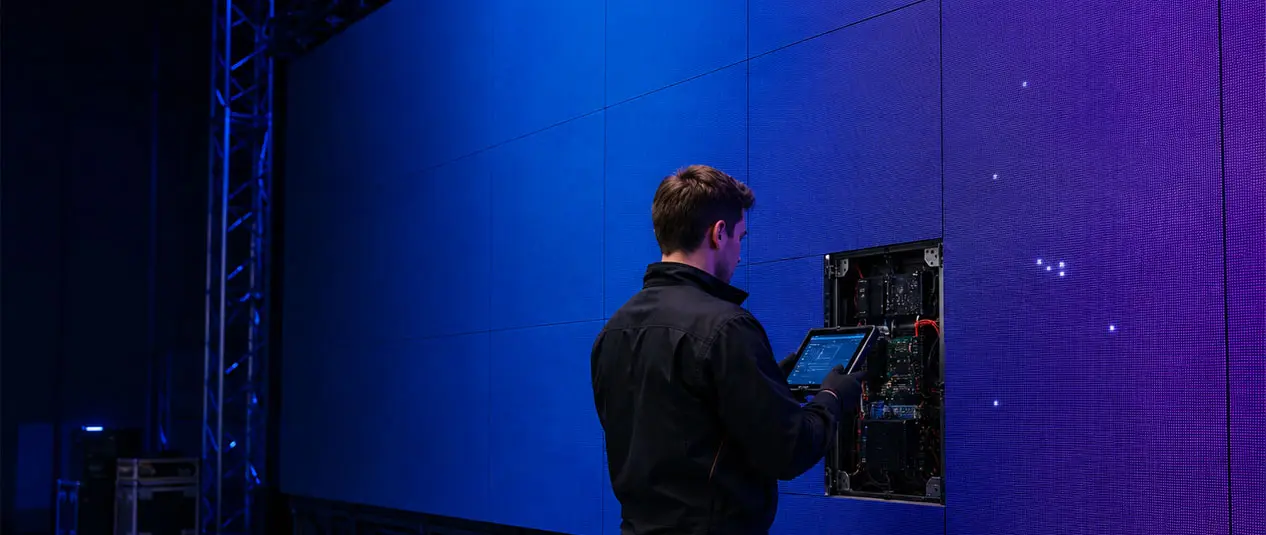
بقع بيضاء على شاشات LED: الأسباب والحلول
قد تظهر البقع البيضاء على شاشة LED كوحدات بكسل ساطعة فردية, مجموعات صغيرة, خطوط أفقية, أو مناطق مضيئة أكبر. يظل بعضها مرئيًا في كل صورة, بينما يختفي البعض الآخر عند المحتوى, كابل, وحدة, أو تغيير إعدادات التحكم. على الرغم من أن البقعة البيضاء قد تبدو وكأنها عيب بسيط في البكسل, السبب الحقيقي يمكن أن يشمل مصابيح LED, المرحلية للسائق, اتصالات الوحدة النمطية, استلام البطاقات, إمدادات الطاقة, بيانات المعايرة, أو الأضرار البيئية. يساعد التشخيص الصحيح على تجنب الاستبدال غير الضروري للوحدة ويمنع انتشار المشكلة. ماذا تعني البقع البيضاء على شاشة LED؟? يحتوي كل بكسل LED كامل الألوان على اللون الأحمر, أخضر, والعناصر الباعثة للضوء الأزرق. عندما تضيء الألوان الثلاثة معًا بكثافة عالية, يظهر البكسل باللون الأبيض. عادةً ما تعني البقعة البيضاء الدائمة أن قنوات RGB يتم تشغيلها بشكل غير صحيح أو لا يمكن إيقاف تشغيلها بشكل طبيعي. However, قد تشير المنطقة الساطعة التي تغطي عدة وحدات بكسل إلى وجود إشارة, وحدة, قوة, أو مشكلة في التكوين بدلاً من مصابيح LED التالفة. يوفر الموقع والنمط معلومات تشخيصية مفيدة: نمط البقعة البيضاء السبب المحتمل بكسل ساطع واحد مصباح LED تالف, ماس كهربائى أو خطأ في السائق عدة بكسلات مجاورة الرطوبة, impact, تلف اللحام أو ثنائي الفينيل متعدد الكلور صف أو عمود كامل في برنامج التشغيل IC أو مشكلة في اتصال الدائرة منطقة واحدة بحجم الوحدة بطاقة الاستقبال, فشل كابل البيانات أو الوحدة النمطية بقع وامضة عشوائية كابل إشارة فضفاض, التأريض أو عدم استقرار الطاقة البقع مرئية فقط في صور معينة المعايرة, مشكلة التدرج الرمادي أو مشكلة مصدر المحتوى الأسباب الشائعة للبقع البيضاء وحدات بكسل LED التالفة أو العالقة بكسل واحد يظل أبيضًا تحت اللون الأحمر, أخضر, قد تحتوي صور الاختبار باللونين الأزرق والأسود على حزمة LED تالفة, وصلة لحام أو دائرة تحكم. التأثير الجسدي, يمكن أن يساهم التفريغ الكهروستاتيكي والشيخوخة في حدوث هذه المشكلة. يتم رفع مصابيح SMD فوق سطح ثنائي الفينيل متعدد الكلور وقد تكون أكثر عرضة للتأثير أثناء التثبيت أو التعامل مع الخزانة. مقارنة LEDCHEER بين SMD و ...
بواسطةيهتف
2026-08-20
2026-08-20
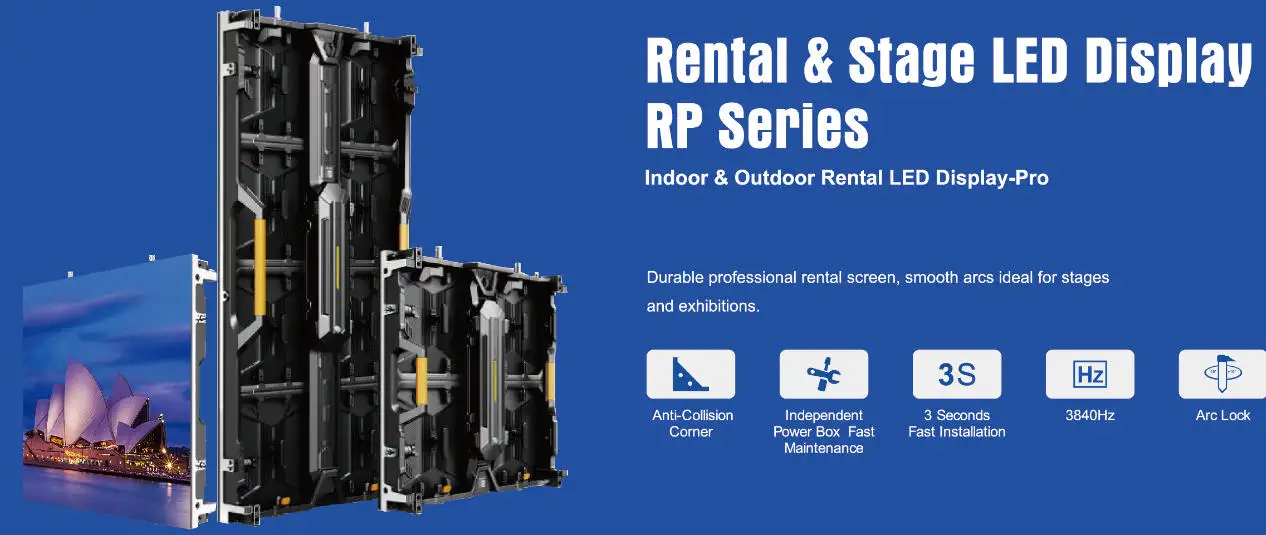
تأجير & شاشة عرض LED للمسرح من سلسلة RP – مُصممة للأحداث الاحترافية
- # تأجير & شاشة LED للمسرح
In today's fast-paced event industry, كل ثانية مهمة. Whether you're organizing a large-scale concert, مؤتمر الشركات, معرض, حدث رياضي, أو البث المباشر, يجب أن يكون نظام العرض LED موثوقًا به, سهلة التركيب, وقادر على تقديم أداء بصري استثنائي. تأجير سلسلة RP & تم تصميم شاشة LED للمسرح خصيصًا لسوق الإيجار, الجمع بين تصميم خزانة خفيفة الوزن, التثبيت السريع, التكوينات المنحنية الإبداعية, وجودة الصورة المتميزة. مصممة لكل من التطبيقات الداخلية والخارجية, فهو يقدم لمنظمي الأحداث وشركات التأجير حلاً يمكن الاعتماد عليه ويعمل في ظل الظروف الصعبة. مصممة لتطبيقات التأجير الاحترافية على عكس شاشات LED التقليدية المثبتة, تتطلب شاشات LED المستأجرة وسائل نقل متكررة, حَشد, وتفكيك. لقد تم تطوير سلسلة RP مع أخذ هذه التحديات في الاعتبار. تشمل مزايا التصميم الرئيسية: يسمح الهيكل المعياري للفنيين ببناء جدران فيديو LED كبيرة بسرعة مع الحفاظ على التسطيح المثالي وأداء الصورة السلس. التثبيت السريع يوفر الوقت والعمالة إحدى أكبر مزايا سلسلة RP هي آلية القفل السريع لمدة 3 ثوانٍ. مع صيانة صندوق الطاقة المستقلة وأجهزة القفل الدقيقة, يمكن للفنيين إكمال التثبيت بشكل أسرع بكثير من خزانات الإيجار التقليدية. تشمل الفوائد: وهذا يجعل سلسلة RP حلاً ممتازًا لشركات التأجير التي تدير أحداثًا متعددة بشكل متكرر كل أسبوع. الربط الإبداعي المرن لتأثيرات بصرية مذهلة غالبًا ما يتطلب تصميم المسرح الحديث أكثر من مجرد جدار LED مسطح تقليدي. تدعم سلسلة RP التكوينات الإبداعية المتعددة بما في ذلك: تدعم الخزانة الربط بزاوية قابلة للتعديل, مما يسمح بزوايا التثبيت تقريبًا: تتيح هذه المرونة للمصممين إنشاء تجارب مسرحية غامرة تعزز مشاركة الجمهور. سواء استخدمت في الحفلات الموسيقية, عروض الأزياء, المعارض, أو استوديوهات التلفزيون, توفر الشاشات المنحنية الإبداعية تأثيرًا بصريًا أكبر من الشاشات المستطيلة التقليدية. معدل تحديث مرتفع لأداء فيديو سلس تعد الجودة المرئية ضرورية للإنتاج المسرحي الاحترافي. تتميز سلسلة RP بمعدل تحديث عالٍ يبلغ 3840 هرتز, ...
بواسطةيهتف
2026-07-03
2026-07-03
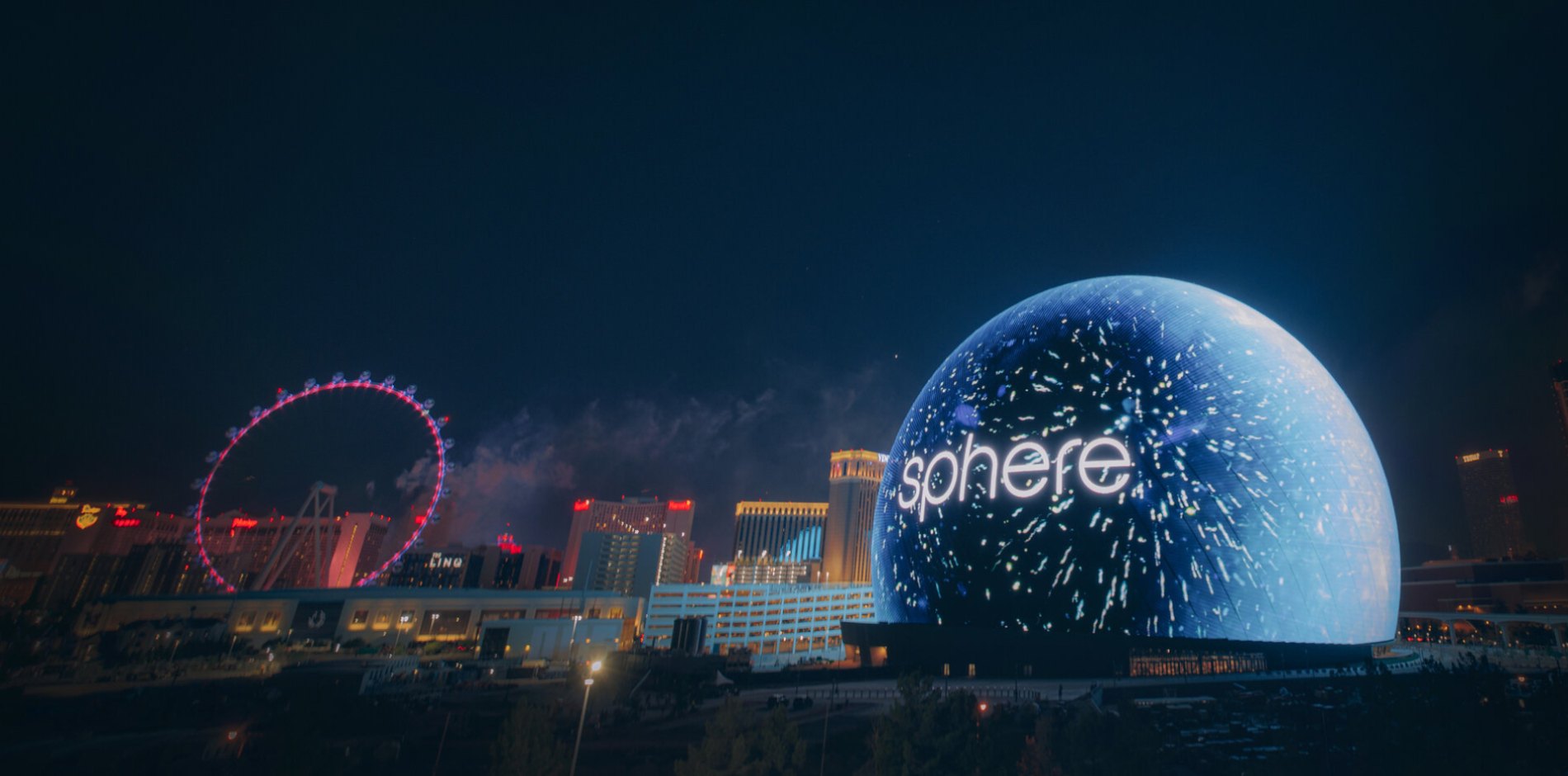
شاشة LED كروية: الدليل الكامل لشاشات LED الكروية الإبداعية بزاوية 360 درجة
- # شاشة LED كروية
ما هي شاشة LED الكروية? شاشة LED كروية, تُعرف أيضًا باسم شاشة LED الكروية أو شاشة الكرة LED, هو نوع مبتكر من شاشات العرض الرقمية التي تشكل مجالًا كاملاً ثلاثي الأبعاد. على عكس شاشات LED المسطحة التقليدية, فهو يوفر رؤية 360 درجة, السماح بمشاهدة المحتوى من أي زاوية دون تشويه. يعمل هذا الهيكل الفريد على تحويل المحتوى الرقمي إلى تجربة غامرة تمامًا. سواء تم تركيبها في ردهة مركز التسوق أو تعليقها في قاعة المعرض, تجذب شاشة LED الكروية الانتباه بشكل طبيعي وتعزز رواية القصص المكانية. لما لها من تأثير بصري ملفت للنظر, أصبحت شاشة LED الكروية الحل المفضل للتركيبات الإبداعية, تجارب العلامة التجارية, والبيئات التجارية الراقية. كيف تعمل شاشة LED الكروية? تم تصميم شاشة LED الكروية باستخدام وحدات LED متعددة مرنة أو مصممة خصيصًا والتي يتم تجميعها في هيكل كروي. تم تصميم هذه الوحدات بعناية للحفاظ على السطوع واللون المتسقين عبر الأسطح المنحنية. يعمل النظام من خلال ثلاثة مكونات رئيسية: على عكس الشاشات المسطحة, يجب إعادة تعيين المحتوى إلى تنسيق كروي, مما يعني أن المصممين غالبًا ما يقومون بإنشاء رسوم متحركة مخصصة أو يستخدمون برامج متخصصة لتحقيق التشغيل السلس. والنتيجة هي على نحو سلس, سطح عرض مستمر قادر على تقديم صور ديناميكية من كل زاوية. الميزات الرئيسية التي يجب البحث عنها في شاشة LED الكروية عند اختيار شاشة LED كروية, تؤثر العديد من الميزات التقنية بشكل مباشر على الأداء والموثوقية على المدى الطويل: 1. 360° زاوية الرؤية الميزة المميزة لشاشة LED الكروية هي قدرتها على توفير رؤية كاملة من جميع الاتجاهات, مما يجعلها مثالية للمساحات المفتوحة. 2. معدل تحديث مرتفع (على سبيل المثال, 3840هرتز) يضمن معدل التحديث العالي الحصول على صور خالية من الوميض, مهم بشكل خاص لتسجيل الفيديو وبيئات البث المباشر. 3. مستويات السطوع تتطلب النماذج الداخلية عادةً سطوعًا معتدلاً, بينما تحتاج شاشات LED الخارجية إلى سطوع أعلى لتظل مرئية تحت ضوء الشمس. 4. ...
بواسطةيهتف
2026-05-05
2026-05-05
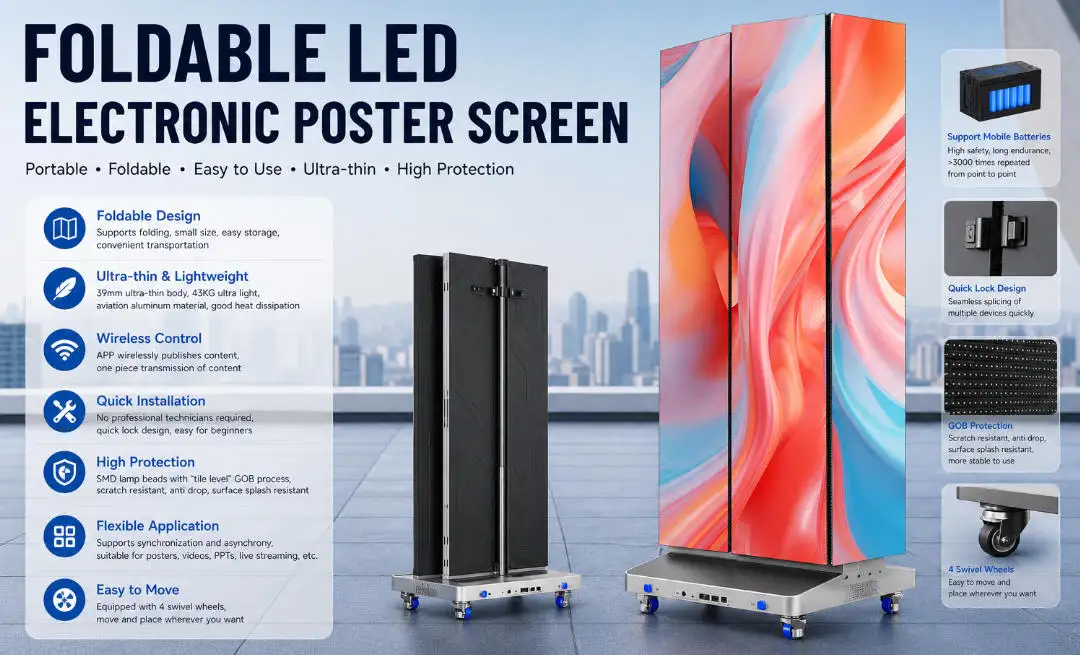
شاشة ملصق إلكترونية LED قابلة للطي: أكثر ذكاءً, طريقة أكثر قابلية للنقل لتقديم المحتوى
- # شاشة ملصق LED قابلة للطي
مع استمرار تطور اللافتات الرقمية, تبحث الشركات عن حلول العرض التي يسهل نقلها, أسرع في التثبيت, وأكثر مرونة في الاستخدام. تم تصميم شاشة الملصقات الإلكترونية LED القابلة للطي من LEDCheer لهذا الغرض بالضبط. مبني على تعليقات المستخدمين وأبحاث السوق, فهو يعالج بعض الإحباطات الأكثر شيوعًا في صناعة LED, بما في ذلك التثبيت الصعب, تصحيح معقد, والنقل غير مريح. تضع شركة LEDCheer نفسها كشركة مصنعة لشاشات LED في Shenzhen مع دعم OEM/ODM ومجموعة منتجات تتضمن شاشة LED إبداعية, شاشة LED للإيجار والمسرح, شاشة LED دوه, وشاشة LED التجارية. تؤكد الشركة أيضًا على الأحجام المخصصة, الأشكال, المواد, والقرار, والذي يتماشى جيدًا مع منتج قابل للتكيف بدرجة كبيرة مثل شاشة الملصقات القابلة للطي. إجابة عملية لمشاكل العرض في العالم الحقيقي يمكن أن تكون شاشات LED التقليدية قوية, لكنها ليست مريحة دائمًا. تتطلب بعض التركيبات فنيين محترفين, خطوات الإعداد المعقدة, وتعديل البرنامج الذي يستغرق وقتًا طويلاً. يمكن أن يشكل النقل أيضًا تحديًا, خاصة بالنسبة للمشاريع أو الشركات الدولية التي تحتاج إلى نقل المعدات بشكل متكرر. تعمل شاشة الملصقات الإلكترونية LED القابلة للطي على حل نقاط الألم هذه من خلال التركيز على إمكانية النقل, بساطة, والنشر السريع. وهي مصممة لتكون مدمجة عند تخزينها, يسهل حملها, وسريع التثبيت في الموقع. للشركات التي تقدر السرعة والمرونة, هذا يخلق ميزة كبيرة. مصممة للتنقل, تخزين, وانخفاض تكلفة النقل إحدى أكبر نقاط القوة لهذا المنتج هي هيكله القابل للطي. دعم الطي يجعل الشاشة أصغر حجمًا, أسهل للتخزين, وأكثر ملاءمة للنقل. وهذا يعني مشاكل لوجستية أقل وتحكم أفضل في التكاليف, وخاصة بالنسبة للشحن عبر الحدود. هذا ذو قيمة خاصة ل:العروض الترويجية للبيع بالتجزئة, أكشاك المعرض, أماكن المؤتمرات, منظمو الحدث, وفرق التسويق المتنقلة. ويساعد التصميم خفيف الوزن والمحمول أيضًا على تقليل الضغط الناتج عن تحريك معدات العرض الكبيرة. بدلا من علاج ...
بواسطةيهتف
2026-05-01
2026-05-01
