


 بيت » مدونة » أخبار الشركة »
2026-04-04



هل وجدت نفسك يومًا تحدق في شاشة LED الضخمة تلك وتفكر؟, "بالتأكيد, it's eye-catching, ولكن ماذا يمكن أن تفعل?" You're not the only one who's wondered that.
يخضع مشهد شاشة LED لتحول دقيق. It's no longer just about the plain old flat panels—it's all about going the extra mile. الآن, عندما يتسوق الناس للشاشات, they're torn between opting for a flexible LED wonder or sticking with the classic LED variety. It's not as cut and dried as it used to be.
I've had the pleasure of dealing with both kinds in various endeavors—from setting up shop in retail spaces to creating event stages and even diving into some innovative architectural endeavors. دعني أخبرك, there's a role for each. لكن اختيار الحصان الخطأ في هذا السباق يمكن أن يكون خطأً مكلفًا.
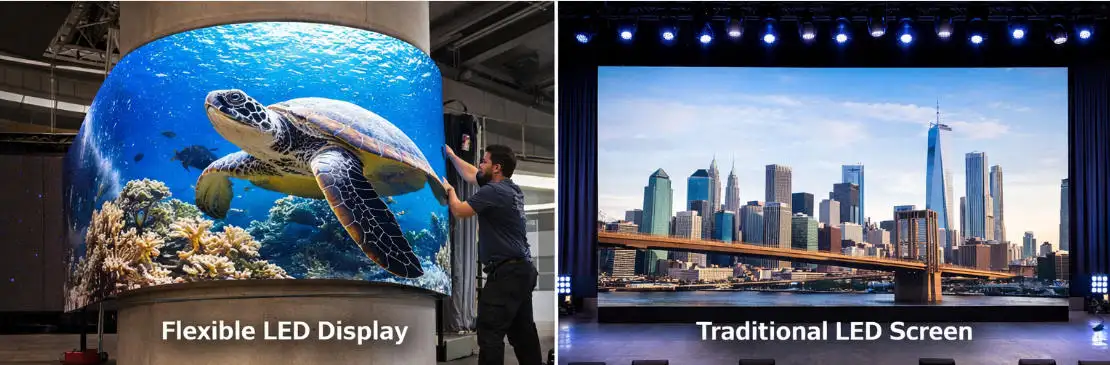
ما هي شاشة LED المرنة?
أ شاشة LED مرنة هو بالضبط ما يوحي الاسم: لوحة LED مبنية على مادة مرنة, قاعدة قابلة للانحناء بدلاً من أن تكون على إطار صلب. على عكس نظرائهم في المدرسة القديمة, يمكن لهذه العروض:
- حليقة داخل أو خارج
- لفائف حول الأعمدة
- تشكل على شكل موجات, اسطوانات, أو حتى الأشكال المبتكرة.
هذا هو المكان الذي يبدأ فيه الجدل بين شاشات LED المنحنية والمسطحة. لم تعد عالقًا مع الخيارات المستطيلة فقط.
ما هو تقليدي (صلب) شاشة ال اي دي?
شاشة LED قياسية, تُعرف أيضًا باسم شاشة LED الصلبة, يتم بناؤه بمرفقات قوية - مصنوعة عادة من الألومنيوم أو الفولاذ.
Here's the deal:
- مسطحة وصلبة
- مثالية للإعدادات القياسية (مثل الجدران, اللوحات الإعلانية, مراحل)
- لا يزال هذا التنسيق هو السائد في الصناعة, ولسبب وجيه.
- الشاشات الصلبة يمكن الاعتماد عليها, قابلة للتطوير, وصديقة للميزانية.
شاشة LED مرنة مقابل شاشة LED التقليدية: الاختلافات الأساسية
مرونة الهيكل والتصميم
شاشة LED مرنة:
- قابل للانحناء, قابل للالتواء, وقابلة للالتفاف
- مثالية للمساحات غير التقليدية
شاشة LED تقليدية:
- ثابت, الإعداد المسطح
- يقتصر على الأشكال القياسية
في الحالات التي يستدعي فيها مشروعك أعمدة, منحنيات, أو الذوق الفني, الفائز الواضح هو الخيار المرن.
تعقيد التثبيت
شاشة LED مرنة:
- يتطلب مهندسين ماهرين
- في كثير من الأحيان يحتاج إلى حوامل مخصصة
شاشة LED تقليدية:
- وحدات وموحدة
- عمليات التثبيت أسرع
الحقيقة هي, بينما تبدو شاشات العرض المرنة رائعة, they aren't as simple to set up as one might think.
التأثير البصري
شاشة LED مرنة:
- يقدم تجربة غامرة
- يحقق صورًا ثلاثية الأبعاد
- يعزز المشاركة في البيع بالتجزئة والمعارض
شاشة LED تقليدية:
- يوفر هشًا, صور حادة
- مثالية للرسائل المباشرة
If you're aiming to grab attention, من الصعب التغلب على شاشات العرض المرنة.
المتانة والصيانة
شاشة LED مرنة:
- أكثر حساسية
- عرضة للتلف إذا أسيء التعامل معها
شاشة LED تقليدية:
- قوية وطويلة الأمد
- أسهل للصيانة والإصلاح
Here's the catch: غالبًا ما يتجاهل المشترون التمييز بين شاشات LED المرنة والصلبة.
Flexible isn't fragile, لكنه يتطلب المزيد من الاهتمام.
عامل التكلفة
شاشة LED مرنة:
- ارتفاع الاستثمار الأولي
- التخصيص يمكن أن يؤدي إلى ارتفاع السعر
شاشة LED تقليدية:
أكثر ملاءمة للميزانية
يمكن الوصول إليها على نطاق واسع
If money's tight, لا تزال الشاشات الصلبة هي الحل الأمثل لسبب ما.
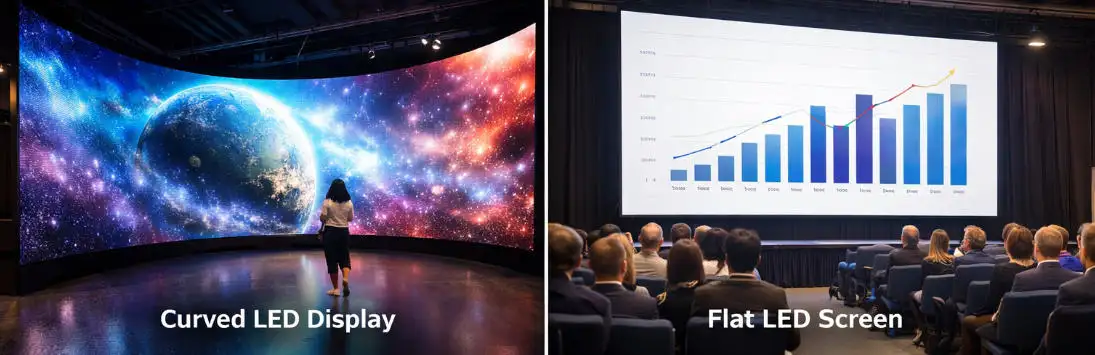
منحني مقابل. شاشة LED مسطحة: عندما يهم الانحناء
شاشات العرض المنحنية تستحق العناء فقط إذا:
- الفضاء منحني بطبيعته
- تبحث عن تأثير غامر أو بانورامي
- You're crafting a high-end commercial space
- خلاف ذلك, الشاشات المسطحة هي أفضل رهان لك، وأرخص في التشغيل.
I've seen projects where companies went for curved displays just for the 'wow' factor, فقط لقلة استخدامها. Don't make that mistake.
تطبيقات العالم الحقيقي
شاشة LED مرنة تتفوق في:
- متاجر التجزئة الرائدة
- مساحات المعرض
- المتاحف والمراكز التفاعلية
- واجهات الوسائط المعمارية
شاشة LED التقليدية تتفوق في:
- إعلانات خارجية
- قاعات المؤتمرات
- مجموعات المرحلة
- الساحات الرياضية
It's all about the right tool for the right job.
العنصر المهمل
Here's something that often flies under the radar:
تكييف المحتوى هو المفتاح.
تكون شاشة LED المرنة فعالة بقدر المحتوى المصمم خصيصًا لها.
If you're playing standard 16:9 فيديو على شاشة منحنية, you're not maximizing the hardware's potential.
شاشات مرنة الطلب:
- إنتاج فيديو مخصص
- التصميم التخطيطي الإبداعي
- في بعض الأحيان حتى تقديم في الوقت الحقيقي
- اجعل الأمر واضحًا.
هذه طبقة إضافية من الاستثمار.
لذا, what's the scoop?
للحصول على لمسة من الأناقة والذوق البصري, اختر شاشة LED مرنة. مثالي عندما تريد الإدلاء ببيان دون المساس بالبساطة. وإذا كانت مساحتك كلها منحنيات ومخالفات, يمكن أن تتكيف هذه الشاشات مع أي شكل. فكر في الرفاهية أو تجربة فريدة من نوعها. من جهة أخرى, if you're looking for durability and cost-effectiveness, شاشة LED التقليدية هي خيارك الأمثل. It's a solid choice for a straightforward, منطقة مسطحة, مع ميزة إضافية تتمثل في الإعداد السريع والصيانة الخالية من المتاعب.
في النهاية, it's not about one being better than the other. It's all about what fits your specific project needs. شاشات LED مرنة هم المستقبل - المبدعون, غامرة, والمعمارية. شاشات LED التقليدية, حسنًا, they've been around the block and done the job reliably, بكفاءة, وقابلة للتطوير. If you're aiming to impress, المرونة هي الطريق للذهاب. But if you want something that's going to perform day in and day out, التقليدية هي الطريق ليكون.
مخطط الأسئلة الشائعة (للحصول على نتائج غنية)
س1: ما هو الفرق بين شاشة LED المرنة والصلبة?
يمكن لشاشة LED المرنة أن تنحني وتتكيف مع الأسطح المنحنية, في حين أن شاشة LED الصلبة ثابتة ومسطحة, مصممة للمنشآت القياسية.
Q2: هل شاشات LED المرنة أفضل من شاشات LED التقليدية؟?
ليس بالضرورة. توفر شاشات LED المرنة المزيد من حرية التصميم والتأثير البصري, في حين أن شاشات LED التقليدية أكثر فعالية من حيث التكلفة ومتينة.
س3: متى يجب أن أختار شاشة LED منحنية؟?
اختر شاشة LED منحنية عندما تكون بيئة التثبيت الخاصة بك منحنية أو عندما تريد إنشاء تجربة بصرية غامرة.
س 4: ما هي مميزات شاشات LED المرنة؟?
تشمل مزايا شاشة LED المرنة القدرة على التكيف مع الأشكال المعقدة, تعزيز المشاركة البصرية, وإمكانيات التصميم المبتكر.
س5: هل شاشة LED التقليدية أكثر موثوقية?
نعم, تعتبر شاشات LED التقليدية أكثر قوة بشكل عام, أسهل للصيانة, وتستخدم على نطاق واسع في المنشآت طويلة الأجل.
