


2026-04-25



フレキシブル LED ディスプレイ ブランドにとって人気の選択肢となっている, 展示会デザイナー, 小売スペース, そして創造的なインスタレーション. 彼らの曲がる能力, 曲線, ユニークな構造に適応するため、強い視覚的インパクトが必要なプロジェクトに最適です。. しかし、最終結果は印象的に見えるかもしれませんが、, プロセスは必ずしも単純ではありません.
フレキシブル LED ディスプレイの問題の多くは、画面の電源が入る前に発生します。. その他はインストール後に表示されます, プロジェクトがすでに稼働しており、修正にコストがかかる場合. 計画ミスからメンテナンスの問題まで, 曲面 LED ディスプレイ プロジェクトは、詳細が正しく処理されないと、ごくありふれた理由で失敗する可能性があります。.
この記事では, LED スクリーンの取り付けで最も一般的な問題を見ていきます。, LED ディスプレイプロジェクトの典型的な間違い, そしてそれらを回避する最良の方法. 大規模な商用設置を計画している場合でも、小規模なカスタム ディスプレイを計画している場合でも, これらのリスクを理解すると時間を節約できる, お金, そして欲求不満.
フレキシブル LED ディスプレイ プロジェクトに特別な注意が必要な理由
フレキシブル LED ディスプレイは、形状が異なる標準的な LED スクリーンだけではありません。. 構造的には慎重な計画が必要です, モジュールレイアウト, 電源設計, 信号制御, 熱管理, と取り付け精度. 画面が湾曲していることが多いので, 手を振った, 円筒形, または不規則な形, 小さなエラーはすぐに目に見えてしまう可能性があります.
これが、フレキシブル LED ディスプレイの問題がフラット スクリーン プロジェクトの問題よりも解決することが難しい理由です。. わずかな隙間, 不均一な曲線, または、セットアップ中に固定点が弱いと深刻に思われない場合があります, ただし、視聴品質に影響を与える可能性があります, 安定性, そして長期的なパフォーマンス.
1. インストール前の間違ったプロジェクト計画
LED ディスプレイ プロジェクトで最もよくある間違いの 1 つは、完全な技術計画なしで設置を開始することです。. 一部のチームは、視覚的なデザインのみに焦点を当て、構造の実際の要件を無視しています。, 電源, 制御システム, およびメンテナンスアクセス.
フレキシブルディスプレイは物理空間に正確に一致する必要があります. 曲げ角度の場合, 画面サイズ, キャビネット構造, または取り付け位置が事前に計画されていない, その結果、現場での調整不良や不必要な修正が発生する可能性があります。.
それを避ける方法
設置前, これらの点を確認してください:
- 画面サイズと形状
- 曲率または曲げ半径
- 取付構造と耐荷重
- 配電計画
- 信号ルーティング
- メンテナンスアクセススペース
良いプロジェクトは常に明確な図面から始まります, 推測ではない.
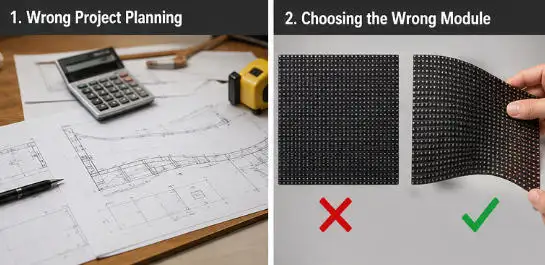
2. 間違ったフレキシブル LED モジュールの選択
すべてではありません フレキシブルLEDモジュール あらゆるプロジェクトに適しています. 1 つのスクリーンには小さな曲げ半径が必要な場合があります, 他の人はより高い明るさを必要とするかもしれません, より細かいピクセルピッチ, またはより強力な磁気固定. 間違ったモジュールを選択すると、曲率が悪くなる可能性があります, 目に見える縫い目, またはパフォーマンスが不安定.
間違った製品の選択は一度に複数の問題を引き起こすことが多いため、これはフレキシブル LED ディスプレイの問題の主な原因です。. カタログでは魅力的に見える画面でも、実際の設置環境では失敗する可能性があります.
それを避ける方法
実際のアプリケーションに基づいてモジュールを選択してください, 見た目だけではなく. 考慮する:
- 屋内または屋外での使用
- 視聴距離
- 曲率要件
- 移動やメンテナンスの頻度
- 明るさのニーズ
- 画素ピッチと画質
信頼できるサプライヤーは、モジュールをプロジェクトに適合させるのに役立ちます。, ただ商品を売るだけではなく.
3. 不適切な構造設計
フレキシブル LED スクリーン 支持構造に大きく依存する. ベースフレームに凹凸がある場合, 不安定な, または間違った形, ディスプレイが正しく設置されません. これにより、目に見える歪みが生じる可能性があります, モジュール間の隙間, または不自然に見える曲線.
曲面 LED ディスプレイのトラブルシューティングの多くは、画面自体ではなく構造から始まります。. 言い換えると, パネルは大丈夫かもしれない, しかしフレームが間違っている.
それを避ける方法
構造をしっかり確認する:
- フルスクリーンを表示できるほど強力です
- 正確な曲線または形状を持っている
- すべての取り付けポイントの位置を揃えます
- 熱膨張を可能にする
- ケーブル管理とサービスのための余地を残す
複雑なプロジェクトの場合, 構造の精度は LED の品質と同じくらい重要です.
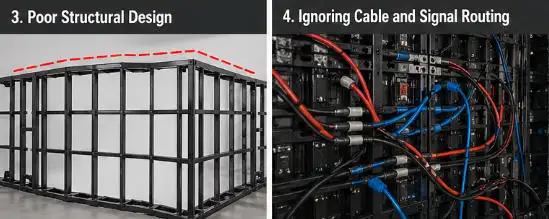
4. ケーブルと信号の配線を無視する
もう 1 つの頻繁な問題は、ケーブルの配線が乱雑であるか、計画が不十分であることです。. フレキシブル LED ディスプレイ プロジェクトにおいて, 多くの場合、ケーブルは狭いスペースを通過したり、曲線状の経路をたどったりする必要があります。. 配線が長すぎる場合, 緩すぎる, または位置が悪い, 不安定になる可能性があります, 信号損失, またはメンテナンスの困難さ.
場合によっては, 設置者がケーブルを曲げたり押しすぎたりする, コネクタが損傷したり、断続的な表示障害が発生したりする可能性があります。.
それを避ける方法
配線を整理して保護する. 適切なケーブル経路を使用する, すべてのコネクタを固定する, 信号ラインへの不要な負担を回避します. 将来のメンテナンスが容易になるように、すべてに明確にラベルを付けます.
適切なケーブル管理は、プロジェクトの見た目をきれいにするだけではありません. 信頼性が向上します.
5. 不均一な曲線と目に見える間隔
画面が湾曲している場合, 小さなアライメント誤差が非常に目立つようになる. 不均一な曲線により画像が歪んで見える場合があります, 一方、モジュールの間隔が正しくないと、目に見える継ぎ目や影の線が生じる可能性があります。. これらは曲面 LED ディスプレイの一般的なトラブルシューティングの問題です, 特にカスタムインストールの場合.
これは通常、モジュールが慎重に調整されていない場合、またはキャビネット/フレームが意図した曲線を保持していない場合に発生します。.
それを避ける方法
インストール中, チェック:
- すべてのモジュールが同じ角度で設置されているかどうか
- 曲線が画面全体で一貫しているかどうか
- エッジが正しく揃っているかどうか
- 画面の表面がどの角度から見ても滑らかかどうか
セットアップに時間がかかる. 数分間余分に調整することで、後で非常に高価な視覚的問題が発生するのを防ぐことができます。.
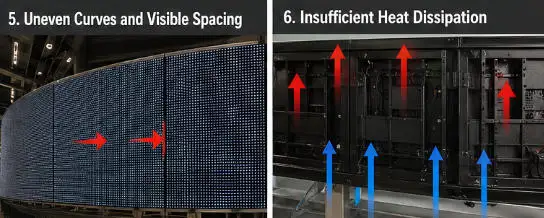
6. 放熱が不十分
熱は LED スクリーンプロジェクトにおける最大の長期的リスクの 1 つです. フレキシブルスクリーン 空気の流れが制限されるコンパクトなスペースや装飾的なスペースに設置されることが多い. 熱がうまく逃げられない場合, 画面の劣化が早くなる可能性があります, 明るさを失う, または時間の経過とともにパフォーマンスの問題が発生する.
これは、最も見落とされている LED スクリーンのメンテナンス問題の 1 つです, 画面は最初はうまく機能しても、長時間使用した後に初めて機能しなくなる可能性があるためです。.
それを避ける方法
初めから換気を計画する. スクリーンの後ろと周囲に空気の流れのための十分なスペースがあることを確認してください. 設置環境が密閉されている場合, 追加の冷却または放熱手段を使用する.
通常、低温で動作するディスプレイは長持ちし、より安定して動作します。.
7. 間違った電源設計の使用
電源の問題によりちらつきが発生する可能性があります, 明るさのムラ, あるいは完全な失敗さえ. フレキシブル LED ディスプレイ プロジェクトにおいて, 電源設計は画面サイズに合わせる必要があります, 明るさレベル, と営業時間. 「十分に良好」と思われる電源システムでも、実際の負荷がかかると不安定になる可能性があります.
これは LED ディスプレイ プロジェクトの間違いの 1 つであり、計画中には見落とされがちですが、設置後に修正するには費用がかかります。.
それを避ける方法
電力要件を慎重に計算する. 高品質の電源を使用する, 適切な負荷分散, 安定した電圧. 回路に過負荷をかけないでください, システムが予想される稼働時間に合わせて設計されていることを確認します.
安定した電力は画像の安定性と製品寿命に不可欠です.
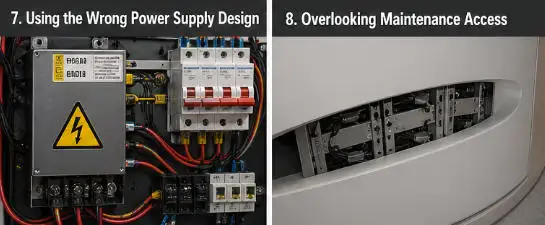
8. 見渡すメンテナンスアクセス
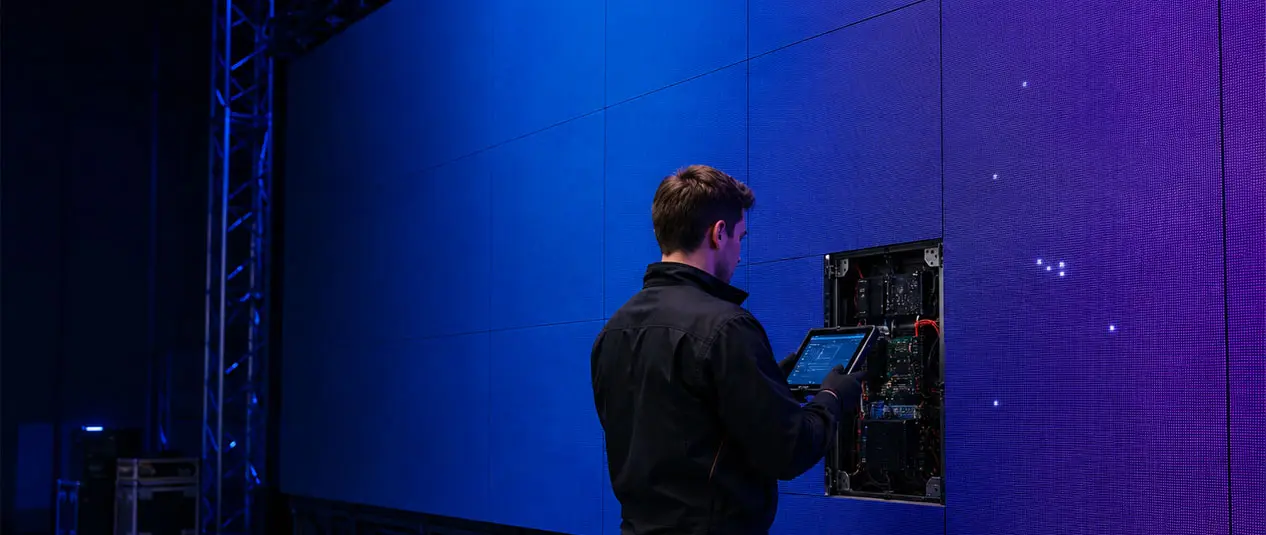
フレキシブル LED スクリーンは、メンテナンスがまったく必要ないかのように設計すべきではありません。. 現実世界では, モジュールの交換が必要になる場合があります, ケーブルの検査が必要な場合があります, および電源コンポーネントのチェックが必要な場合があります. メンテナンスアクセスが計画されていない場合, 小さな問題でも大規模な修理作業になる可能性があります.
これは、LED スクリーンのメンテナンスにおいて最も現実的な問題の 1 つです。, しかし、設計段階では無視されることがよくあります。.
それを避ける方法
十分なスペースを残しておいてください:
- モジュールの交換
- コントローラアクセス
- ケーブル検査
- クリーニング
- 換気チェック
メンテナンスが簡単なディスプレイは、長期にわたって維持コストが低くなります.
9. 設置後のキャリブレーションが不十分
ハードウェアが正しく取り付けられている場合でも、, キャリブレーションが不完全な場合、画面が正しく表示されない可能性があります. 色の不一致, 明るさの不均衡, または、画像の配置が不均一であると、フレキシブル ディスプレイが低品質に見える可能性があります.
これは、湾曲した設置では特に重要です, 視野角が表面全体で異なる場合がある場合.
それを避ける方法
インストール後, 完全な校正テストを実行する:
- 明るさの均一性をチェックする
- 色の一貫性をテストする
- 信号の安定性を検証する
- 複数の視点から画面を検査する
キャリブレーションを最後の追加ステップとして扱わないでください. これはプロジェクトの品質管理の一部です.
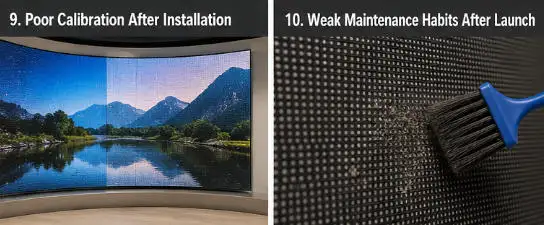
10. 発売後のメンテナンスの習慣が弱い
LED スクリーンのメンテナンスの問題の多くは、突然の故障によって発生するものではありません. それらは無視から来ます. 粉塵の蓄積, コネクタが緩んでいる, 不適切な掃除方法, 検査の遅れなどすべてが画面の寿命を縮めます.
フレキシブル LED ディスプレイは耐久性に優れています, しかし、それでも適切なケアが必要です. 定期的にチェックされる画面は、無視される画面よりもパフォーマンスが高くなります。.
それを避ける方法
簡単なメンテナンスルーチンを作成する:
- 画面を優しく定期的に掃除してください
- モジュールとコネクタを検査する
- 温度と換気を監視する
- 画像の異常を早期にチェックする
- 損傷した部品をすぐに交換する
予防メンテナンスは緊急修理よりはるかに安価です.
フレキシブル LED ディスプレイ プロジェクトを成功させるための実践的なチェックリスト
インストールを開始する前に, 基本を理解していることを確認してください:
- スクリーン形状は完全に確認されています
- 構造がデザインと一致している
- フレキシブルLEDモジュールは用途に適しています
- 電源プランは安定しています
- ケーブルの配線が整理されている
- 放熱が考慮されている
- メンテナンスアクセスが利用可能です
- インストール後にキャリブレーションが完了します
このチェックリストは簡単そうに見えるかもしれませんが、, ただし、柔軟な LED ディスプレイの問題のほとんどを発生前に防止します。.
結論
フレキシブル LED ディスプレイは優れた創造的自由を提供します, しかし、慎重な実行も必要です. ほとんどの失敗は画面のコンセプト自体から来るものではありません. それらは計画上のギャップから生じます, 構造上のエラー, 配線が悪い, 弱い冷却, 不適切なメンテナンス習慣.
最も一般的な LED スクリーンの取り付けの問題と曲面 LED ディスプレイのトラブルシューティングの課題を理解することにより、, コストのかかる間違いを回避し、見栄えがよく、より長く続くプロジェクトを構築できます。.
フレキシブル LED ディスプレイ プロジェクトを成功させるには、単に画面を湾曲させるだけではありません. システムのあらゆる部分がスムーズに連携できるようにすることです, 確実に, そして専門的に.
カスタムプロジェクトを計画している場合, 最初から適切な製品と適切な設置アプローチを選択することで、常に最良の結果が得られます。.
