


 Дом » Блог » Комупионные новости »
2026-04-25



Гибкие светодиодные дисплеи стали популярным выбором для брендов, дизайнеры выставок, торговые помещения, и креативные инсталляции. Их способность сгибаться, изгиб, и адаптируются к уникальным структурам, что делает их идеальными для проектов, требующих сильного визуального воздействия.. Но при этом конечный результат может выглядеть впечатляюще, процесс не всегда простой.
Многие проблемы с гибкими светодиодными дисплеями возникают еще до включения экрана.. Остальные появляются после установки, когда проект уже запущен и его исправление обходится дорого. От ошибок планирования до проблем с обслуживанием, проект изогнутого светодиодного дисплея может потерпеть неудачу по самым обычным причинам, если детали не будут обработаны правильно.
В этой статье, мы рассмотрим наиболее распространенные проблемы с установкой светодиодных экранов, Типичные ошибки в проекте светодиодного дисплея, и лучшие способы их избежать. Планируете ли вы большую коммерческую установку или небольшой индивидуальный дисплей, понимание этих рисков может сэкономить время, деньги, и разочарование.
Почему проекты гибких светодиодных дисплеев требуют особого внимания
Гибкий светодиодный дисплей – это не просто стандартный светодиодный экран различной формы.. Это требует тщательного планирования структуры., макет модуля, силовая конструкция, контроль сигнала, управление теплом, и точность установки. Потому что экран часто искривляется, помахал рукой, цилиндрический, или неправильной формы, небольшие ошибки могут быстро стать видимыми.
Вот почему проблемы с гибкими светодиодными дисплеями часто решить сложнее, чем проблемы с плоским экраном.. Крошечный разрыв, неровная кривая, или слабая точка крепления может показаться несерьезной во время установки, но это может повлиять на качество просмотра, стабильность, и долгосрочная производительность.
1. Неправильное планирование проекта перед установкой
Одна из наиболее частых ошибок при проектировании светодиодных экранов — начало установки без полного технического плана.. Некоторые команды сосредотачиваются только на визуальном дизайне и игнорируют реальные требования структуры., источник питания, система управления, и доступ для обслуживания.
Гибкий дисплей должен точно соответствовать физическому пространству. Если угол изгиба, размер экрана, структура шкафа, или место установки не запланировано заранее, результатом может быть плохое выравнивание или ненужная модификация на месте..
Как этого избежать
Перед установкой, подтвердите эти пункты:
- размер и форма экрана
- кривизна или радиус изгиба
- монтажная конструкция и грузоподъемность
- план распределения электроэнергии
- маршрутизация сигнала
- пространство доступа для обслуживания
Хороший проект всегда начинается с четкого чертежа., не догадки.
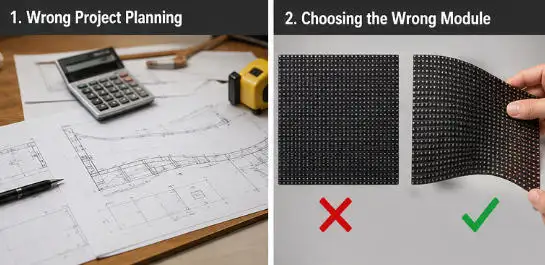
2. Выбор неправильного гибкого светодиодного модуля
Не каждый гибкий светодиодный модуль подходит для любого проекта. Для одного экрана может потребоваться небольшой радиус изгиба., в то время как другому может потребоваться более высокая яркость, более мелкий шаг пикселя, или более сильная магнитная фиксация. Выбор неправильного модуля может привести к плохой кривизне., видимые швы, или нестабильная производительность.
Это основной источник проблем с гибкими светодиодными дисплеями, поскольку неправильный выбор продукта часто вызывает сразу несколько проблем.. Экран может выглядеть привлекательно в каталоге, но не работать в реальных условиях установки..
Как этого избежать
Выбирайте модуль на основе реального приложения, не только внешний вид. Учитывать:
- использование в помещении или на открытом воздухе
- расстояние просмотра
- требования к кривизне
- частота движения или обслуживания
- потребность в яркости
- шаг пикселя и качество изображения
Надежный поставщик должен помочь вам подобрать модуль к проекту., не просто продать вам товар.
3. Плохой структурный дизайн
Гибкие светодиодные экраны во многом зависят от несущей конструкции. Если базовый каркас неровный, нестабильный, или неправильной формы, дисплей не будет сидеть должным образом. Это может привести к видимым искажениям., зазоры между модулями, или кривая, которая выглядит неестественно.
Многие случаи устранения неполадок с изогнутыми светодиодными дисплеями начинаются с конструкции, а не с самого экрана.. Другими словами, панель может быть в порядке, но кадр неправильный.
Как этого избежать
Убедитесь, что структура:
- достаточно силен, чтобы выдержать полноэкранный режим
- имеет точную кривую или форму
- сохраняет все точки крепления совмещенными
- допускает тепловое расширение
- оставляет место для прокладки кабелей и обслуживания
Для сложных проектов, структурная точность так же важна, как и качество светодиодов.
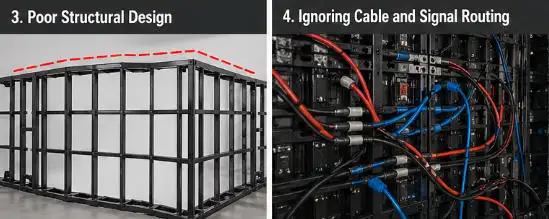
4. Игнорирование кабелей и маршрутизации сигналов
Другая частая проблема — беспорядочная или плохо спланированная прокладка кабеля.. В проектах гибких светодиодных дисплеев, Кабелям часто приходится проходить через ограниченное пространство или по изогнутым путям.. Если провод слишком длинный, слишком свободный, или плохо расположен, это может создать нестабильность, потеря сигнала, или сложность обслуживания.
В некоторых случаях, установщики слишком сильно сгибают или прижимают кабели, которые могут повредить разъемы или привести к периодическим сбоям в работе дисплея..
Как этого избежать
Держите проводку организованной и защищенной. Используйте правильные кабельные пути, закрепите все разъемы, и избежать ненужной нагрузки на сигнальные линии. Четко обозначьте все, чтобы облегчить дальнейшее обслуживание..
Хорошая прокладка кабелей не только делает проект чище. Это повышает надежность.
5. Неровные кривые и видимое расстояние
Когда экран изогнут, небольшие ошибки выравнивания становятся очень заметными. Неровные кривые могут исказить изображение., в то время как неправильное расстояние между модулями может привести к появлению видимых швов или теневых линий.. Это распространенные проблемы устранения неполадок изогнутых светодиодных дисплеев., особенно в индивидуальных установках.
Обычно это происходит, когда модули не отрегулированы тщательно или когда шкаф/рама не выдерживает заданную кривизну..
Как этого избежать
Во время установки, проверять:
- все ли модули расположены под одинаковым углом
- является ли кривая единообразной по всему экрану
- правильно ли выровнены края
- гладкая ли поверхность экрана под любым углом обзора
Уделите время настройке. Несколько дополнительных минут настройки могут предотвратить очень дорогостоящие проблемы со зрением в будущем..
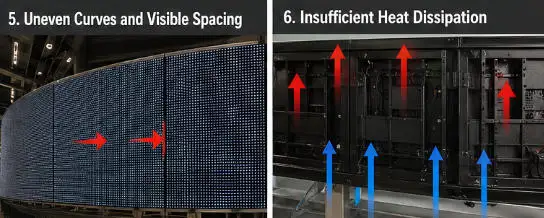
6. Недостаточное тепловыделение
Перегрев является одним из самых больших долгосрочных рисков в проектах светодиодных экранов.. Гибкие экраны часто устанавливаются в компактных или декоративных помещениях, где поток воздуха ограничен.. Если тепло не может уйти должным образом, экран может стареть быстрее, потерять яркость, или со временем возникнут проблемы с производительностью.
Это одна из самых игнорируемых проблем с обслуживанием светодиодных экранов., потому что поначалу экран может работать хорошо и выйти из строя только после длительного использования.
Как этого избежать
Планируйте вентиляцию с самого начала. Убедитесь, что позади и вокруг экрана достаточно места для потока воздуха.. Если среда установки закрыта, использовать дополнительные меры по охлаждению или рассеиванию тепла.
Дисплей, который работает без перегрева, обычно служит дольше и работает более стабильно..
7. Использование неправильной конструкции блока питания
Проблемы с питанием могут вызвать мерцание, неравномерная яркость, или даже полный провал. В проектах гибких светодиодных дисплеев, схема питания должна соответствовать размеру экрана, уровень яркости, и часы работы. Система электроснабжения, которая кажется «достаточно хорошей», все же может быть нестабильной при реальной нагрузке..
Это одна из ошибок проекта светодиодного дисплея, которую легко пропустить при планировании, но исправить после установки дорого..
Как этого избежать
Тщательно рассчитайте требования к мощности. Используйте качественные источники питания, правильное распределение нагрузки, и стабильное напряжение. Не перегружайте цепи, и убедитесь, что система рассчитана на ожидаемое время работы..
Стабильная мощность необходима для стабильности изображения и срока службы продукта..
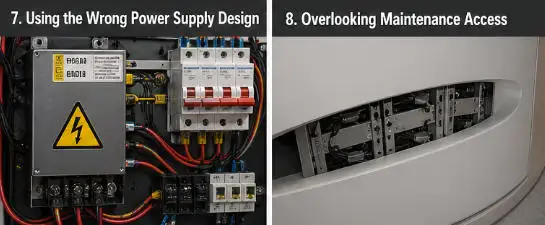
8. С видом на доступ для технического обслуживания
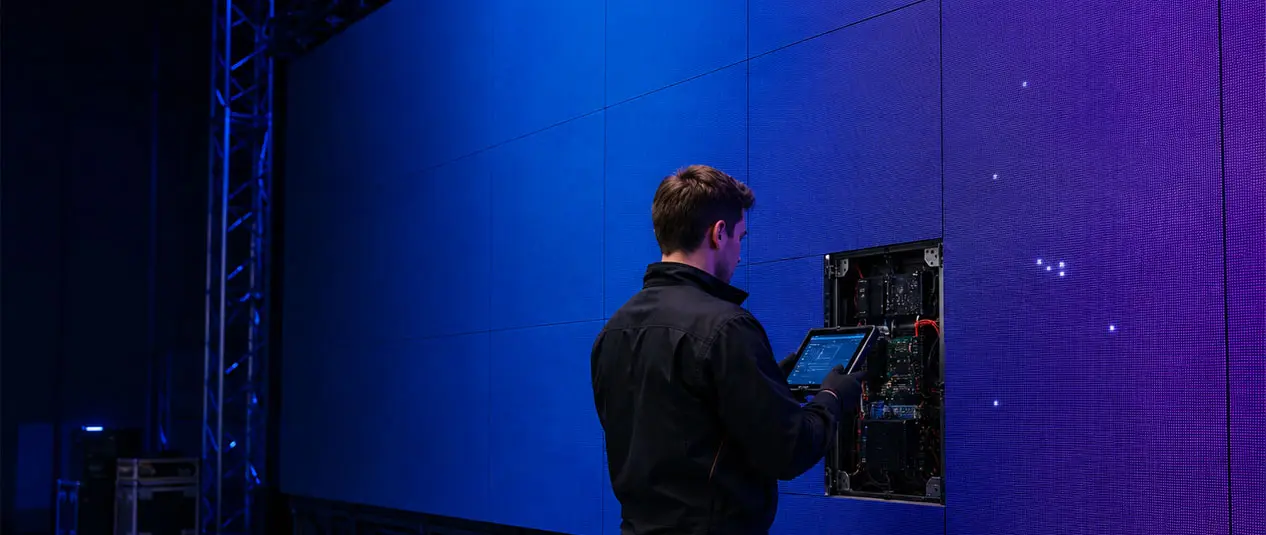
Гибкий светодиодный экран не должен проектироваться так, как будто он никогда не потребует обслуживания.. В реальном мире, модули могут нуждаться в замене, кабели могут нуждаться в проверке, и силовые компоненты могут потребовать проверки. Если доступ для обслуживания не был запланирован, даже незначительная проблема может стать серьезным ремонтом.
Это один из наиболее практичных вопросов обслуживания светодиодных экранов., однако это часто игнорируется на этапе проектирования..
Как этого избежать
Оставьте достаточно места для:
- замена модуля
- доступ к контроллеру
- проверка кабеля
- уборка
- проверка вентиляции
Дисплей, который прост в обслуживании, с течением времени будет стоить меньше в обслуживании..
9. Плохая калибровка после установки
Даже если оборудование установлено правильно, экран может выглядеть неправильно, если калибровка не завершена. Несоответствие цвета, дисбаланс яркости, или неравномерное выравнивание изображения может сделать гибкий дисплей некачественным..
Это особенно важно в изогнутых установках., где углы обзора могут различаться в зависимости от поверхности.
Как этого избежать
После установки, выполнить полную калибровочную проверку:
- проверить равномерность яркости
- проверить постоянство цвета
- проверить стабильность сигнала
- осмотрите экран с нескольких позиций просмотра
Не рассматривайте калибровку как последний дополнительный шаг.. Это часть контроля качества проекта..
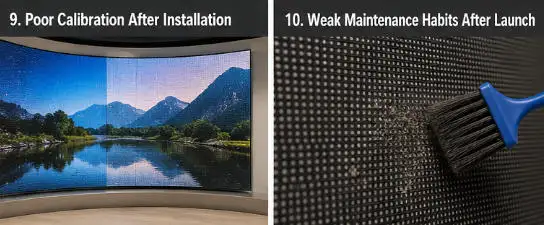
10. Слабые привычки обслуживания после запуска
Многие проблемы с обслуживанием светодиодных экранов возникают не из-за внезапного выхода из строя.. Они происходят от пренебрежения. Скопление пыли, свободные разъемы, плохие методы очистки, и запоздалые проверки сокращают срок службы сит.
Гибкие светодиодные дисплеи долговечны., но они все равно нуждаются в правильном уходе. Экран, который регулярно проверяется, будет работать лучше, чем тот, который игнорируется..
Как этого избежать
Создайте простую процедуру обслуживания:
- очищайте экран аккуратно и регулярно
- осмотреть модули и разъемы
- следить за температурой и вентиляцией
- заранее проверьте наличие дефектов изображения
- быстро заменить поврежденные детали
Профилактическое обслуживание обходится гораздо дешевле, чем аварийный ремонт..
Практический контрольный список для успешного проекта гибкого светодиодного дисплея
Прежде чем начать установку, убедитесь, что вы освоили основы:
- форма экрана полностью подтверждена
- структура соответствует дизайну
- гибкий светодиодный модуль подходит для применения
- план электропитания стабильный
- организована прокладка кабеля
- учитывается тепловыделение
- есть доступ для обслуживания
- калибровка будет завершена после установки
Этот контрольный список может показаться простым, но это предотвращает большинство проблем с гибкими светодиодными дисплеями еще до их возникновения..
Заключение
Гибкие светодиодные дисплеи предлагают исключительную свободу творчества., но они также требуют тщательного исполнения. Большинство неудач связано не с самой концепцией экрана.. Они возникают из-за пробелов в планировании, структурные ошибки, плохая проводка, слабое охлаждение, и плохие привычки в обслуживании.
Понимая наиболее распространенные проблемы с установкой светодиодных экранов и проблемы устранения неполадок изогнутых светодиодных экранов., вы можете избежать дорогостоящих ошибок и создать проект, который будет выглядеть лучше и прослужит дольше..
Успешный проект гибкого светодиодного дисплея заключается не только в том, чтобы сделать экран изогнутым.. Речь идет о том, чтобы все части системы работали бесперебойно., надежно, и профессионально.
Если вы планируете индивидуальный проект, выбор правильного продукта и правильный подход к установке с самого начала всегда дадут вам лучший результат.
