Indoor and Outdoor Rental LED Display: A Complete Guide for Event Professionals
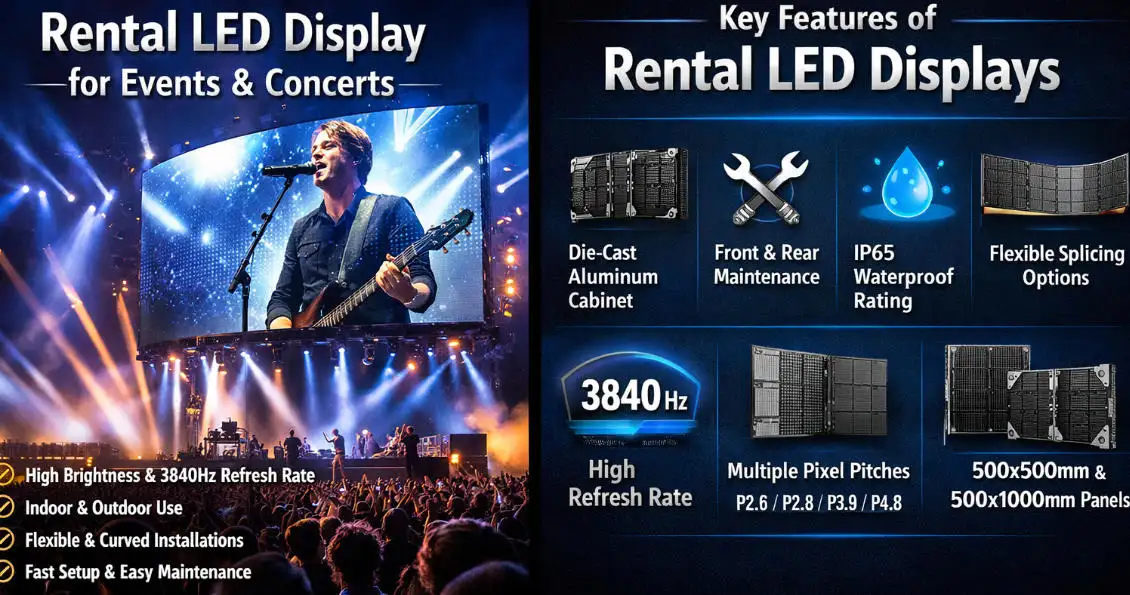
In today’s event industry, visual impact is everything. Whether it’s a live concert, corporate event, exhibition, or stage performance, the quality of your display can define the entire audience experience. This is where an indoor and outdoor rental LED display becomes essential. Unlike traditional screens, modern rental LED displays are designed for flexibility, durability, and high-performance visuals. They are built to handle frequent installation and dismantling while delivering stunning image quality in both indoor and outdoor environments. This guide explores everything you need to know—from key features and technical advantages to real-world applications—so you can choose the right rental LED screen for events and maximize your return on investment. Why Rental LED Displays Are Dominating the Event Industry Over the past decade, LED display technology has rapidly replaced projectors and LCD video walls in large-scale events. The reasons are clear. First, LED displays offer superior brightness and visibility. Outdoor environments, especially, demand screens that can compete with sunlight. With brightness levels reaching up to 4500 cd/m², modern outdoor LED displays for concerts ensure clear visuals even in daylight. Second, they provide seamless modular construction. Unlike traditional displays, LED panels can be assembled into virtually any size or shape. This flexibility makes them ideal for creative stage design. Finally, rental LED displays are engineered for mobility. Lightweight materials, quick-lock systems, and modular panels allow for fast setup and teardown—critical for event companies managing tight schedules. Key Features of Indoor and Outdoor Rental LED Displays 1. Flexible Pixel Pitch Options One of the most important factors in choosing an LED display is pixel pitch. Rental LED displays typically offer multiple options such as: This flexibility allows event planners to match screen resolution with audience distance, ensuring optimal image clarity without overspending. For example: 2. High Refresh Rate for Smooth Visuals A high ...
Learn More