


* THERE ARE 76 ARTICLES
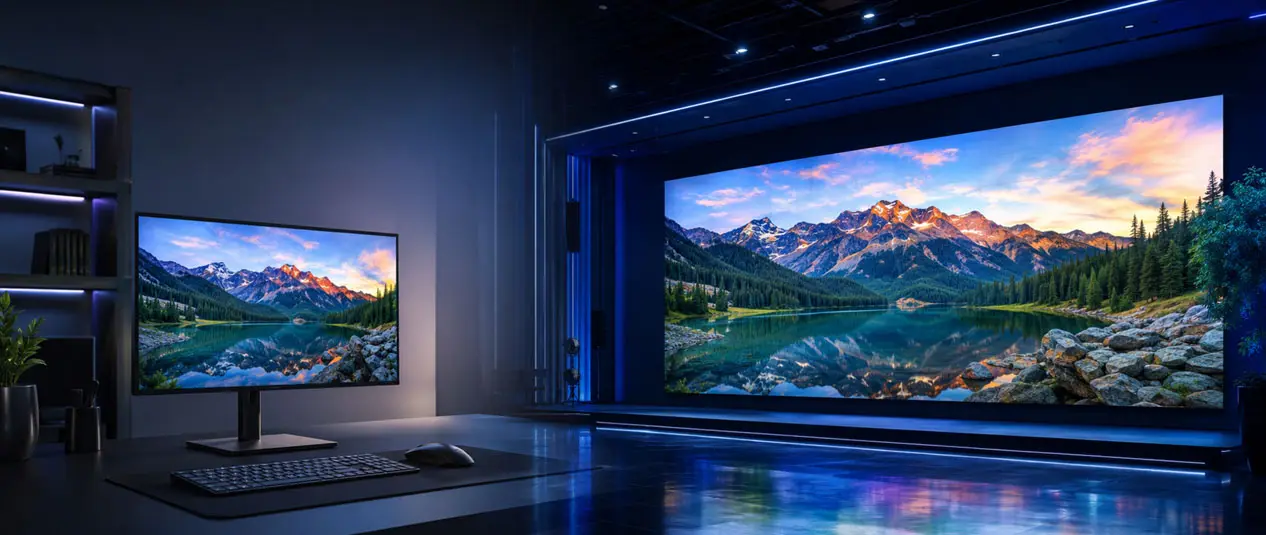
IPS vs LED Display: What Is the Difference?
IPS and LED displays are commonly compared when selecting screens for conference rooms, retail stores, control centers, exhibitions and entertainment venues. However, these terms do not describe the same type of technology. IPS is a type of LCD panel technology, while a direct-view LED display creates images using individual light-emitting diodes. Understanding this distinction helps buyers select the right screen based on size, brightness, viewing distance, installation environment and maintenance requirements. What Is an IPS Display? IPS stands for In-Plane Switching. It is a type of liquid crystal display panel designed to improve color consistency and viewing angles. An IPS display does not produce light directly through the liquid crystals. It normally uses an LED backlight behind the LCD panel. The liquid crystal layer controls how much backlight passes through each pixel to create the image. IPS panels are commonly used in: The main strengths of IPS include wide viewing angles, stable colors and sharp images at close viewing distances. What Is a Direct-View LED Display? A direct-view LED display uses red, green and blue light-emitting diodes to produce the image. Unlike an IPS LCD panel, it does not require a separate backlight. LED modules are installed inside cabinets, and multiple cabinets are combined to create a screen of almost any required size. This modular structure makes LED displays suitable for large conference rooms, stages, retail spaces, control centers, outdoor advertising and architectural installations. Fine-pitch products such as the LEDCHEER Ultra HD Fine Pixel Pitch LED Display are designed for indoor applications that require high resolution and closer viewing. IPS vs LED Display: Main Differences Feature IPS Display Direct-View LED Display Display technology LCD panel with LED backlight Self-emitting RGB LEDs Typical screen size Small to medium Medium to extremely large Panel seams Visible when multiple screens are combined Nearly ...
By Cheer
2026-08-20
2026-08-20
16:9 Aspect Ratio LED Display: Size, Resolution and Design Guide
A 16:9 aspect ratio LED display has a width-to-height relationship of 16 units to 9 units. It is one of the most widely used screen formats because it matches common Full HD and 4K video resolutions, presentation slides, livestreams and digital media. For conference rooms, corporate auditoriums, retail environments, control centers and event stages, choosing a 16:9 LED screen can simplify content production and reduce unwanted cropping, stretching or empty borders. However, achieving a true 16:9 LED display requires more than selecting a screen that looks rectangular. The physical dimensions, cabinet configuration, pixel pitch, total resolution and video processor must work together. What Does a 16:9 Aspect Ratio Mean? Aspect ratio describes the proportional relationship between the width and height of a display. A 16:9 screen is 16 units wide for every 9 units high. The physical dimensions can be calculated using the following formulas: Screen width = Screen height × 16 ÷ 9 Screen height = Screen width × 9 ÷ 16 For example, if the required screen height is 3 meters: Width = 3 × 16 ÷ 9 = 5.33 meters The completed display should therefore measure approximately 5.33 × 3 meters to maintain the 16:9 format. Common 16:9 LED Display Resolutions A screen’s aspect ratio and resolution are related but not identical. Aspect ratio describes the screen’s shape, while resolution describes the number of pixels used to create the image. Resolution Format Common Application 1280 × 720 HD Basic presentations and smaller displays 1920 × 1080 Full HD Meetings, events and commercial displays 2560 × 1440 QHD Detailed indoor visual applications 3840 × 2160 4K UHD Broadcast, premium retail and control rooms 7680 × 4320 8K UHD Large high-resolution installations All these resolutions use the 16:9 aspect ratio. A large physical screen does not automatically provide 4K ...
By Cheer
2026-08-20
2026-08-20
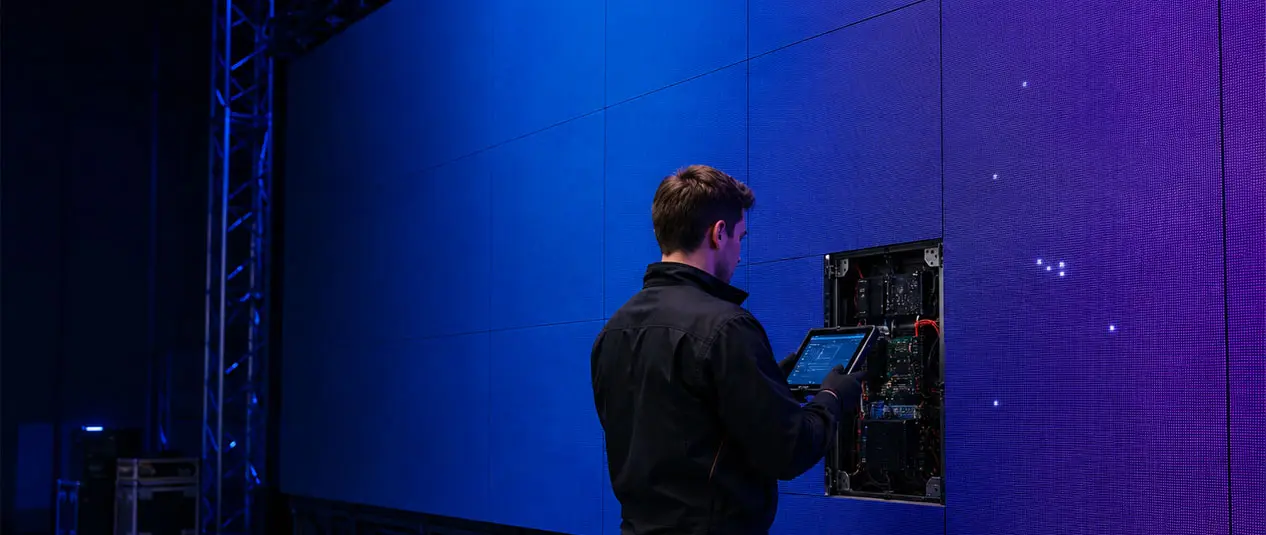
White Spots on LED Displays: Causes and Solutions
White spots on an LED display may appear as individual bright pixels, small clusters, horizontal lines, or larger illuminated areas. Some remain visible on every image, while others disappear when the content, cable, module, or control settings change. Although a white spot may look like a simple pixel defect, the actual cause can involve LED lamps, driver ICs, module connections, receiving cards, power supplies, calibration data, or environmental damage. Correct diagnosis helps avoid unnecessary module replacement and prevents the issue from spreading. What Do White Spots on an LED Display Mean? Each full-color LED pixel contains red, green, and blue light-emitting elements. When all three colors illuminate together at high intensity, the pixel appears white. A permanent white spot usually means the RGB channels are being driven incorrectly or cannot switch off normally. However, a bright area covering several pixels may indicate a signal, module, power, or configuration problem rather than damaged LED lamps. The location and pattern provide useful diagnostic information: White Spot Pattern Possible Cause One bright pixel Damaged LED lamp, short circuit or driver fault Several nearby pixels Moisture, impact, soldering or PCB damage Complete row or column Driver IC or circuit connection problem One module-sized area Receiving card, data cable or module failure Random flashing spots Loose signal cable, grounding or power instability Spots visible only in certain images Calibration, grayscale or content-source issue Common Causes of White Spots Damaged or Stuck LED Pixels A single pixel that stays white under red, green, blue and black test images may have a damaged LED package, solder joint or control circuit. Physical impact, electrostatic discharge and aging can all contribute to this problem. SMD lamps are raised above the PCB surface and may be more exposed to impact during installation or cabinet handling. LEDCHEER’s comparison of SMD and ...
By Cheer
2026-08-20
2026-08-20
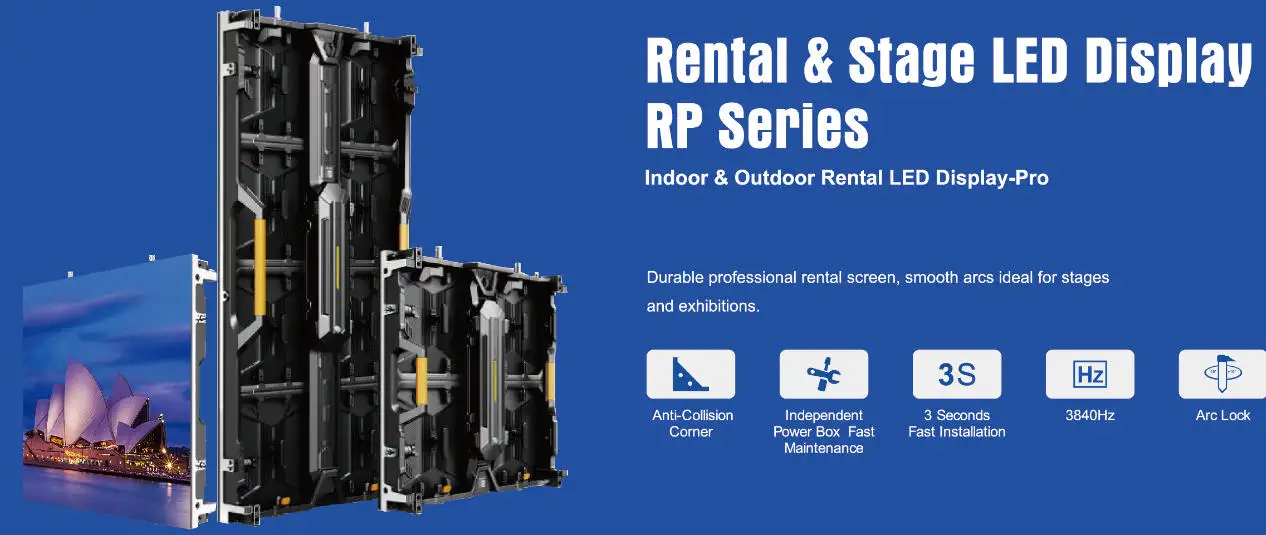
Rental & Stage LED Display RP Series – Built for Professional Events
- # Rental & Stage LED Display
In today's fast-paced event industry, every second matters. Whether you're organizing a large-scale concert, corporate conference, exhibition, sports event, or live broadcast, the LED display system must be reliable, easy to install, and capable of delivering exceptional visual performance. The RP Series Rental & Stage LED Display is specifically engineered for the rental market, combining lightweight cabinet design, rapid installation, creative curved configurations, and outstanding image quality. Designed for both indoor and outdoor applications, it offers event organizers and rental companies a dependable solution that performs under demanding conditions. Designed for Professional Rental Applications Unlike conventional fixed installation LED displays, rental LED screens require frequent transportation, assembly, and dismantling. The RP Series has been developed with these challenges in mind. Key design advantages include: The modular structure allows technicians to build large LED video walls quickly while maintaining perfect flatness and seamless image performance. Fast Installation Saves Time and Labor One of the biggest advantages of the RP Series is its 3-second quick locking mechanism. With independent power box maintenance and precision locking hardware, technicians can complete installation significantly faster than traditional rental cabinets. Benefits include: This makes the RP Series an excellent solution for rental companies that frequently manage multiple events every week. Flexible Creative Splicing for Stunning Visual Effects Modern stage design often requires more than a traditional flat LED wall. The RP Series supports multiple creative configurations including: The cabinet supports adjustable angle splicing, allowing installation angles of approximately: This flexibility enables designers to create immersive stage experiences that enhance audience engagement. Whether used in concerts, fashion shows, exhibitions, or television studios, creative curved displays provide greater visual impact than conventional rectangular screens. High Refresh Rate for Smooth Video Performance Visual quality is essential for professional stage productions. The RP Series features a 3840Hz high refresh rate, ...
By Cheer
2026-07-03
2026-07-03
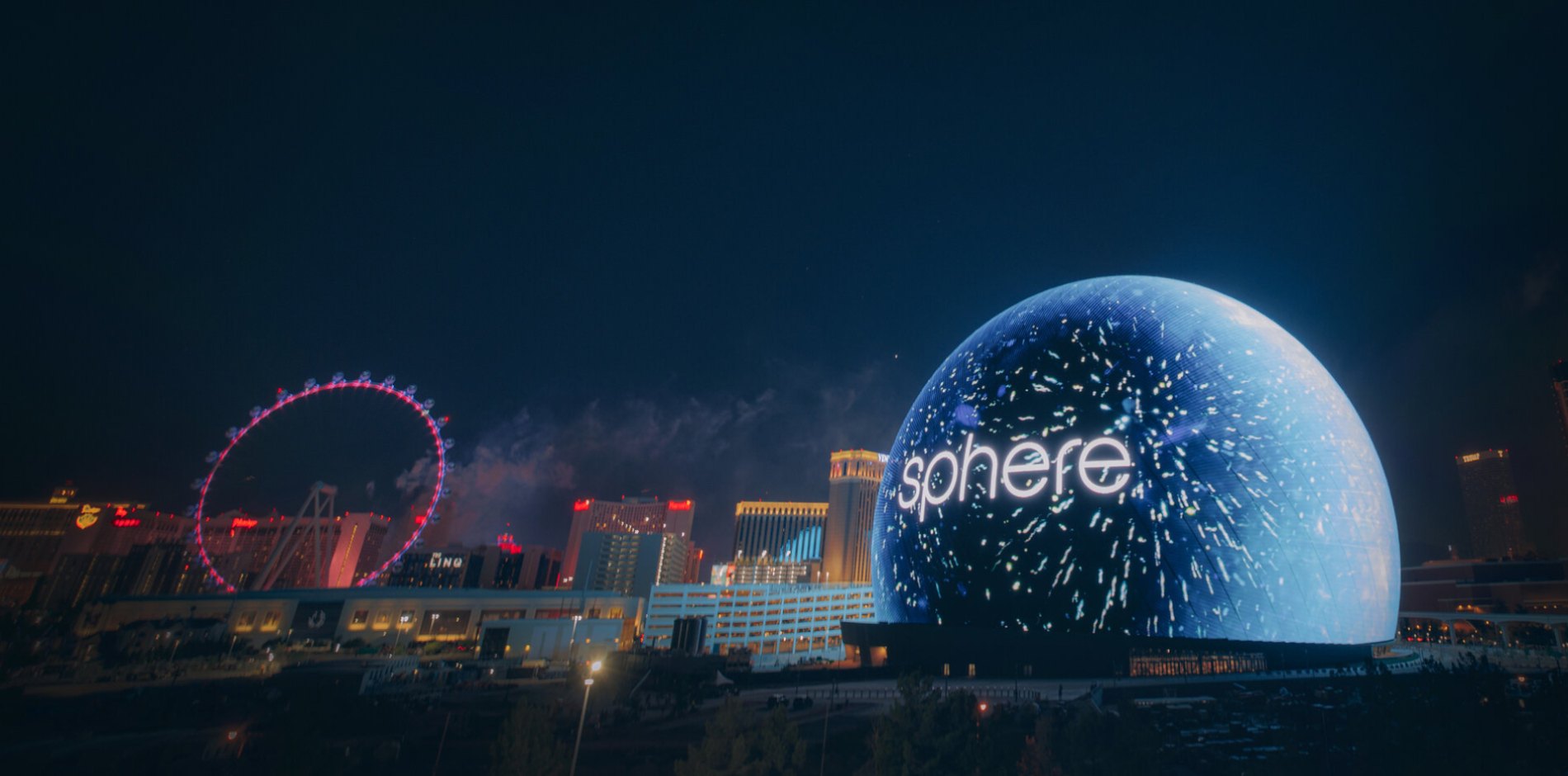
Sphere LED Display: The Complete Guide to 360° Creative LED Ball Screens
- # sphere LED display
What is a Sphere LED Display? A sphere LED display, also known as a spherical LED display or LED ball screen, is an innovative type of digital display that forms a complete three-dimensional sphere. Unlike traditional flat LED screens, it delivers 360-degree visibility, allowing content to be viewed from any angle without distortion. This unique structure transforms digital content into a fully immersive experience. Whether installed in a shopping mall atrium or suspended in an exhibition hall, a sphere LED display naturally draws attention and enhances spatial storytelling. Because of its striking visual impact, the sphere LED display has become a preferred solution for creative installations, brand experiences, and high-end commercial environments. How Does a Sphere LED Display Work? A sphere LED display is built using multiple flexible or specially designed LED modules that are assembled into a spherical structure. These modules are carefully engineered to maintain consistent brightness and color across curved surfaces. The system works through three key components: Unlike flat screens, content must be remapped into a spherical format, meaning designers often create custom animations or use specialized software to achieve seamless playback. The result is a smooth, continuous display surface capable of delivering dynamic visuals from every angle. Key Features to Look For in a Sphere LED Display When selecting a sphere LED display, several technical features directly impact performance and long-term reliability: 1. 360° Viewing Angle The defining advantage of a sphere LED display is its ability to provide full visibility from all directions, making it ideal for open spaces. 2. High Refresh Rate (e.g., 3840Hz) A high refresh rate ensures flicker-free visuals, especially important for video recording and live broadcasting environments. 3. Brightness Levels Indoor models typically require moderate brightness, while outdoor sphere LED displays need higher brightness to remain visible under sunlight. 4. ...
By Cheer
2026-05-05
2026-05-05
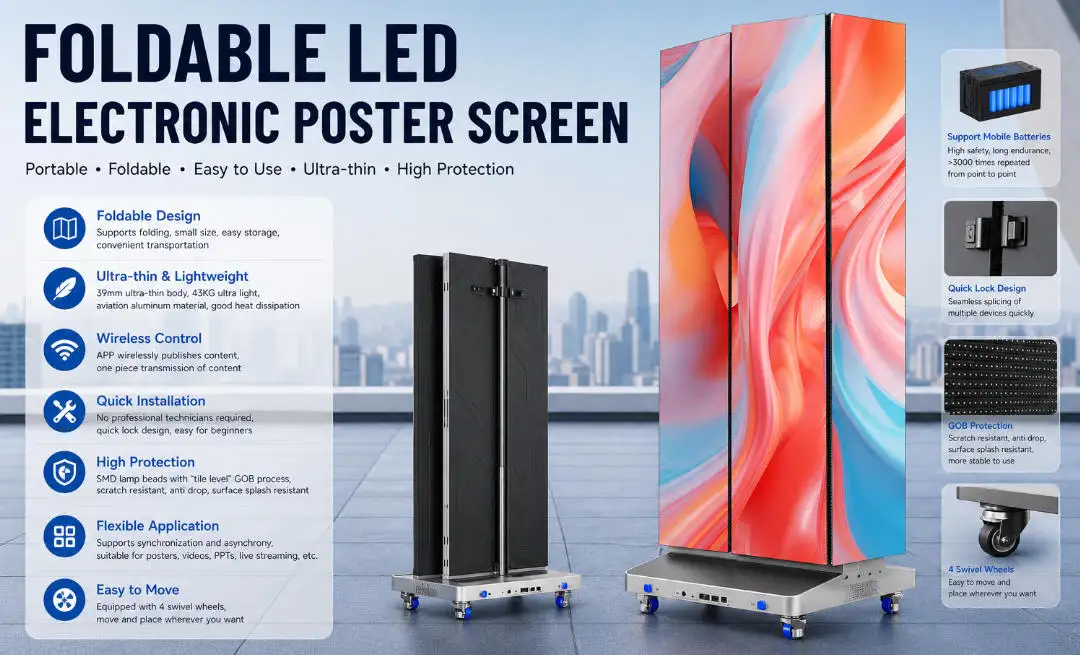
Foldable LED Electronic Poster Screen: A Smarter, More Portable Way to Present Content
- # foldable LED poster screen
As digital signage continues to evolve, businesses are looking for display solutions that are easier to move, faster to install, and more flexible to use. LEDCheer’s foldable LED electronic poster screen is designed for exactly that purpose. Built around user feedback and market research, it addresses some of the most common frustrations in the LED industry, including difficult installation, complicated debugging, and inconvenient transportation. LEDCheer positions itself as a Shenzhen-based LED display manufacturer with OEM/ODM support and a product lineup that includes Creative LED Display, Rental and Stage LED Display, DOOH LED display, and Commercial LED display. The company also emphasizes customized sizes, shapes, materials, and resolution, which aligns well with a highly adaptable product like a foldable poster screen. A Practical Answer to Real-World Display Problems Traditional LED displays can be powerful, but they are not always convenient. Some installations require professional technicians, complex setup steps, and time-consuming program adjustment. Transportation can also be a challenge, especially for international projects or businesses that need to move equipment frequently. The foldable LED electronic poster screen solves these pain points by focusing on portability, simplicity, and fast deployment. It is designed to be compact when stored, easy to carry, and quick to install on-site. For businesses that value speed and flexibility, this creates a major advantage. Designed for Mobility, Storage, and Lower Transport Cost One of the biggest strengths of this product is its foldable structure. Folding support makes the screen smaller in size, easier to store, and much more convenient to transport. That means fewer logistics headaches and better cost control, especially for cross-border shipping. This is especially valuable for:retail promotions, exhibition booths, conference venues, event organizers, and mobile marketing teams. The lightweight and portable design also helps reduce the pressure of moving large display equipment. Instead of treating the ...
By Cheer
2026-05-01
2026-05-01
