


UHD vs HD vs SD: Which Resolution Is Best for Modern LED Displays?
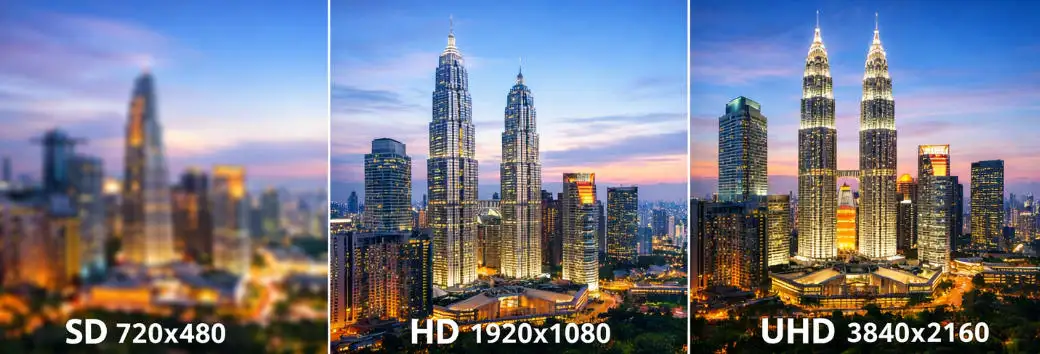
When people compare display screens, resolution is usually one of the first things they notice. UHD, HD, and SD are not just technical labels; they directly affect how clear text looks, how detailed images appear, and how professional your content feels on screen. In the source article, UHD is described as 3840×2160, HD as the familiar 1080p class, and SD as the older standard-definition level around 720×480. For today’s digital signage and LED display projects, resolution is more than a number on a spec sheet. A screen with better resolution can show sharper product images, cleaner fonts, and smoother motion, which is especially important in commercial environments where viewers may be standing close to the display or only passing by for a few seconds. What Do UHD, HD, and SD Mean? SD, or Standard Definition, is the oldest of the three formats and is generally associated with lower pixel counts and weaker image detail. It may still work in basic or legacy applications, but it is no longer ideal for modern advertising or premium visual presentation. HD, or High Definition, is the middle ground and remains the most practical choice for many business displays. It delivers noticeably better clarity than SD, while still keeping hardware and content delivery requirements more manageable than UHD. In the source article, HD is presented as the most common everyday option for commercial screens because it balances image quality and efficiency. UHD, or Ultra High Definition, is the highest of the three and is commonly used when visual detail matters most. With its much higher pixel count, UHD is better suited for premium advertising, large-format viewing, and content that needs to look vivid and refined from a distance. How the Three Formats Compare in Real Use The practical difference between SD, HD, and UHD becomes ...
Learn More
LED Solutions for Concert Tours and Touring AV Companies
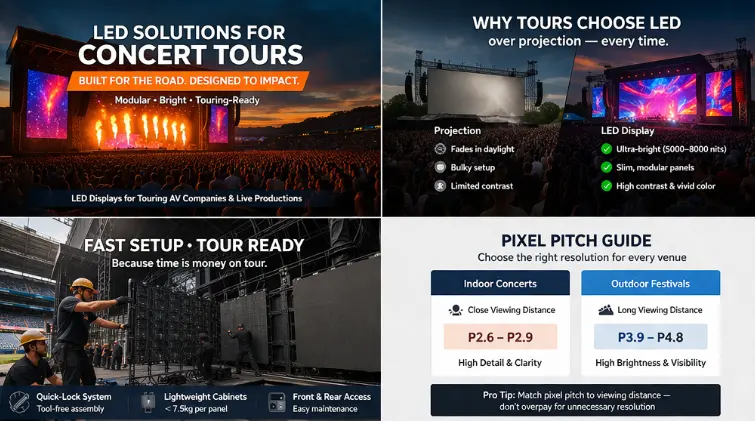
Introduction: Life on Tour Isn’t Easy—Your LED System Should Be If you’ve ever worked on a concert tour, you already know—nothing about it is static. One night you’re in a packed indoor arena, the next you’re dealing with wind, dust, and unpredictable weather at an outdoor festival. Everything moves fast. Load in, set up, rehearse, perform, tear down, and do it all over again in a new city. In that kind of environment, your LED display system can’t just “look good.” It has to work flawlessly, every single time. That’s why more touring AV companies are moving toward modular, rental-focused LED solutions—systems designed not just for performance, but for life on the road. Manufacturers like LEDcheer have built their products around this reality, focusing on durability, speed, and flexibility rather than just specs on paper. Why LED Has Become the Backbone of Concert Touring A few years ago, projection still had its place. Today, LED has taken over—and for good reason. It Performs Anywhere, Anytime Imagine trying to run visuals at an outdoor festival in full daylight. Projection struggles. LED doesn’t. Modern LED displays deliver the kind of brightness and contrast that cuts through ambient light effortlessly. Whether it’s a daytime set or a night show with heavy lighting effects, your visuals stay sharp and vibrant. And if your show is being filmed or livestreamed? High refresh rates mean no flicker, no weird camera artifacts—just clean, professional output. It Adapts to Creative Vision Every tour has its own identity. Some want massive flat walls. Others want curved stages, immersive tunnels, or completely custom shapes. This is where modular LED systems really shine. With the right panels, your team can build: LEDcheer’s rental systems, for example, are built with flexibility in mind—so designers aren’t limited by the hardware. Speed Matters More ...
Learn More
