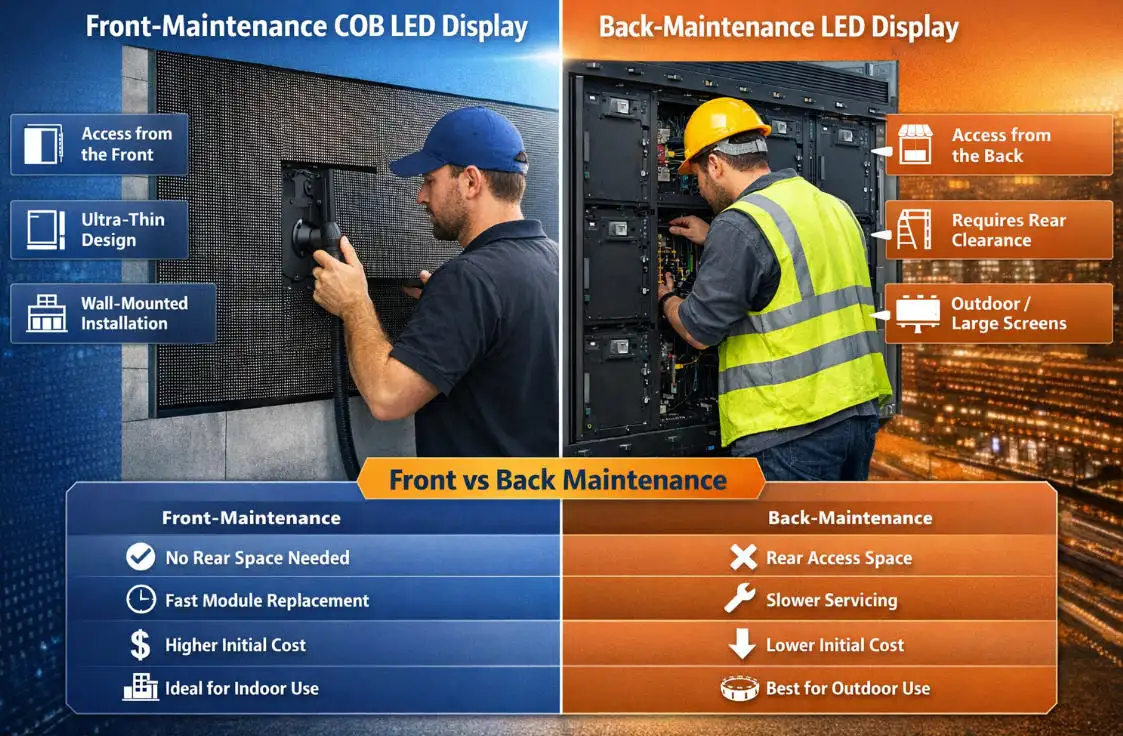
COB LED Front-Maintenance vs Back-Maintenance: Key Differences Installers Should Know
As COB (Chip-on-Board) LED display technology continues to gain traction in high-end visual applications—such as control rooms, broadcast studios, conference centers, and retail displays—installation and maintenance methods have become an important decision factor for integrators and contractors. Two major service architectures dominate the LED display industry: front-maintenance and back-maintenance systems. While both designs allow technicians to access internal components for repair or replacement, they differ significantly in installation flexibility, maintenance efficiency, structural requirements, and long-term operating costs. For installers planning a COB LED display project, understanding these differences can help ensure smoother installations, reduced downtime, and optimized total cost of ownership. This guide explains how front-maintenance and back-maintenance COB LED displays work, compares their advantages and limitations, and highlights the key considerations installers should evaluate before choosing a system. Understanding COB LED Display Technology COB (Chip-on-Board) technology directly encapsulates multiple LED chips onto a PCB substrate, creating a protective, integrated light-emitting surface. Compared with traditional SMD packaging, COB displays offer: The encapsulated structure also allows many modern COB panels to support front-service designs, enabling module replacement from the viewing side of the screen. This capability is particularly valuable for space-constrained installations, where maintaining rear service access is impractical. What Is Front-Maintenance in COB LED Displays? A front-maintenance LED display allows technicians to service key components—including LED modules, receiving cards, and power supplies—from the front side of the screen. Modules are typically fixed using magnetic mounts, quick-release locks, or suction-tool access points, enabling a technician to remove a panel within minutes. Key Characteristics In many designs, installers can mount the display directly against a wall or architectural structure because maintenance does not require rear clearance. Advantages for Installers 1. Space-Saving Installation Front-service displays eliminate the need for a maintenance channel behind the screen, which is especially beneficial for wall-mounted installations in ...
Learn More