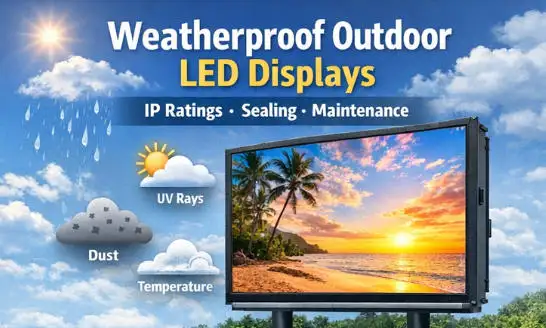
Weatherproofing Outdoor LED Displays: IP Ratings, Sealing Technologies, and Long-Term Maintenance
Outdoor LED displays operate in some of the harshest environments—exposed to rain, dust, UV radiation, humidity, and temperature fluctuations. Without proper weatherproofing, even high-end LED screens can suffer from corrosion, short circuits, brightness degradation, and premature failure. For manufacturers and buyers alike, understanding IP ratings, sealing structures, and long-term care strategies is critical to ensuring durability, reliability, and ROI. Leading manufacturers such as LEDCHEER incorporate advanced waterproofing and structural engineering to meet global outdoor application demands. This article provides a comprehensive technical guide to help you select, install, and maintain weatherproof outdoor LED displays effectively. 1. Understanding IP Ratings in Outdoor LED Displays 1.1 What is an IP Rating? IP (Ingress Protection) rating is an international standard (IEC 60529) used to define how well an enclosure protects against solid particles and liquids. An IP rating consists of two digits: For example: This makes IP65 the baseline standard for outdoor LED displays. 1.2 Common IP Ratings for LED Displays Rating Protection Level Application IP54 Splash & partial dust protection Semi-outdoor IP65 Dust-tight + rain/water jets Standard outdoor IP66 Strong water jets Harsh weather zones IP67 Temporary immersion Flood-prone areas IP68 Continuous immersion Extreme environments Outdoor LED displays typically require IP65 or higher to ensure stable performance. 1.3 Why IP Ratings Matter A higher IP rating directly impacts: Without adequate protection, dust and moisture can penetrate the cabinet, leading to electrical failure and corrosion over time. 2. Core Weatherproofing Technologies Modern outdoor LED displays rely on multiple layers of protection—not just IP rating labels. 2.1 Sealed Cabinet Design The cabinet is the first line of defense. High-quality outdoor displays use: Sealed cabinets prevent environmental ingress while maintaining structural integrity. 2.2 Gaskets and Sealants Gaskets play a critical role in sealing gaps between components. Key materials include: These materials: 2.3 Sealed Connectors and ...
Learn More