


2026-03-21



Outdoor LED displays operate in some of the harshest environments—exposed to rain, dust, UV radiation, humidity, and temperature fluctuations. Without proper weatherproofing, even high-end LED screens can suffer from corrosion, short circuits, brightness degradation, and premature failure.
For manufacturers and buyers alike, understanding IP ratings, sealing structures, and long-term care strategies is critical to ensuring durability, reliability, and ROI. Leading manufacturers such as LEDCHEER incorporate advanced waterproofing and structural engineering to meet global outdoor application demands.
This article provides a comprehensive technical guide to help you select, install, and maintain weatherproof outdoor LED displays effectively.
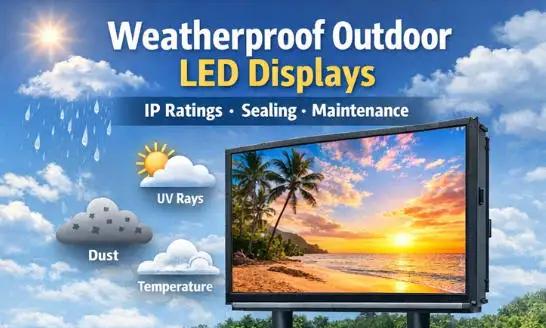
1. Understanding IP Ratings in Outdoor LED Displays
1.1 What is an IP Rating?
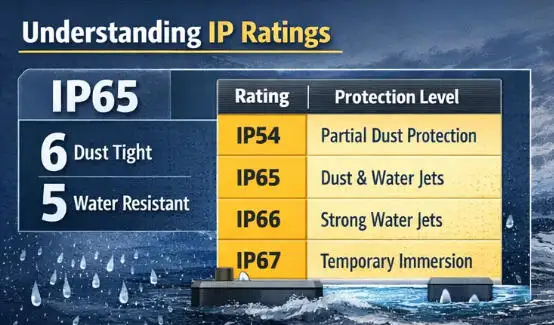
IP (Ingress Protection) rating is an international standard (IEC 60529) used to define how well an enclosure protects against solid particles and liquids.
An IP rating consists of two digits:
- First digit (0–6): Protection against solids (dust)
- Second digit (0–8): Protection against liquids (water)
For example:
- IP65
- 6 = completely dust-tight
- 5 = protected against water jets
This makes IP65 the baseline standard for outdoor LED displays.
1.2 Common IP Ratings for LED Displays
| Rating | Protection Level | Application |
|---|---|---|
| IP54 | Splash & partial dust protection | Semi-outdoor |
| IP65 | Dust-tight + rain/water jets | Standard outdoor |
| IP66 | Strong water jets | Harsh weather zones |
| IP67 | Temporary immersion | Flood-prone areas |
| IP68 | Continuous immersion | Extreme environments |
Outdoor LED displays typically require IP65 or higher to ensure stable performance.
1.3 Why IP Ratings Matter
A higher IP rating directly impacts:
- Component protection (LED chips, PCB, power supply)
- Operational stability
- Maintenance frequency
- Service lifespan
Without adequate protection, dust and moisture can penetrate the cabinet, leading to electrical failure and corrosion over time.
2. Core Weatherproofing Technologies
Modern outdoor LED displays rely on multiple layers of protection—not just IP rating labels.
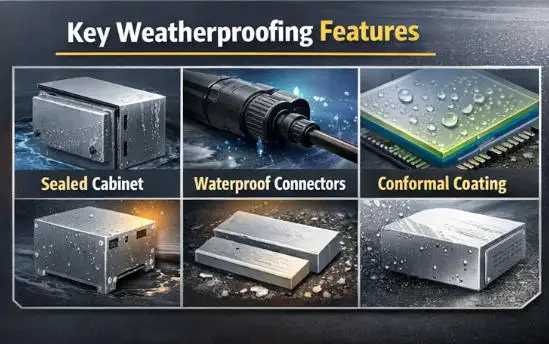
2.1 Sealed Cabinet Design
The cabinet is the first line of defense. High-quality outdoor displays use:
- Fully enclosed structures
- Waterproof rear covers
- Integrated drainage design
Sealed cabinets prevent environmental ingress while maintaining structural integrity.
2.2 Gaskets and Sealants
Gaskets play a critical role in sealing gaps between components.
Key materials include:
- Silicone rubber
- EPDM rubber
- Polymer sealants
These materials:
- Maintain elasticity under temperature changes
- Prevent water and dust penetration
- Ensure long-term sealing performance
2.3 Sealed Connectors and Interfaces
Common failure points include:
- Power connectors
- Signal ports (HDMI, Ethernet)
Outdoor LED displays must use:
- Waterproof aviation plugs
- Rubber-sealed connectors
- Protective cable glands
Unsealed connectors can compromise the entire system—even if the cabinet itself is sealed.
2.4 Conformal Coating Technology
Advanced manufacturers apply conformal coatings to:
- PCB boards
- Driver ICs
- LED modules
Benefits:
- Moisture resistance
- Corrosion protection
- Extended electronic lifespan
This is especially important in high-humidity or coastal environments.
2.5 Anti-Corrosion and Structural Materials
Outdoor LED displays often use:
- Aluminum alloy cabinets
- Stainless steel frames
- Powder-coated surfaces
These materials provide:
- UV resistance
- Anti-oxidation protection
- Structural durability in extreme climates
2.6 Ventilation and Heat Balance
A fully sealed system can trap heat. Therefore, modern designs include:
- Breathable waterproof valves (e.g., Gore vents)
- Smart airflow channels
- Heat dissipation systems
This ensures thermal stability without compromising waterproofing.
3. Real-World Weather Challenges and Solutions
3.1 Rain and Humidity
Solution:
- IP65+ protection
- Waterproof modules
- Moisture-resistant coatings
Even with IP65, long-term humidity exposure requires internal protection layers to avoid corrosion.
3.2 Dust and Sand
Dust accumulation can:
- Block ventilation
- Damage circuits
- Reduce brightness
Solution:
- Dust-tight enclosure (IP6X)
- Periodic cleaning
3.3 Temperature Fluctuations
Extreme heat can cause:
- LED degradation
- Power supply failure
Solution:
- Thermal management systems
- High-quality materials
3.4 Coastal and Salt Environments
Salt accelerates corrosion.
Solution:
- Anti-corrosion coatings
- Sealed electronics
- Stainless steel components
4. Long-Term Maintenance and Care
Even the best weatherproof design requires proper maintenance.
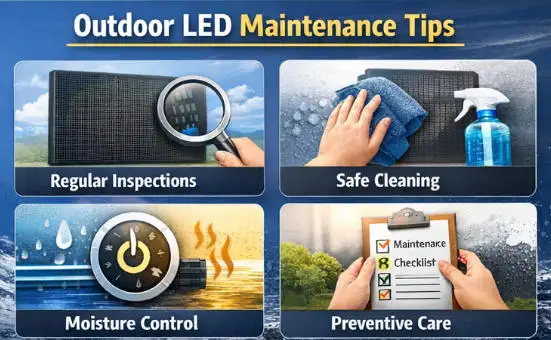
4.1 Routine Inspection Checklist
- Check gasket integrity
- Inspect connectors for wear
- Ensure cabinet sealing is intact
- Monitor system performance remotely
4.2 Cleaning Practices
- Use soft cloth + non-corrosive cleaners
- Avoid high-pressure water (unless rated)
- Clean dust regularly to prevent buildup
4.3 Moisture Management
- Power on periodically to remove internal moisture
- Use ventilation systems when needed
- Avoid prolonged shutdown in humid environments
4.4 Preventive Maintenance Strategy
- Scheduled inspections (quarterly or biannual)
- Remote diagnostics systems
- Replacement of aging seals
Proper maintenance significantly reduces downtime and extends service life.
5. Choosing the Right Weatherproof LED Display
When selecting an outdoor LED display, consider:
5.1 Key Technical Factors
- IP rating (minimum IP65)
- Cabinet material
- Sealing technology
- Heat dissipation design
- Maintenance accessibility (front/rear service)
5.2 Manufacturer Capabilities
Reliable manufacturers like LEDCHEER offer:
- OEM/ODM customization
- Advanced waterproof engineering
- Proven outdoor project experience
- Strict quality control
5.3 Application-Based Recommendations
| Application | Recommended IP Level |
|---|---|
| Urban billboards | IP65 |
| Coastal areas | IP66–IP67 |
| Heavy rain regions | IP66+ |
| Flood-prone zones | IP67 |
Weatherproofing is not just about meeting an IP rating—it is a comprehensive engineering system involving sealing design, material science, thermal management, and long-term maintenance.
An outdoor LED display with proper weatherproofing will deliver:
- Stable performance
- Reduced maintenance costs
- Extended lifespan
- Higher return on investment
By combining IP-rated protection, advanced sealing technologies, and proactive care, businesses can ensure reliable operation in any outdoor environment.
