


2026-08-20



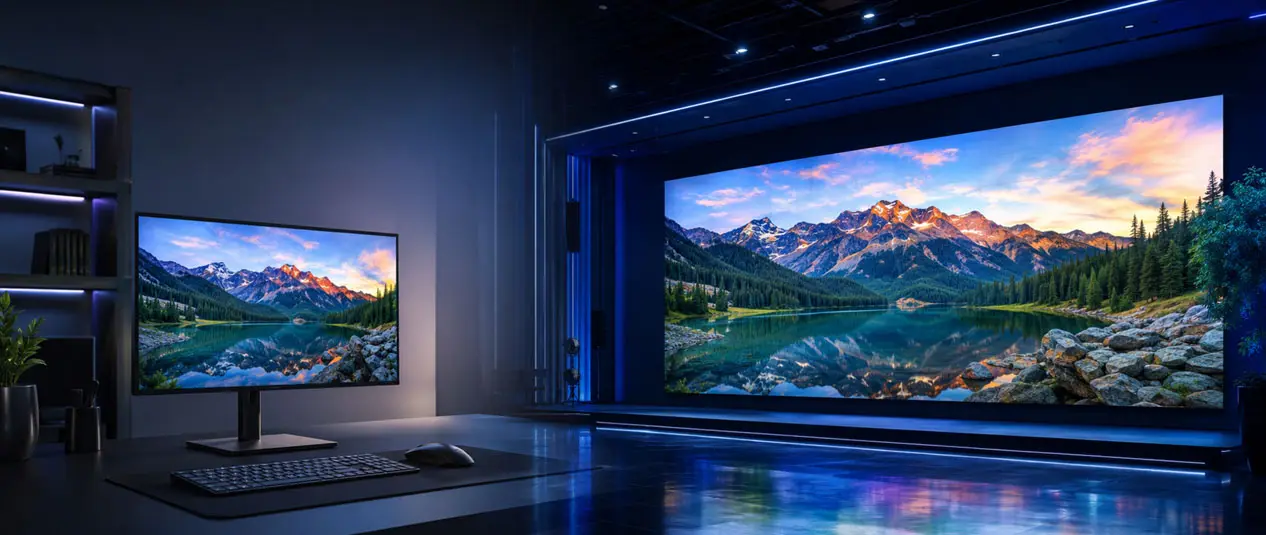
IPS and LED displays are commonly compared when selecting screens for conference rooms, retail stores, control centers, exhibitions and entertainment venues. However, these terms do not describe the same type of technology.
IPS is a type of LCD panel technology, while a direct-view LED display creates images using individual light-emitting diodes. Understanding this distinction helps buyers select the right screen based on size, brightness, viewing distance, installation environment and maintenance requirements.
What Is an IPS Display?
IPS stands for In-Plane Switching. It is a type of liquid crystal display panel designed to improve color consistency and viewing angles.
An IPS display does not produce light directly through the liquid crystals. It normally uses an LED backlight behind the LCD panel. The liquid crystal layer controls how much backlight passes through each pixel to create the image.
IPS panels are commonly used in:
- Desktop monitors
- Laptops
- Televisions
- Design workstations
- Medical monitors
- Small meeting-room displays
- Digital signage screens
The main strengths of IPS include wide viewing angles, stable colors and sharp images at close viewing distances.
What Is a Direct-View LED Display?
A direct-view LED display uses red, green and blue light-emitting diodes to produce the image. Unlike an IPS LCD panel, it does not require a separate backlight.
LED modules are installed inside cabinets, and multiple cabinets are combined to create a screen of almost any required size. This modular structure makes LED displays suitable for large conference rooms, stages, retail spaces, control centers, outdoor advertising and architectural installations.
Fine-pitch products such as the LEDCHEER Ultra HD Fine Pixel Pitch LED Display are designed for indoor applications that require high resolution and closer viewing.
IPS vs LED Display: Main Differences
| Feature | IPS Display | Direct-View LED Display |
|---|---|---|
| Display technology | LCD panel with LED backlight | Self-emitting RGB LEDs |
| Typical screen size | Small to medium | Medium to extremely large |
| Panel seams | Visible when multiple screens are combined | Nearly seamless modular surface |
| Brightness | Suitable for controlled indoor lighting | Indoor and high-brightness outdoor options |
| Viewing distance | Excellent for close viewing | Depends on pixel pitch |
| Viewing angle | Wide and consistent | Wide, depending on LED package |
| Installation shape | Usually fixed rectangular format | Custom sizes, ratios and shapes |
| Maintenance | Complete panel may require replacement | Individual modules can be serviced |
| Outdoor use | Limited unless specially protected | Outdoor-rated models available |
| Initial investment | Lower for smaller screens | More economical at large sizes |
Image Quality and Resolution
IPS displays offer high pixel density because the pixels are closely packed within a fixed-size panel. This makes them suitable for desktop work, detailed graphics and applications where users sit close to the screen.
Direct-view LED image quality depends heavily on pixel pitch. Pixel pitch is the distance between adjacent LED pixels. A smaller pitch provides greater pixel density and a shorter suitable viewing distance.
For example:
- P0.9–P1.5 is suitable for close-viewing premium indoor displays.
- P1.5–P2.5 works well in meeting rooms and auditoriums.
- P2.6–P3.9 is commonly used for indoor stages and exhibitions.
- P4–P10 is often selected for outdoor screens and longer viewing distances.
A direct-view LED screen can provide Full HD or 4K resolution, but the physical dimensions must be planned according to the selected pixel pitch.
Brightness and Ambient Light Performance
IPS monitors and televisions normally perform well in offices, classrooms and controlled indoor environments. However, reflections and strong ambient light can reduce visibility.
Direct-view LED displays can be produced with much higher brightness. This makes them suitable for shopping centers, glass-fronted retail spaces, outdoor events, stadiums and roadside advertising.
Brightness should still match the installation environment. Excessive brightness in a dark meeting room can cause discomfort and reduce perceived image quality. Professional LED systems allow brightness to be adjusted for different lighting conditions.
Contrast and Black Performance
IPS displays use a backlight, so a small amount of light may pass through when displaying black content. This can make blacks appear dark gray in low-light environments.
Direct-view LED pixels can reduce or stop their light output when displaying black. This can create strong contrast, particularly when the screen uses high-quality driver ICs, calibration and low-reflection surface treatment.
COB packaging can also provide a smoother, darker display surface. The LEDCHEER COB LED Display is designed for fine-pitch commercial applications requiring enhanced protection and detailed images.
Screen Size and Seamless Installation
IPS screens are manufactured in fixed sizes. Building a larger video wall requires combining multiple LCD panels, which creates visible bezels between images.
Direct-view LED displays use modules and cabinets to build a continuous screen. Properly installed cabinets create a nearly seamless visual surface without the thick borders associated with tiled LCD panels.
LED displays can also be configured in custom dimensions and aspect ratios. This provides more design flexibility for:
- Wide control-room walls
- Large conference displays
- Stage backdrops
- Retail feature walls
- Curved installations
- Vertical advertising screens
- Creative architectural structures
For standard meeting and presentation environments, the LEDCHEER All-In-One LED Display provides integrated Full HD options in several screen sizes.
Viewing Angle
IPS technology is known for maintaining relatively consistent colors when viewed from the side. This is one reason it is frequently used for professional monitors and shared workspaces.
Direct-view LED displays can also provide wide viewing angles, but actual performance depends on LED packaging, module mask design and installation quality. A well-designed LED screen can deliver consistent visibility to large audiences across conference rooms, auditoriums and event venues.
Durability and Maintenance
An IPS display is usually serviced or replaced as a complete panel. If one screen in an LCD video wall fails, the replacement panel may also show slight differences in color or brightness compared with older units.
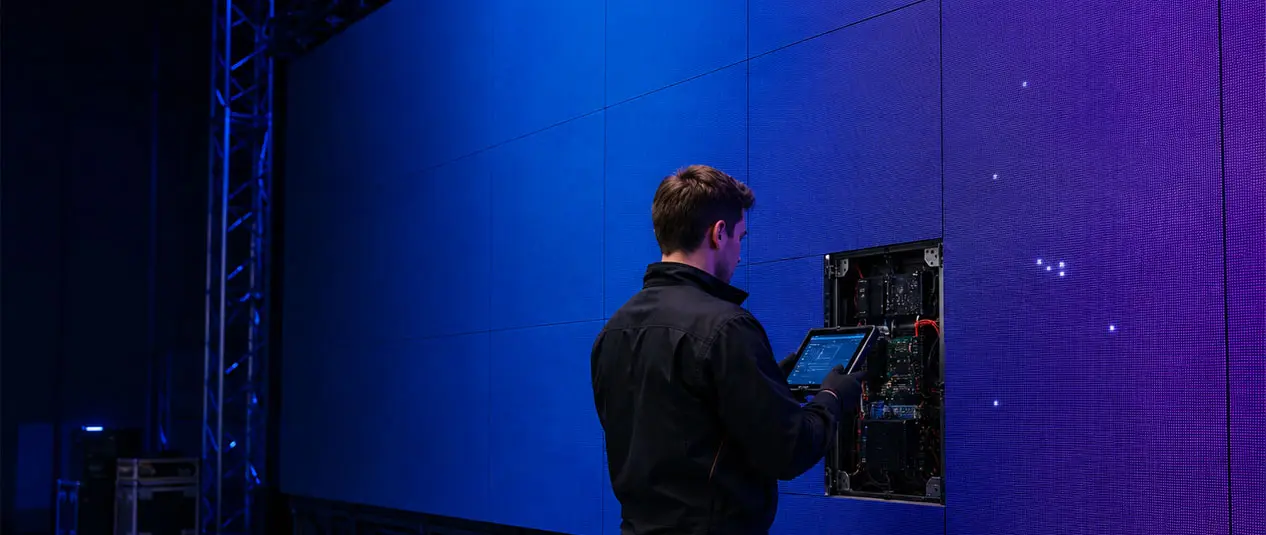
Direct-view LED displays are modular. Technicians can replace individual LED modules, power supplies, receiving cards or other components without replacing the entire display.
Front-service LED cabinets are particularly useful where rear maintenance space is limited. Modular maintenance can reduce downtime for large commercial and event installations.
Energy Consumption
Energy use depends on brightness, screen size, content and product design.
A single IPS monitor or television normally consumes less total power than a large LED wall because it has a much smaller display area. However, comparing power consumption only by individual screen is misleading when the required installation sizes are different.
For large displays, buyers should compare:
- Average power consumption per square meter
- Maximum power consumption
- Required operating brightness
- Heat dissipation
- Daily operating hours
- Standby power
- Automatic brightness controls
Some modern COB LED screens are designed to improve energy efficiency and reduce operating temperature.
Cost Comparison
IPS screens are generally more affordable for small and medium installations. A single monitor or television is practical when the required display size is below approximately 86 inches.
As the required screen becomes larger, combining multiple IPS panels increases the cost of mounting structures, controllers, cabling and maintenance. Visible bezels also remain between panels.
Direct-view LED displays require a higher initial investment, especially for fine pixel pitches. However, their scalable size, seamless appearance and modular maintenance can provide better long-term value for large commercial projects.
Which Display Is Better for Your Application?
Choose an IPS Display When:
- The screen size is relatively small.
- Users sit very close to the display.
- High pixel density is required for detailed desktop work.
- The installation is indoors with controlled lighting.
- Budget is the primary consideration.
- A standard monitor or television format is sufficient.
Choose a Direct-View LED Display When:
- A large or custom-sized screen is required.
- Visible seams are unacceptable.
- High brightness is needed.
- The display will operate outdoors.
- Modules must be replaceable onsite.
- The installation requires a curved or creative shape.
- The screen will be viewed by a large audience.
- Long-term commercial operation is required.
IPS vs LED Display for Conference Rooms
Small meeting rooms may only require a single IPS LCD screen. It provides high resolution, simple connectivity and a lower purchase cost.
For larger boardrooms, auditoriums and multipurpose spaces, a fine-pitch LED display offers a larger seamless image. Presentations, remote participants and shared content can be displayed without bezel lines interrupting the image.
The final choice should consider the room depth, nearest viewing distance, required screen size, lighting and installation access.
IPS vs LED Display for Retail and Advertising
IPS signage screens work well for menu boards, product information and smaller indoor advertising installations.
Direct-view LED displays are better suited to large retail feature walls, shop windows, shopping centers and outdoor advertising. Their brightness and scalable dimensions help content remain visible across longer viewing distances.
For non-standard spaces, customized LED displays can be designed around architectural dimensions and creative concepts.
Frequently Asked Questions
Is IPS better than LED?
Neither technology is universally better. IPS is practical for smaller close-viewing screens, while direct-view LED is better for large, bright, seamless and customized installations.
Is an IPS display also an LED display?
An IPS screen often uses LEDs as its backlight, but it remains an LCD display. A direct-view LED screen uses the LEDs themselves to create the visible image.
Which display has better image quality?
IPS usually offers higher pixel density at smaller sizes. Fine-pitch LED displays can deliver excellent large-format image quality when the pixel pitch and viewing distance are selected correctly.
Can direct-view LED replace an IPS video wall?
Yes. Direct-view LED eliminates visible LCD bezel lines and allows more flexible dimensions. The initial investment may be higher, but modular maintenance and seamless images can provide long-term advantages.
Which option is better for outdoor use?
Direct-view LED is generally the better choice. Outdoor LED screens can provide high brightness, weather protection and long-distance visibility, while standard IPS screens are intended mainly for indoor use.
Conclusion
The IPS vs LED display decision depends primarily on screen size, viewing distance, brightness, installation environment and maintenance requirements.
IPS displays remain a practical choice for monitors, televisions and smaller indoor screens. Direct-view LED displays offer greater brightness, scalable dimensions, seamless installation and modular servicing for large commercial, event and outdoor applications.
Before selecting a display, define the installation dimensions, nearest viewing distance, content resolution and operating environment. Contact LEDCHEER for a direct-view LED configuration based on your project requirements.
