


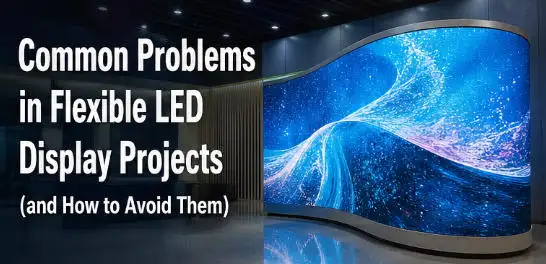
Common Problems in Flexible LED Display Projects (and How to Avoid Them)
Flexible LED displays have become a popular choice for brands, exhibition designers, retail spaces, and creative installations. Their ability to bend, curve, and adapt to unique structures makes them ideal for projects that need a strong visual impact. But while the final result can look impressive, the process is not always simple. Many flexible LED display problems appear before the screen is even powered on. Others show up after installation, when the project is already live and costly to fix. From planning mistakes to maintenance issues, a curved LED display project can fail for very ordinary reasons if the details are not handled correctly. In this article, we will look at the most common LED screen installation issues, the typical LED display project mistakes, and the best ways to avoid them. Whether you are planning a large commercial installation or a smaller custom display, understanding these risks can save time, money, and frustration. Why Flexible LED Display Projects Need Special Attention A flexible LED display is not just a standard LED screen with a different shape. It requires careful planning in structure, module layout, power design, signal control, heat management, and installation accuracy. Because the screen is often curved, waved, cylindrical, or irregularly shaped, small errors can quickly become visible. This is why flexible LED display problems are often more difficult to solve than problems in a flat screen project. A tiny gap, uneven curve, or weak fixing point may not seem serious during setup, but it can affect viewing quality, stability, and long-term performance. 1. Wrong Project Planning Before Installation One of the most common LED display project mistakes is starting installation without a complete technical plan. Some teams focus only on the visual design and ignore the real requirements of the structure, power supply, control system, and maintenance ...
Learn More
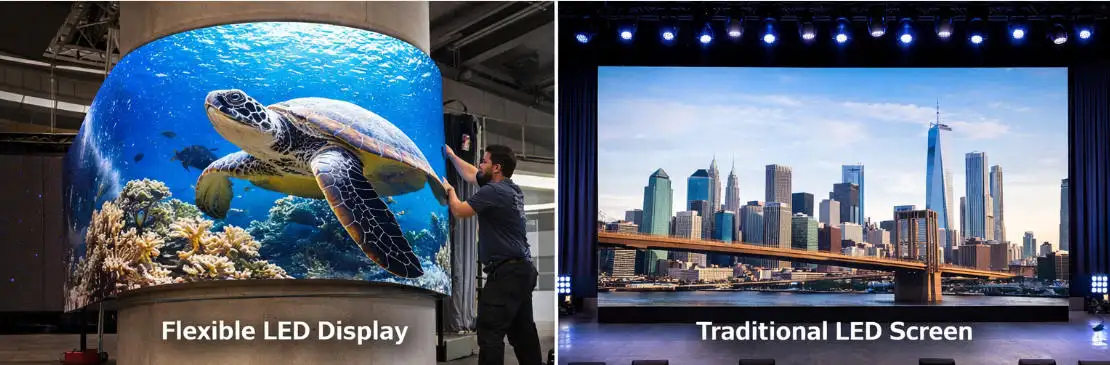
Flexible LED Display vs Traditional LED Screen: Which One Should You Choose?
Ever find yourself staring at that colossal LED screen and thinking, "Sure, it's eye-catching, but what else can it do?" You're not the only one who's wondered that. The LED screen scene is undergoing a subtle transformation. It's no longer just about the plain old flat panels—it's all about going the extra mile. Now, when people shop for screens, they're torn between opting for a flexible LED wonder or sticking with the classic LED variety. It's not as cut and dried as it used to be. I've had the pleasure of dealing with both kinds in various endeavors—from setting up shop in retail spaces to creating event stages and even diving into some innovative architectural endeavors. Let me tell you, there's a role for each. But picking the wrong horse in this race can be a costly misstep. What is a Flexible LED Display? A flexible LED screen is precisely what the name implies: an LED panel constructed on a pliable, bendable base rather than on a stiff frame. Unlike their old-school counterparts, these displays can: This is where the debate between curved and flat LED screens truly kicks off. No longer are you stuck with just rectangular options. What is a Traditional (Rigid) LED Screen? A standard LED screen, also known as a rigid LED display, is constructed with sturdy enclosures—typically made of aluminum or steel. Here's the deal: Flexible LED Display vs Traditional LED Screen: Core Differences Structure and Design Flexibility Flexible LED display: Traditional LED screen: In cases where your project calls for columns, curves, or artistic flair, the clear winner is the flexible option. Installation Complexity Flexible LED display: Traditional LED screen: The truth is, while flexible displays look fantastic, they aren't as simple to set up as one might think. Visual Impact Flexible LED display: ...
Learn More
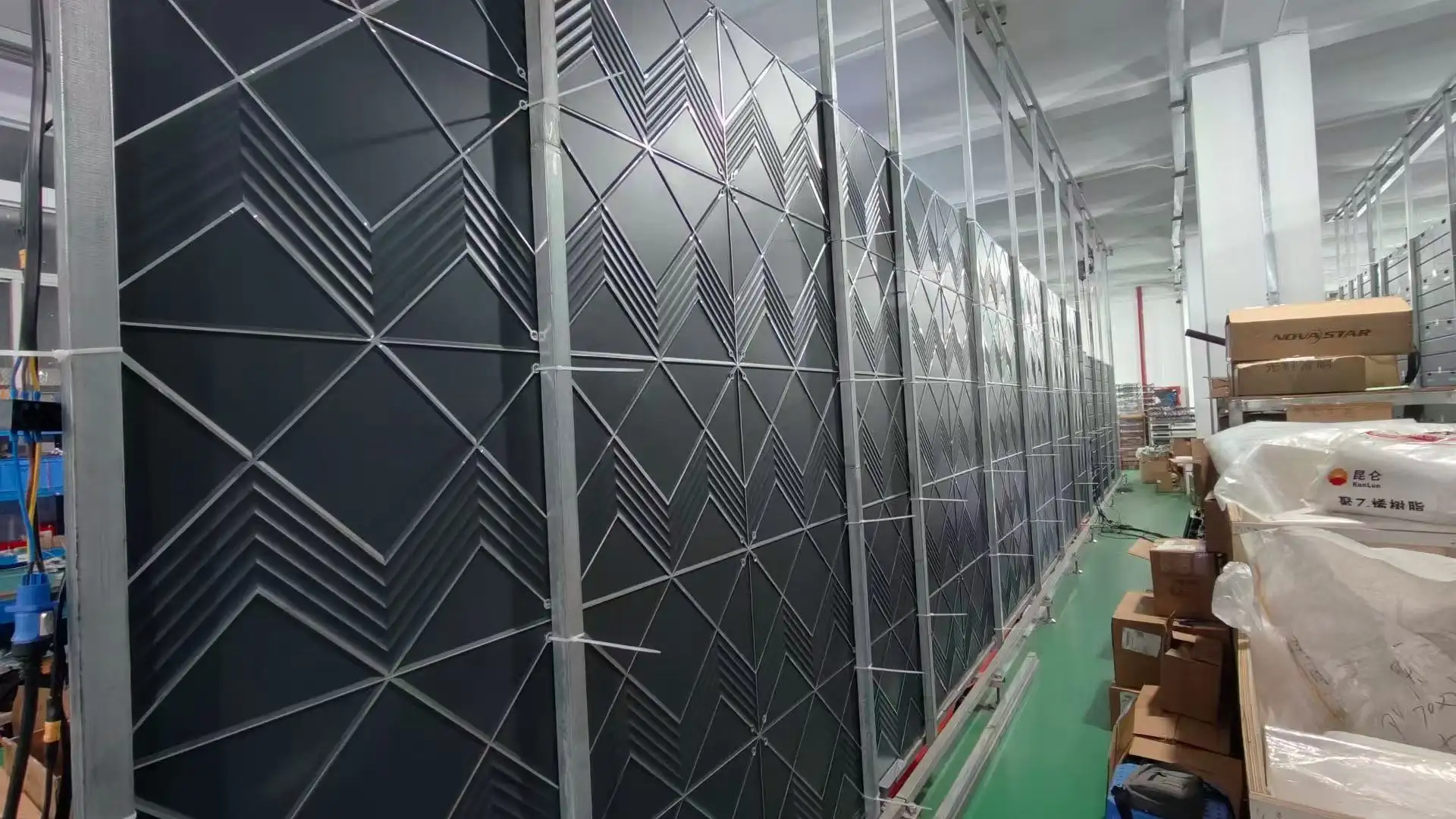
How to Choose a Flexible LED Display: A Practical Guide for Modern Projects
There’s a moment in almost every creative display project when a flat LED screen just isn’t enough. You need curves. Movement. Something that wraps around a column, flows across a wall, or becomes part of the architecture itself. That’s usually when people start searching for a flexible LED display, often without fully understanding what makes one solution work—and another fail six months later. I’ve seen projects where the screen looked stunning on day one and became a maintenance headache by month three. And I’ve seen others run flawlessly for years because the buyer made a few smart decisions early. This guide is about those decisions. Flexible LED Display Is Not About “Flexibility” Alone The biggest misconception is simple: people assume the more flexible the screen is, the better. That’s not how it works. A good flexible LED screen for custom installation needs to balance three things at the same time: Yes, it should bend—but it also needs to hold its shape, maintain pixel alignment, and survive transportation, installation, and daily use. Modern designs—especially those using flexible PCB materials and soft silicone bases—allow modules to bend significantly while still maintaining reliability. But the real question is: how controlled is that flexibility? Because uncontrolled flexibility leads to uneven surfaces, visible seams, and eventual failure. Where Flexible LED Displays Actually Make Sense Not every project needs a curved screen. But when it does, nothing else can replace it. The most common use cases today include: In these scenarios, buyers are often searching for terms like custom flexible LED display for retail, curved LED screen for stage design, or creative LED display solutions for commercial spaces. And the intention behind those searches is always the same:“I don’t want a screen. I want a visual experience.” The Technical Side Most Buyers Overlook Here’s where things ...
Learn More
