


2026-04-01



There’s a moment in almost every creative display project when a flat LED screen just isn’t enough.
You need curves. Movement. Something that wraps around a column, flows across a wall, or becomes part of the architecture itself. That’s usually when people start searching for a flexible LED display, often without fully understanding what makes one solution work—and another fail six months later.
I’ve seen projects where the screen looked stunning on day one and became a maintenance headache by month three. And I’ve seen others run flawlessly for years because the buyer made a few smart decisions early.
This guide is about those decisions.
Flexible LED Display Is Not About “Flexibility” Alone
The biggest misconception is simple: people assume the more flexible the screen is, the better.
That’s not how it works.
A good flexible LED screen for custom installation needs to balance three things at the same time:
- Structural stability
- Visual consistency
- Long-term durability
Yes, it should bend—but it also needs to hold its shape, maintain pixel alignment, and survive transportation, installation, and daily use.
Modern designs—especially those using flexible PCB materials and soft silicone bases—allow modules to bend significantly while still maintaining reliability. But the real question is: how controlled is that flexibility?
Because uncontrolled flexibility leads to uneven surfaces, visible seams, and eventual failure.
Where Flexible LED Displays Actually Make Sense
Not every project needs a curved screen. But when it does, nothing else can replace it.
The most common use cases today include:
- Retail flagship stores and brand experience spaces
- Exhibition booths and trade show installations
- Hotel lobbies and high-end commercial interiors
- Stage design and immersive event environments
- Creative architectural media facades
In these scenarios, buyers are often searching for terms like custom flexible LED display for retail, curved LED screen for stage design, or creative LED display solutions for commercial spaces.
And the intention behind those searches is always the same:
“I don’t want a screen. I want a visual experience.”
The Technical Side Most Buyers Overlook
Here’s where things get interesting. Most buyers still start with pixel pitch. It’s important—but it’s rarely the deciding factor in flexible LED projects.
1. Bending Capability (and Limits)
A reliable curved LED display solution should clearly define its bending range. Some high-quality modules can handle up to 120° curvature without damaging internal circuits.
But more importantly, they should survive repeated bending.
If a module performs well once but degrades after installation adjustments, it’s not suitable for real-world projects.
2. Module Weight and Installation Efficiency
Lightweight modules—typically under 200g—make a huge difference.
Not just in shipping, but in:
- Installation speed
- Structural load requirements
- On-site adjustments
For large-scale projects, this directly impacts labor costs and timelines. It’s one of those details that doesn’t show up in marketing brochures but matters a lot on-site.
3. Material Quality: The Hidden Backbone
Flexible LED modules are only as good as their materials.
High-quality designs usually include:
- Ultra-thin flexible PCBs (around 0.4–0.6mm)
- Flame-retardant components
- Silicone or soft rubber protective backing
These aren’t just technical specs—they determine whether your flexible LED display panel can handle heat, stress, and long-term operation.
4. Indoor vs Outdoor Flexibility
Many buyers assume flexibility is mainly for indoor use. That used to be true. Not anymore.
Today, outdoor flexible LED display solutions are becoming more common, especially for creative facades and public installations. But outdoor use introduces new challenges:
- Waterproofing (not just surface-level)
- Signal stability
- Power connection protection
- Temperature resistance
If these aren’t engineered properly, the “flexible” advantage disappears quickly in real environments.
5. Visual Performance Still Matters
Even in creative installations, performance can’t be ignored.
Look for:
- High refresh rates (3840Hz is becoming standard)
- Consistent brightness across curved surfaces
- Wide viewing angles
- Stable grayscale performance
Otherwise, you risk building a visually impressive structure that doesn’t actually display content well.
Customization Is Not a Bonus—It’s the Core
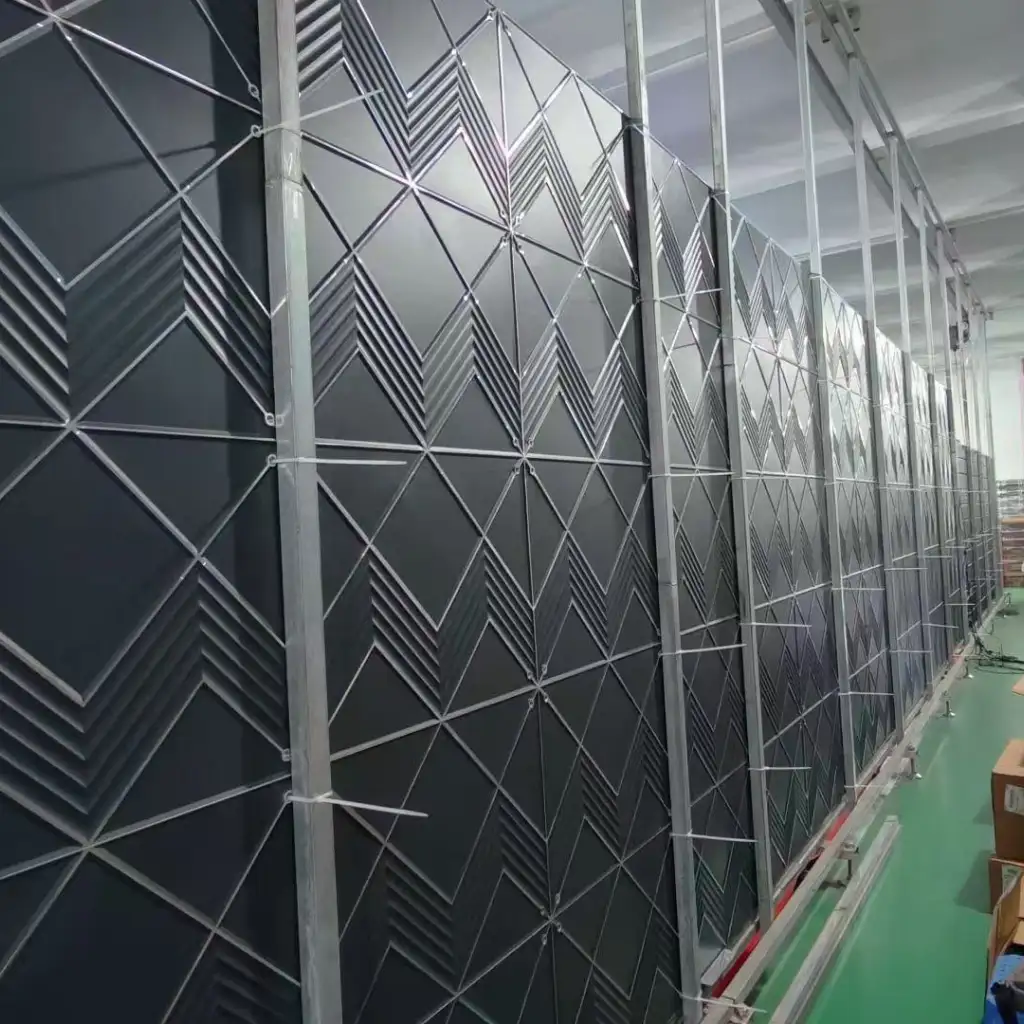
Here’s something many first-time buyers underestimate: Flexible LED displays are rarely off-the-shelf products. Most projects require some level of customization:
- Shape (cylindrical, wave, concave/convex)
- Size and module arrangement
- Resolution matching viewing distance
- Installation method
That’s why searches like flexible LED display manufacturer China, OEM flexible LED screen supplier, or custom curved LED display factory are so common. Because in reality, you’re not just buying a product—you’re building a solution.
A Quick Reality Check: What Actually Causes Problems Later
From experience, most issues don’t come from the LED itself. They come from poor decisions early on. Here are the common ones:
Choosing based on price alone
Cheap flexible modules often compromise on materials and durability.
Ignoring installation complexity
If the structure isn’t well planned, even a good screen becomes difficult to install.
Overlooking maintenance access
Creative designs are great—until you can’t replace a module easily.
Working with suppliers who lack project experience
Flexible LED projects require coordination, not just manufacturing.
Where Flexible LED Technology Is Heading
This is where things get exciting. Flexible LED displays are moving beyond “special installations” and becoming part of mainstream design thinking. We’re starting to see:
- Integration with architectural surfaces
- More seamless curved-to-flat transitions
- Lighter, thinner, and more durable modules
- Increased demand for immersive environments
In other words, the line between “display” and “structure” is disappearing. And that’s pushing manufacturers to evolve—not just in production, but in engineering support and customization capability.
Final Thought
If you’re evaluating a flexible LED display for commercial or creative projects, don’t start with specs alone. Start with the application. Then ask:
- Can this system handle the shape I need?
- Will it stay stable over time?
- Is it easy to install and maintain?
- Does the supplier understand real projects—not just products?
Because in the end, the best flexible LED display isn’t the one that bends the most. It’s the one that works—quietly, reliably, and exactly the way your project demands.
