


* THERE ARE 37 ARTICLES
What Affects the Lifespan of a Flexible LED Display?
- # flexible LED display lifespan
- # LED screen durability
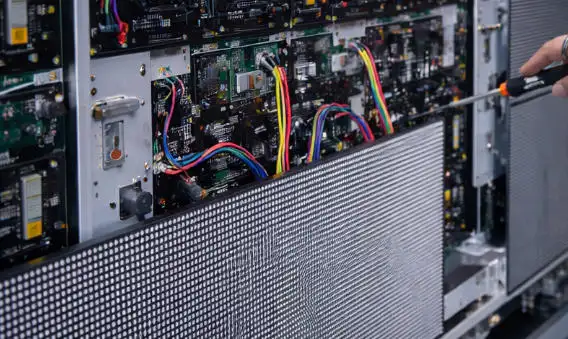
Flexible LED displays are designed to do more than look impressive. They need to stay bright, stable, and reliable over time, even when they are curved, installed in creative shapes, or used in demanding environments. That is why the real value of a display is not only in its visual performance on day one, but also in how long it can keep performing well. If you are comparing options for a commercial project, event installation, retail space, or creative stage design, understanding the factors behind flexible LED display lifespan can help you make a smarter choice. A well-built screen can deliver years of dependable use, while a poorly maintained one may lose brightness, develop dead pixels, or suffer from structural damage much sooner than expected. In this article, we will look at the main LED display reliability factors that affect service life, explain what reduces LED screen durability, and share practical LED display maintenance tips that can help you get a long life LED display solution for your business. Why Flexible LED Display Lifespan Matters A flexible LED display is often chosen for its design freedom. It can be curved, wrapped, installed on irregular surfaces, and adapted to different creative layouts. But that flexibility also means the product must balance thin materials, repeated bending stress, heat management, and stable electrical performance. When people ask about flexible LED display lifespan, they are really asking a larger question: how long will the screen stay bright, uniform, and safe to use without major repair costs? The answer depends on several technical and environmental factors. Some are related to product quality, while others depend on installation, operating habits, and maintenance. 1. LED Chip Quality The LED chip is one of the biggest factors affecting lifespan. High-quality chips usually provide better brightness stability, color consistency, ...
By Cheer
2026-04-23
2026-04-23
UHD vs HD vs SD: Which Resolution Is Best for Modern LED Displays?
- # HD vs SD
- # LED Displays
- # uhd vs hd
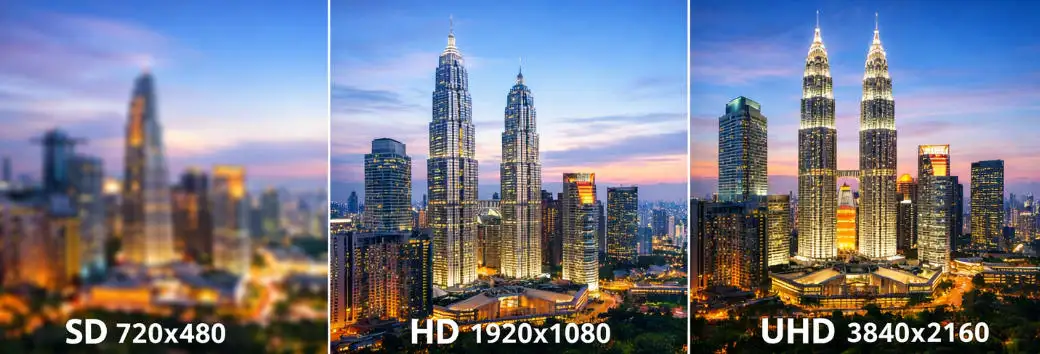
When people compare display screens, resolution is usually one of the first things they notice. UHD, HD, and SD are not just technical labels; they directly affect how clear text looks, how detailed images appear, and how professional your content feels on screen. In the source article, UHD is described as 3840×2160, HD as the familiar 1080p class, and SD as the older standard-definition level around 720×480. For today’s digital signage and LED display projects, resolution is more than a number on a spec sheet. A screen with better resolution can show sharper product images, cleaner fonts, and smoother motion, which is especially important in commercial environments where viewers may be standing close to the display or only passing by for a few seconds. What Do UHD, HD, and SD Mean? SD, or Standard Definition, is the oldest of the three formats and is generally associated with lower pixel counts and weaker image detail. It may still work in basic or legacy applications, but it is no longer ideal for modern advertising or premium visual presentation. HD, or High Definition, is the middle ground and remains the most practical choice for many business displays. It delivers noticeably better clarity than SD, while still keeping hardware and content delivery requirements more manageable than UHD. In the source article, HD is presented as the most common everyday option for commercial screens because it balances image quality and efficiency. UHD, or Ultra High Definition, is the highest of the three and is commonly used when visual detail matters most. With its much higher pixel count, UHD is better suited for premium advertising, large-format viewing, and content that needs to look vivid and refined from a distance. How the Three Formats Compare in Real Use The practical difference between SD, HD, and UHD becomes ...
By Cheer
2026-04-16
2026-04-16
Top Chinese Manufacturers of Indoor Commercial Digital Display Screens
- # top LED display manufacturers China
China has emerged as a key player in the global scene for producing indoor commercial digital screens. From bustling malls and grand exhibition halls to bustling airports, plush hotels, sleek corporate lobbies, and sophisticated command centers, Chinese firms are at the forefront, offering a broad array of LED display options that excel in brightness, pixel precision, reliability, and adaptable setup. When companies are on the hunt for indoor digital displays, China's mix of manufacturing prowess, bespoke offerings, cost-effectiveness, and technological finesse is hard to beat. However, with an abundance of suppliers out there, selecting the right producer is just as crucial as picking the perfect screen. Why China Domines the Indoor Digital Display Sector China's indoor commercial display scene has really kicked into high gear over the past ten years. A plethora of manufacturers have poured money into R&D, set up automated assembly lines, implemented rigorous quality control measures, and adopted global certification protocols. These efforts have turned Chinese factories into producers of LED displays that can satisfy the needs of both cozy retail spaces and massive commercial endeavors. And let's not forget the biggie—the ability to tailor make. Leading Chinese manufacturers can typically offer customized options, taking into account pixel density, screen dimensions, cabinet styling, brightness needs, refresh rates, and the installation environment. This level of specificity is crucial, especially for indoor venues, where image crispness, viewing range, and seamless fit with the decor are non-negotiable. What Makes a Top Indoor Commercial Display Manufacturer A top-notch manufacturer isn't just a place that puts together screens; it's a business that's got the engineering and the commercial know-how down pat. When it comes to indoor display tech, they've got a few key traits up their sleeve. First off, they've got to keep the quality game strong. Indoor displays are on the ...
By Cheer
2026-04-15
2026-04-15
Indoor vs Outdoor Flexible LED Displays: Key Differences and Selection Tips
- # indoor flexible LED display
- # Indoor vs Outdoor Flexible LED Displays
- # outdoor flexible LED screen
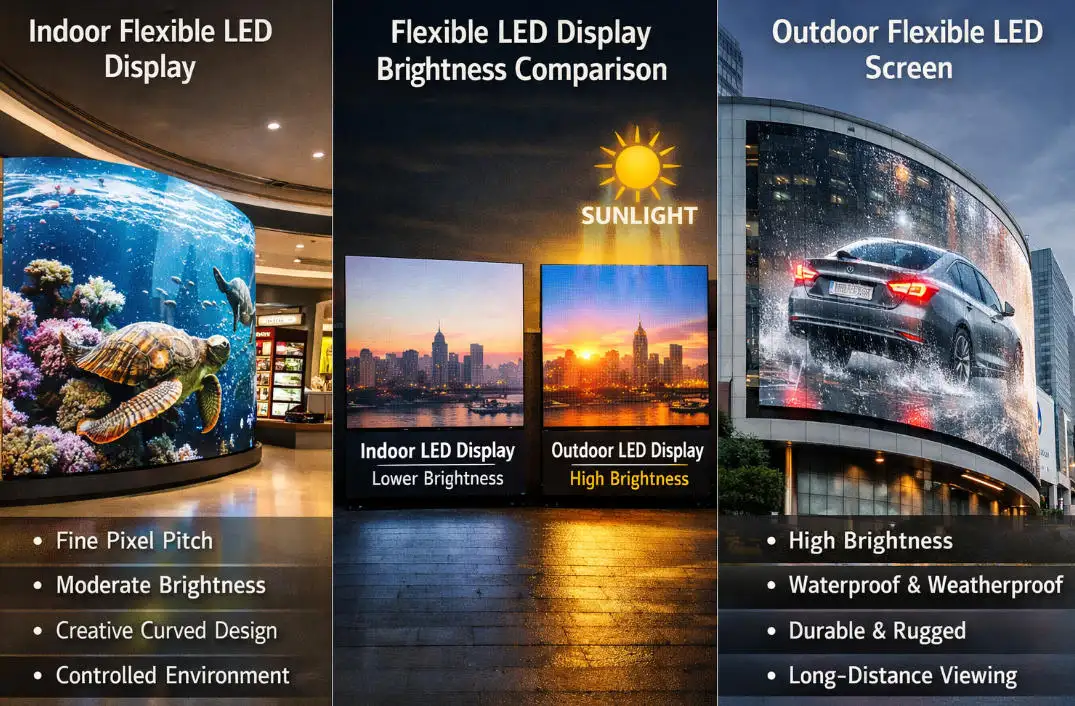
Flexible LED displays are changing the way brands design visual experiences. From curved retail walls to large-scale outdoor billboards, these screens offer creative freedom that traditional rigid panels simply cannot match. But here’s the reality most buyers overlook:An indoor flexible LED display and an outdoor flexible LED screen are built for completely different environments. Choosing the wrong type doesn’t just affect performance—it can shorten lifespan, increase maintenance costs, and ruin the visual effect of your project. This guide will walk you through the real differences and help you choose the right solution with confidence. A flexible LED display is a bendable LED screen built with soft PCB materials, allowing it to curve, wrap, or form creative shapes without damage. Unlike traditional flat screens, flexible LED displays are widely used in: Some modern solutions—like those from LEDCHEER—can even achieve up to 120° bending with ultra-thin modules, making them suitable for complex structures like columns or wave-shaped walls. Indoor Flexible LED Display: Designed for Visual Experience An indoor flexible LED display is optimized for controlled environments such as: Because these environments don’t face harsh weather or strong sunlight, indoor displays focus more on image quality and viewing comfort. Key Features: In indoor scenarios, viewers are often just a few meters away. That means clarity and detail matter more than extreme brightness. Outdoor Flexible LED Screen: Built for Performance An outdoor flexible LED screen is designed to survive real-world conditions—rain, dust, sunlight, and temperature changes. Typical applications include: Key Features: For example, some flexible LED modules use waterproof adhesives, sealed structures, and outdoor-rated cables to ensure stable operation even in harsh environments. Flexible LED Display Brightness Comparison One of the most critical differences is brightness. Indoor vs Outdoor: If brightness is mismatched: A proper flexible LED display brightness comparison is essential before making ...
By Cheer
2026-04-13
2026-04-13
Custom Flexible LED Displays: What OEM & ODM Buyers Need to Know
- # custom flexible LED display
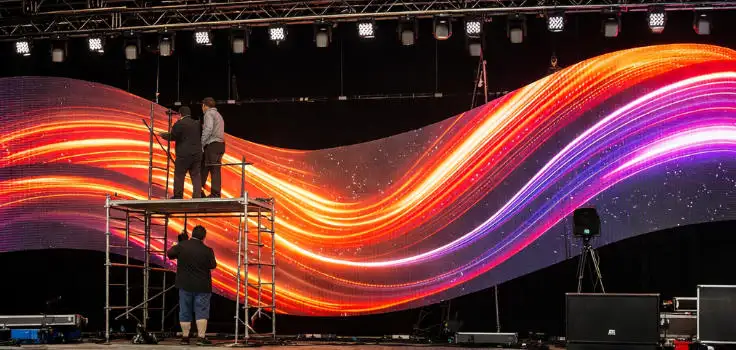
The market for digital display technology has changed fast. A few years ago, most buyers only cared about size, resolution, and brightness. Now, for brands, installers, event companies, and system integrators, the real question is different: can the display be customized to fit the project? That is exactly why the custom flexible LED display category is growing so quickly. These displays are no longer limited to flat, rigid boards. They can bend, curve, wrap, and adapt to creative installations that standard screens simply cannot handle. For buyers looking for a more tailored solution, the choice often comes down to working with an OEM flexible LED screen or an ODM LED display manufacturer that can deliver something built for a specific use case. If you are searching for a flexible LED display supplier China or comparing custom LED display solution options, this guide will help you understand what matters before you place an order. What Is a Custom Flexible LED Display? A custom flexible LED display is a display system designed to adapt to non-standard shapes, surfaces, or installation requirements. Unlike traditional rigid LED panels, flexible LED modules use a softer structure that allows the screen to curve or conform to a surface. This makes them useful in places where design matters just as much as performance. You might see them in retail stores, exhibition booths, stage backdrops, curved walls, control rooms, architectural installations, and immersive brand spaces. The word “custom” is important here. A custom flexible LED display is not a one-size-fits-all product. It may be adapted in terms of pixel pitch, curvature, cabinet size, module shape, installation method, brightness, refresh rate, or even the control system. Why Buyers Choose Flexible LED Displays There is a simple reason flexible LED technology keeps attracting attention: it creates visual impact. A flat ...
By Cheer
2026-04-12
2026-04-12
How Flexible LED Displays Are Used in Stage Design and Live Events
- # creative stage LED solutions
- # flexible LED screen for stage
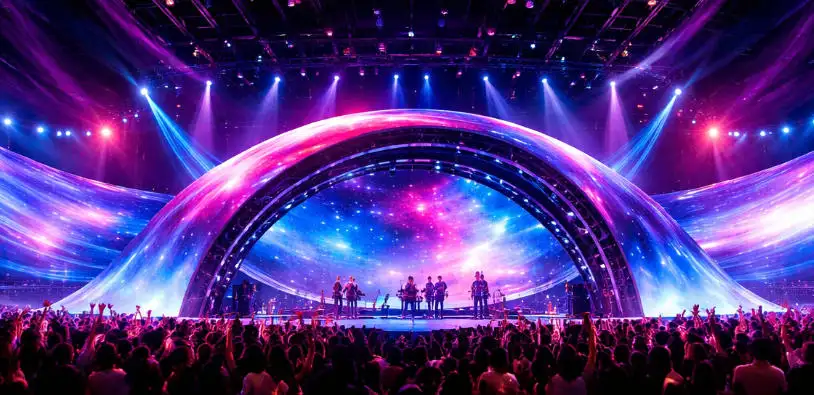
Stage design has changed a lot in the last few years. A live event is no longer just about lights, speakers, and a backdrop. Today, the screen itself is part of the show. It shapes the mood, supports the performance, and turns a simple stage into a visual experience. That is where the flexible LED screen for stage applications really stands out. Unlike traditional flat displays, flexible LED panels can bend, curve, wrap, and form custom structures. This gives designers far more freedom when building immersive stages for concerts, exhibitions, product launches, fashion shows, and corporate events. For event planners and production teams, the demand is clear: stronger visual impact, faster setup, and more creative stage LED solutions. Flexible LED technology answers all three. Why Flexible LED Displays Matter in Stage Design A stage is not just a platform. It is the center of attention. Every visual detail matters. The audience remembers how the stage looked, how the content moved, and how well the screen matched the performance. A curved LED display for events allows designers to break away from the standard rectangular screen. Instead of forcing a stage design to fit around a display, the display can now fit the design. That changes everything. Flexible LED panels can be installed on curved walls, columns, arches, waves, cylinders, and other custom shapes. This makes them especially useful in modern event production where visual storytelling is just as important as the performance itself. The Role of Flexible LED Screens in Concerts Concert stages rely heavily on visual energy. A good performance needs a screen that does more than show a static logo or video clip. It needs to move with the music and support the atmosphere. That is why the LED display for concert stage setup has become such a major ...
By Cheer
2026-04-09
2026-04-09
