


 Home » Blog » Comapny News »
2026-04-13



Flexible LED displays are changing the way brands design visual experiences. From curved retail walls to large-scale outdoor billboards, these screens offer creative freedom that traditional rigid panels simply cannot match.
But here’s the reality most buyers overlook:
An indoor flexible LED display and an outdoor flexible LED screen are built for completely different environments.
Choosing the wrong type doesn’t just affect performance—it can shorten lifespan, increase maintenance costs, and ruin the visual effect of your project.
This guide will walk you through the real differences and help you choose the right solution with confidence.
A flexible LED display is a bendable LED screen built with soft PCB materials, allowing it to curve, wrap, or form creative shapes without damage.
Unlike traditional flat screens, flexible LED displays are widely used in:
- Curved architectural installations
- Retail and showroom environments
- Exhibition booths and event stages
- Creative advertising structures
Some modern solutions—like those from LEDCHEER—can even achieve up to 120° bending with ultra-thin modules, making them suitable for complex structures like columns or wave-shaped walls.
Indoor Flexible LED Display: Designed for Visual Experience
An indoor flexible LED display is optimized for controlled environments such as:
- Shopping malls
- Retail stores
- Conference rooms
- Exhibition halls
Because these environments don’t face harsh weather or strong sunlight, indoor displays focus more on image quality and viewing comfort.
Key Features:
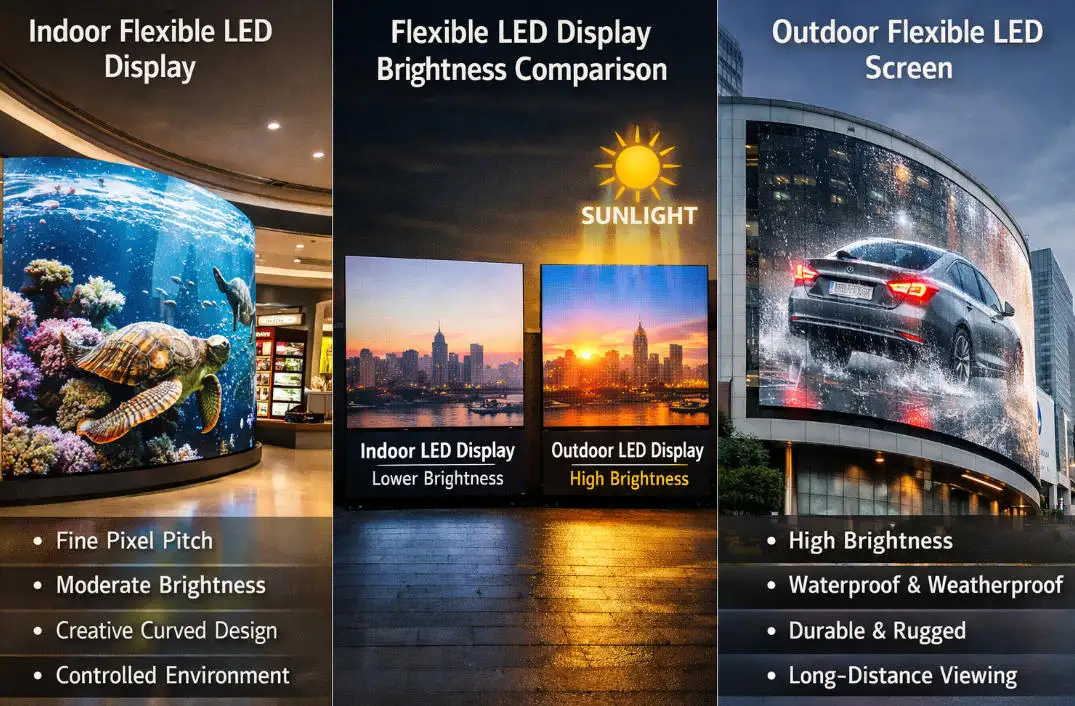
- Fine pixel pitch for close viewing
- Moderate brightness levels
- Lightweight and ultra-thin structure
- Smooth color consistency
In indoor scenarios, viewers are often just a few meters away. That means clarity and detail matter more than extreme brightness.
Outdoor Flexible LED Screen: Built for Performance
An outdoor flexible LED screen is designed to survive real-world conditions—rain, dust, sunlight, and temperature changes.
Typical applications include:
- Building façades
- DOOH advertising (digital billboards)
- Stadiums and public venues
- Outdoor stage events
Key Features:
- High brightness for daylight visibility
- Strong waterproof structure
- Durable materials and reinforced design
- Larger pixel pitch for long-distance viewing
For example, some flexible LED modules use waterproof adhesives, sealed structures, and outdoor-rated cables to ensure stable operation even in harsh environments.
Flexible LED Display Brightness Comparison
One of the most critical differences is brightness.
Indoor vs Outdoor:
- Indoor flexible LED display: Lower brightness for comfortable viewing
- Outdoor flexible LED screen: High brightness to fight sunlight
If brightness is mismatched:
- Too low → Screen looks washed out outdoors
- Too high → Causes glare and energy waste indoors
A proper flexible LED display brightness comparison is essential before making a purchase decision.
Waterproof Flexible LED Display: Not Optional Outdoors
If your project is outdoors, a waterproof flexible LED display is mandatory.
Outdoor screens face:
- Rain and humidity
- Dust and pollution
- Temperature fluctuations
High-quality designs often include:
- Waterproof front and rear sealing
- Outdoor-rated connectors
- Protective coatings
Skipping waterproofing is one of the most expensive mistakes buyers make.
LED Display IP Rating Explained
The LED display IP rating tells you how well a screen is protected against dust and water.
- Indoor displays → Lower IP rating (basic protection)
- Outdoor displays → Higher IP rating (weather-resistant)
For example:
- IP54 → Limited protection
- IP65+ → Suitable for outdoor environments
A higher IP rating means better durability—but also higher cost. So the goal is not the highest rating, but the right rating for your environment.
Key Differences at a Glance
| Factor | Indoor Flexible LED Display | Outdoor Flexible LED Screen |
|---|---|---|
| Brightness | Moderate | High |
| Protection | Basic | Waterproof & dustproof |
| Viewing Distance | Close | Long-distance |
| Environment | Controlled | Harsh conditions |
| IP Rating | Lower | Higher |
How to Choose the Right Flexible LED Display
Before choosing, ask yourself:
- Is the installation indoor or outdoor?
- Will the screen face direct sunlight?
- What is the viewing distance?
- Do you need waterproof protection?
- What IP rating is required?
If you’re working on a creative installation (curved walls, columns, etc.), it’s also worth considering flexible modules that have been tested for long-term bending durability and structural reliability, especially for large-scale projects.
Practical Selection Tips
- Choose indoor flexible LED display for retail, exhibitions, and immersive spaces
- Choose outdoor flexible LED screen for advertising and public installations
- Always verify waterproof flexible LED display design for outdoor use
- Compare LED display IP rating before final decision
- Avoid over-spec or under-spec—match the product to the environment
Common Mistakes to Avoid
Many buyers focus only on shape and ignore performance.
Typical mistakes include:
- Using indoor screens outdoors
- Ignoring IP rating
- Underestimating brightness needs
- Choosing low-quality flexible modules
The result? Poor visibility, higher maintenance, and shorter lifespan.
Both indoor and outdoor flexible LED displays offer incredible creative potential—but they are engineered for very different purposes.
- An indoor flexible LED display delivers detail and design
- An outdoor flexible LED screen delivers visibility and durability
If your project involves weather exposure, always prioritize a waterproof flexible LED display with the right LED display IP rating.
In the end, the best screen is not the most expensive one—it’s the one that fits your environment perfectly.
