


* THERE ARE 76 ARTICLES
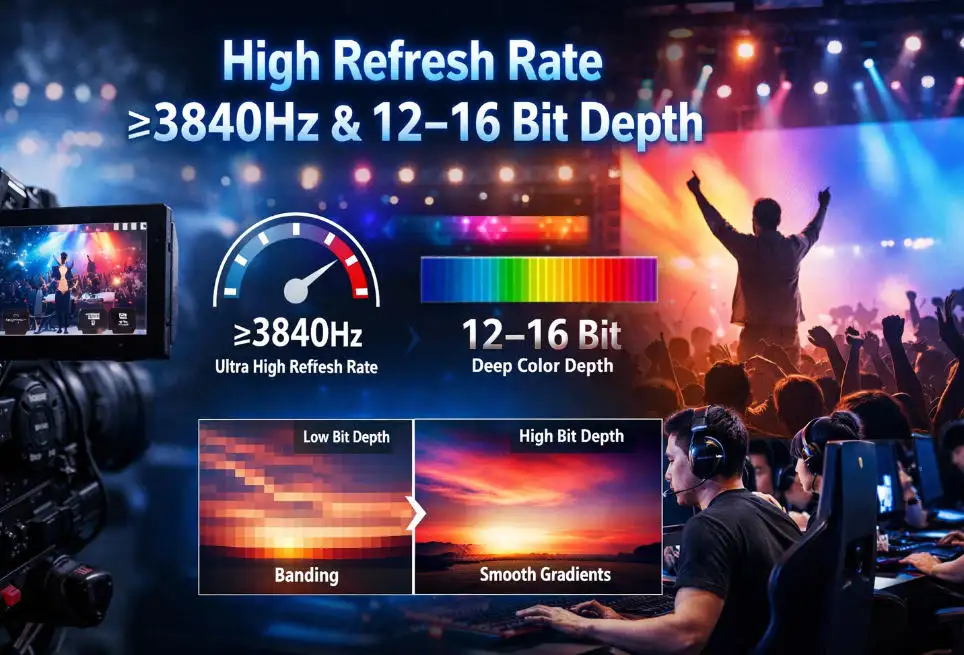
High Refresh Rates and Bit Depth: Why ≥3840Hz and 12–16-Bit Matter for Live Broadcast
- # 3840Hz refresh rate live broadcast
- # High refresh rate LED display
- # LED video wall broadcast quality
In the world of live broadcast, visual quality isn’t merely about resolution — it’s about how smoothly and accurately content appears both to the human eye and to cameras capturing that content. For applications like TV studios, stage shows, concerts, esports events, and digital signage with live recording, LED displays must meet rigorous specifications to deliver broadcast-ready visuals. Two key parameters that determine this performance are refresh rate and bit depth. At its core, refresh rate and bit depth are technical specs, but in professional live broadcast environments, they are fundamental to ensuring flicker-free, lifelike imagery with precise color reproduction — and failure to meet these criteria can result in distracting artifacts such as scanning lines, banding, or loss of detail during dynamic scenes. This article explains why a minimum of ≥3840 Hz refresh rate and 12–16-bit bit depth have become benchmarks for modern broadcast-grade LED displays — and how these specifications directly impact content quality and camera compatibility. What Refresh Rate Really Means for LED Displays In LED terminology, refresh rate refers to how many times per second the display renews its LED output signal — effectively how often it redraws each pixel. Unlike consumer TVs that refresh at 60–120 Hz, professional LED video walls often use refresh rates of ≥3840 Hz or higher. This ultra-fast updating is essential for live broadcast applications where cameras with varying shutter speeds film the LED content. Why ≥3840 Hz Matters Understanding Bit Depth and Its Importance While refresh rate dictates temporal stability, bit depth governs how smoothly a display can represent brightness and color gradations. Bit depth indicates the number of distinct brightness levels a pixel can produce. For example: Why 12–16-Bit Depth Matters in Broadcast How Higher Refresh & Bit Depth Work Together The benefits of high refresh rates and bit ...
By Cheer
2026-02-20
2026-02-20
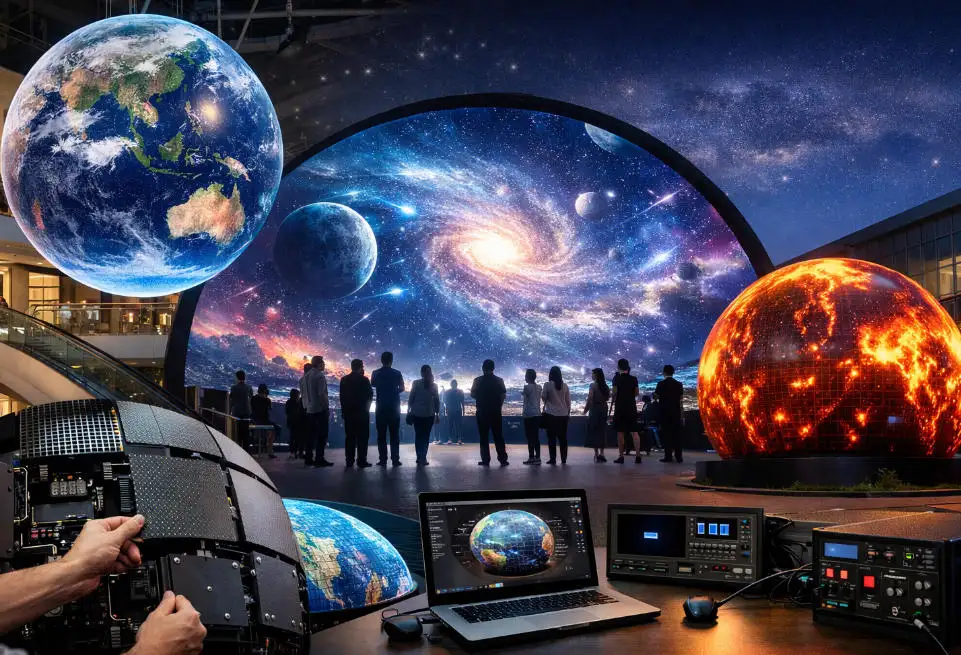
Sphere and Dome LED Displays: Engineering and Content Considerations
- # 360° LED screen
- # dome LED display
- # sphere LED display
Innovative display technologies are reshaping how audiences experience digital content—moving far beyond traditional flat LED screens. Among the most striking developments are sphere and dome LED displays, capable of delivering immersive, 360° visuals that capture attention in retail environments, museums, attraction venues, corporate spaces, and public installations. These curved LED architectures require both specialized engineering approaches and content production strategies to unlock their full impact. This article explores the core engineering principles, structural challenges, content considerations, and practical applications of sphere and dome LED displays, with insights drawn from industry leaders such as Exploring LEDCheer: Revolutionizing Visual Experiences with Advanced LED Display Solutions. What Are Sphere and Dome LED Displays? Unlike conventional flat LED panels, sphere and dome LED displays use curved or fully spherical LED modules assembled into three-dimensional surfaces. The result is a 360° viewing experience—content wraps around a curved volume, offering panoramic visibility from every angle. Typical implementations include: Manufacturers like LEDCheer offer customizable sphere LED products that support seamless splicing, high refresh rates (e.g., 3840Hz for smooth motion), and customizable diameters for both indoor and outdoor applications. Engineering Challenges and Considerations Designing sphere and dome LED displays extends well beyond simply bending a panel. Engineers must account for several unique mechanical, electrical, and optical challenges: 1. Modular Curved Construction To form a smooth sphere or dome, LED modules are shaped in specific polygonal geometries (often trapezoidal or custom profiles) that fit together like a 3D puzzle. This modular design must ensure: Advanced engineering and quality control are critical to align modules with minimal visible seams and maintain consistent image quality across curvature. 2. Thermal Management Curved displays inherently have less surface area exposed relative to flat arrays, making heat dissipation management more complex. Effective solutions include: For outdoor spheres, such as those offered by LEDCheer with ...
By Cheer
2026-02-18
2026-02-18
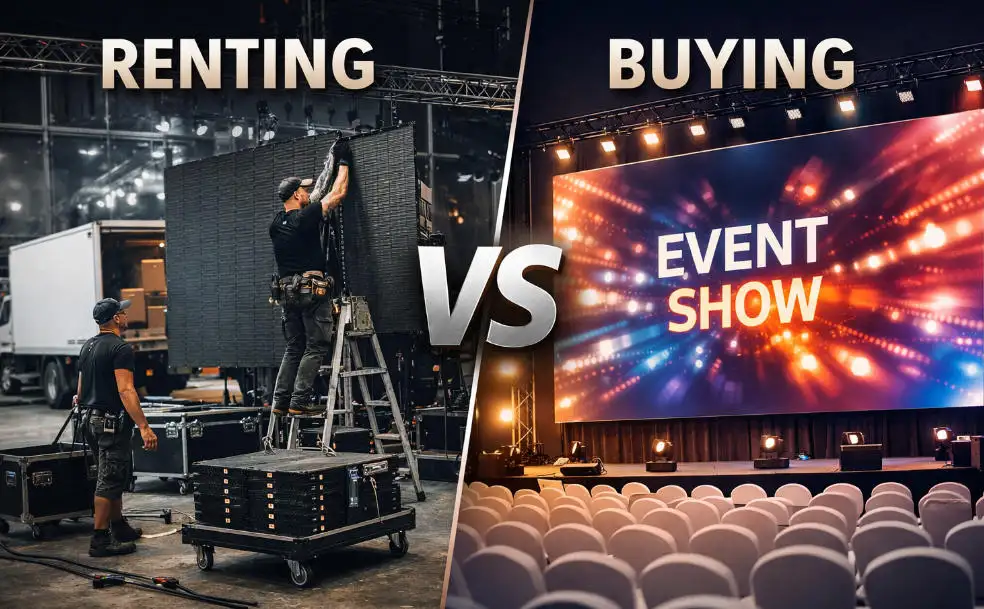
The Economics of Renting vs Buying LED Screens for Event Producers
- # LED screen rental vs purchase
- # Rental and stage LED displays
- # Renting LED screens
For most event producers, the decision to rent or buy LED screens isn’t about technology first — it’s about economics. LED displays are now central to live production. Whether it’s a corporate conference, music festival, product launch, or touring show, LED screens shape the audience experience. But behind the visuals sits a practical question: does it make more financial sense to rent LED screens or invest in buying LED screens outright? The answer depends less on preference and more on usage patterns, capital structure, and long-term operational planning. Understanding the Real Cost of LED Displays When comparing renting LED screens and buying LED screens, it’s easy to look only at the headline price. Rental quotes feel manageable. Purchase invoices feel intimidating. But the true comparison lies in total cost of ownership and return on investment. Buying LED screens involves: Renting LED screens, on the other hand, bundles many of these costs into a single event-based fee. The difference becomes clear when you analyze how often the screens will be used. When Renting LED Screens Makes Financial Sense For producers handling occasional events, renting LED screens is usually the more practical choice. 1. Lower Financial Risk Rental avoids tying up capital in equipment that may sit idle. For smaller production companies or agencies with fluctuating schedules, preserving liquidity is often more valuable than owning assets. 2. Flexibility Across Event Types Not every event requires the same LED display configuration. A corporate indoor conference might need a fine-pitch screen, while a music festival demands high-brightness outdoor panels. Rental gives producers access to different LED display solutions for events without being limited to one inventory type. 3. No Long-Term Technical Burden LED technology evolves quickly. Pixel pitch, refresh rates, brightness standards, and creative display formats continue to improve. Renting allows producers to use ...
By Cheer
2026-02-12
2026-02-12
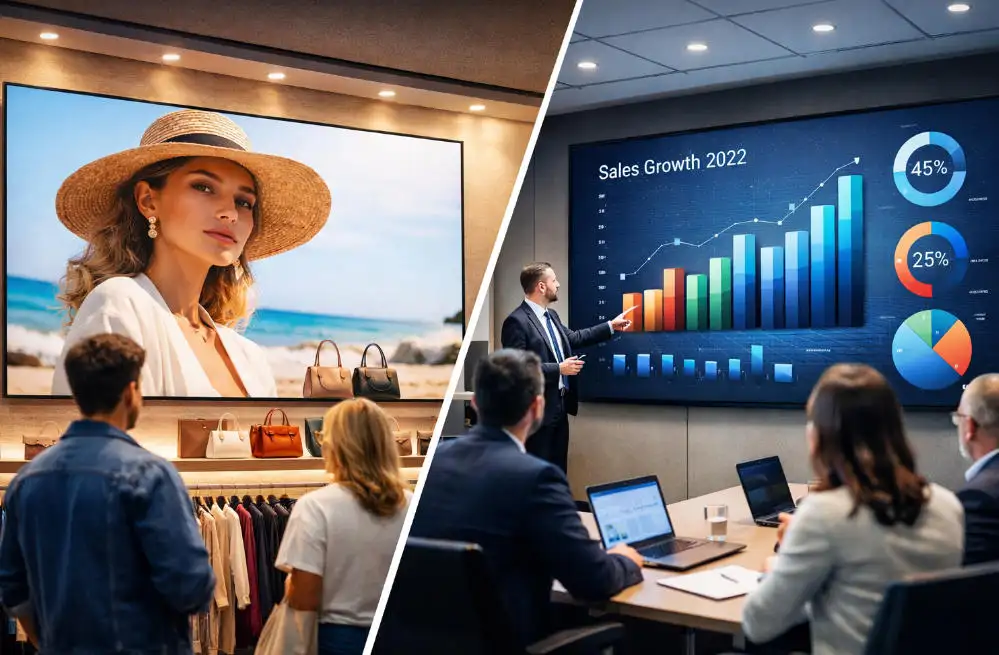
Fine-Pitch LED: Why Indoor Retail and Conference Spaces Are Switching to Ultra-Fine Pixel Pitch
- # Fine-pitch LED display
- # Indoor LED video wall
- # Retail LED display solutions
- # Ultra-fine pixel pitch LED
Walk into a modern flagship store or a newly renovated corporate conference room, and chances are you’ll see a large LED wall that looks more like a giant, seamless TV than a traditional LED screen. The reason is simple: fine-pitch LED displays have matured to the point where they finally make sense for everyday indoor use — not just high-end control rooms or broadcast studios. Over the past few years, retail brands and corporate users have quietly moved away from LCD video walls and projectors. In their place, ultra-fine pixel pitch LED displays are becoming the preferred choice. The shift isn’t about chasing new technology for its own sake; it’s about practicality, image quality, and long-term value. Understanding Fine-Pitch LED in Real-World Terms Fine-pitch LED refers to LED displays with a pixel pitch typically below 2.5 mm, and often much smaller — such as P1.8, P1.5, P1.2, or even P0.9. In simple terms, the smaller the pixel pitch, the closer viewers can stand to the screen without seeing individual pixels. This is what makes fine-pitch LED suitable for indoor spaces. In a retail store or meeting room, people are often only a few meters away from the display. Older LED screens were simply not designed for this viewing distance. Fine-pitch technology changes that by delivering high pixel density, smooth images, and clean text, even at close range. Why Retail Spaces Are Making the Switch Better Visual Impact Where It Matters Most Retail displays aren’t just about brightness anymore. Shoppers expect visuals that feel premium, polished, and modern. Ultra-fine pixel pitch LED screens offer a level of detail and color consistency that makes product visuals, lifestyle videos, and branding content look sharp and realistic — not oversized or pixelated. This matters especially for fashion, electronics, automotive, and luxury retail, where visual ...
By Cheer
2026-02-05
2026-02-05
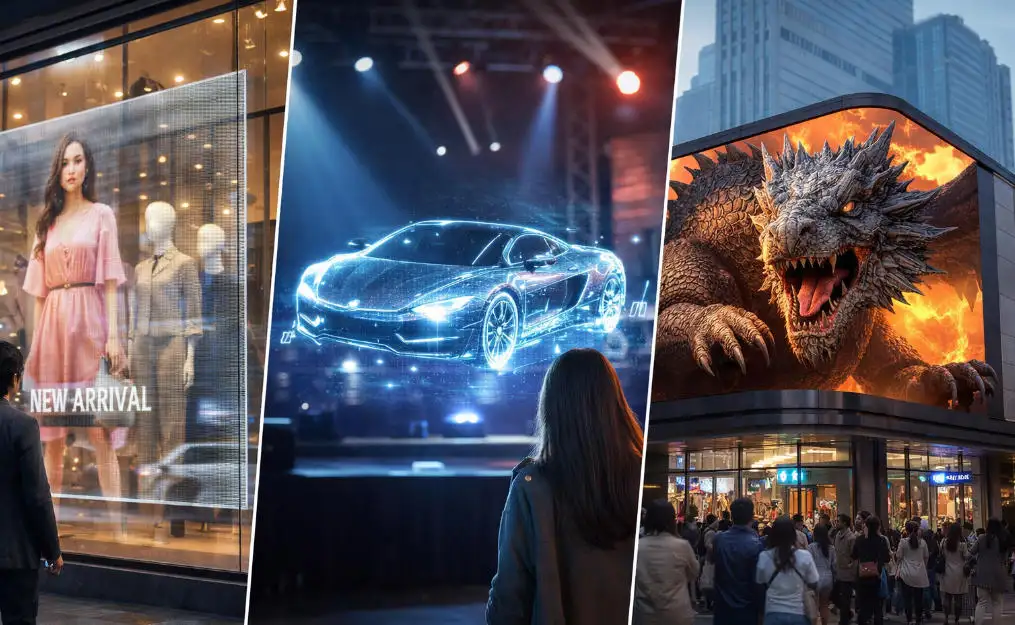
Future Display Formats: Transparent, Holographic, and Naked-Eye 3D Screens
- # holographic screen displays
- # Naked-Eye 3D Screens
Display technology is no longer evolving only in terms of resolution or screen size. A much deeper shift is underway—one that focuses on how displays interact with physical space and human perception. Transparent displays, holographic screen displays, and naked-eye 3D screens are leading this transition, turning traditional LED screens into immersive, spatial communication tools. These future display formats are already appearing in retail storefronts, architectural installations, exhibitions, and DOOH LED technology projects. Rather than replacing the environment, they enhance it—blending digital content with real-world settings in a way that feels natural, intuitive, and visually compelling. Transparent Displays: Digital Content Without Visual Barriers Why Transparent Display Technology Is Gaining Momentum Transparent display technology addresses a long-standing limitation of traditional screens: obstruction. Conventional LED displays dominate the viewer’s field of vision, while transparent LED displays allow digital visuals to coexist with glass, light, and physical objects behind the screen. This makes transparent LED display solutions especially attractive for spaces where openness and aesthetics matter—such as high-end retail, commercial architecture, and public venues. Practical Benefits in Real Installations From a system integrator’s perspective, transparent LED displays offer several practical advantages: Manufacturers like CheerLED (Ledcheer) have focused on developing lightweight, low-profile transparent LED screen systems that can be applied directly to glass surfaces. These solutions are increasingly used in shopping malls, showrooms, and building facades where standard LED screens would feel intrusive. Typical Use Scenarios Transparent LED signage is most effective in: In these environments, transparency isn’t just a feature—it’s the core value of the display. Holographic Screen Displays: Creating Depth and Attention From Concept to Commercial Reality Holographic screen displays have moved beyond novelty. Today’s holographic LED technology allows images to appear as if they are floating in space, without requiring special glasses or head-mounted devices. This visual depth immediately captures attention, especially ...
By Cheer
2026-01-28
2026-01-28
How LED Screens Are Reshaping Live Events and Immersive Stage Experiences
- # LED screens
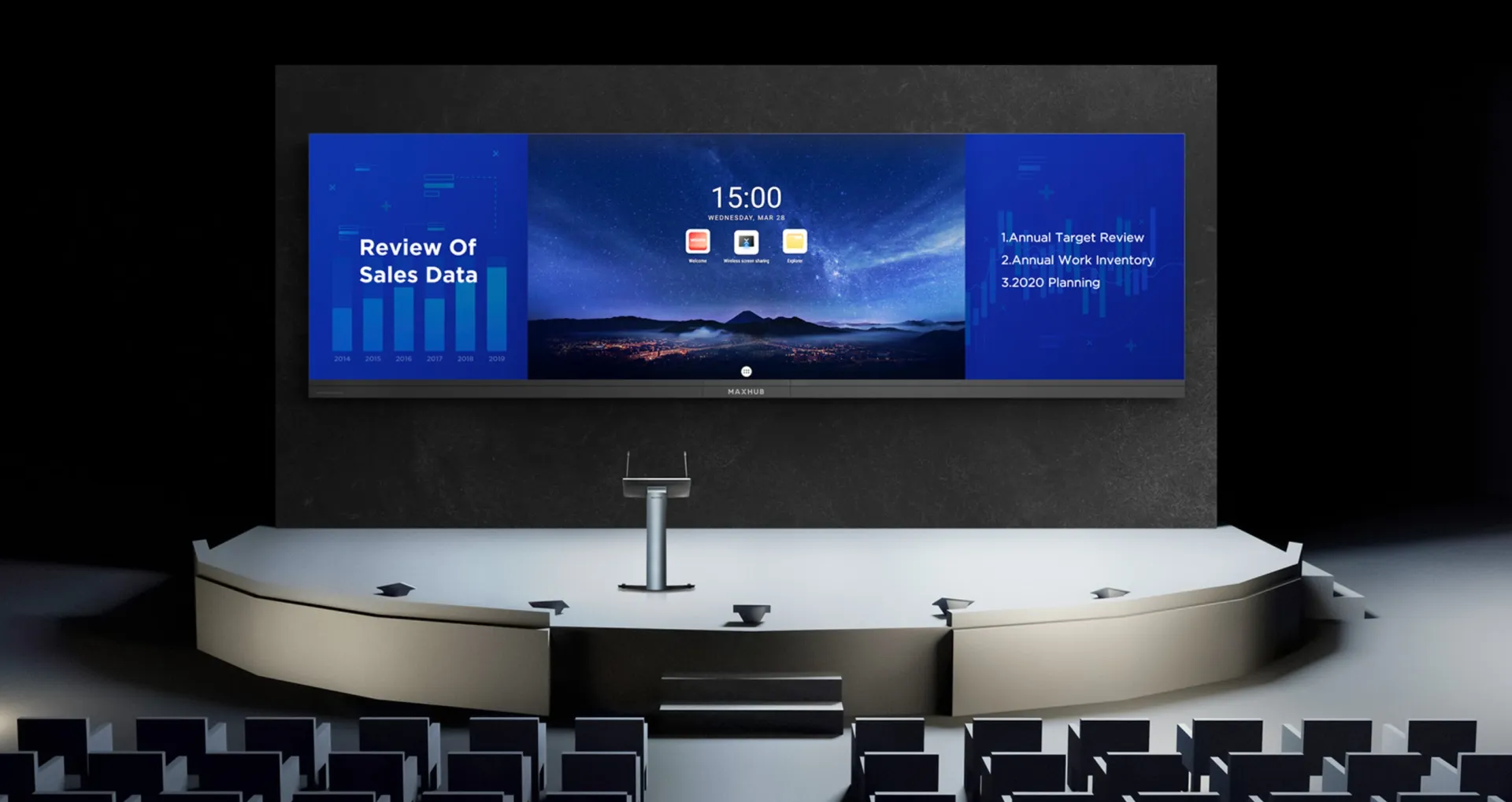
Walk into almost any major concert, exhibition, or brand event today, and one thing immediately stands out: LED screens are everywhere. They are no longer just “screens” in the background. They have become the stage itself—shaping atmosphere, guiding audience attention, and turning live events into fully immersive visual experiences. As audience expectations continue to rise, event organizers, production teams, and brands are rethinking how visual technology is used. LED screens now sit at the center of this transformation, redefining how stories are told, performances are enhanced, and environments are created. From Supporting Element to Center Stage Not long ago, LED displays were mainly used as supplementary visuals—showing logos, simple motion graphics, or camera feeds. Today, they are core design elements. Entire stages are built around LED structures, whether it’s a massive video wall behind a performer or a custom-shaped display wrapping around the audience. This shift is driven by a simple reality: static stages no longer hold attention. Modern audiences expect movement, depth, and visual storytelling. LED screens make this possible by allowing real-time content changes, seamless transitions, and visuals that evolve with the performance or event agenda. Creating Immersive Experiences, Not Just Visuals What truly sets LED screens apart is their ability to create immersion. Instead of watching a performance, audiences feel surrounded by it. Large-format LED walls can instantly transform a stage into a cityscape, a futuristic world, or an abstract visual environment that reacts to sound and motion. Close-up live camera feeds bring performers emotionally closer to audiences in large venues, while synchronized animations amplify energy during key moments. For corporate events and exhibitions, LED displays serve a different but equally powerful role. They help brands communicate complex messages clearly—through animated product demos, storytelling visuals, and interactive content—making presentations more engaging and memorable. Why LED Screens Work ...
By Cheer
2026-01-21
2026-01-21
