


* THERE ARE 76 ARTICLES
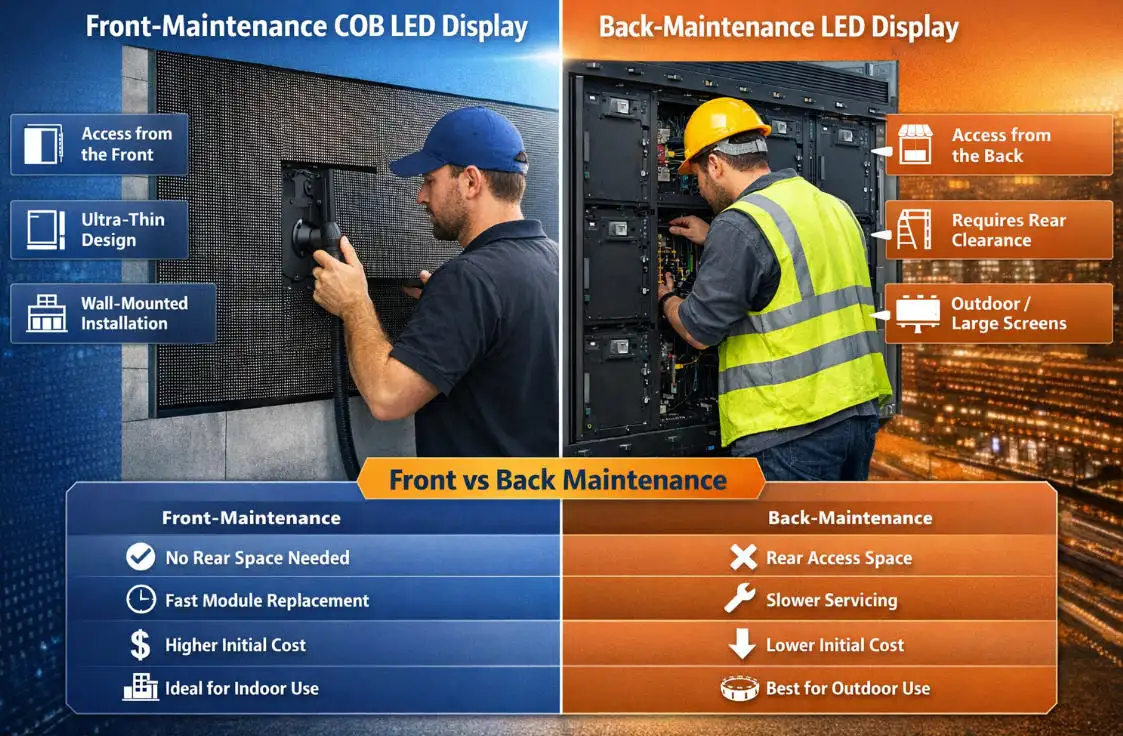
COB LED Front-Maintenance vs Back-Maintenance: Key Differences Installers Should Know
- # COB LED Display
- # COB LED display installation
As COB (Chip-on-Board) LED display technology continues to gain traction in high-end visual applications—such as control rooms, broadcast studios, conference centers, and retail displays—installation and maintenance methods have become an important decision factor for integrators and contractors. Two major service architectures dominate the LED display industry: front-maintenance and back-maintenance systems. While both designs allow technicians to access internal components for repair or replacement, they differ significantly in installation flexibility, maintenance efficiency, structural requirements, and long-term operating costs. For installers planning a COB LED display project, understanding these differences can help ensure smoother installations, reduced downtime, and optimized total cost of ownership. This guide explains how front-maintenance and back-maintenance COB LED displays work, compares their advantages and limitations, and highlights the key considerations installers should evaluate before choosing a system. Understanding COB LED Display Technology COB (Chip-on-Board) technology directly encapsulates multiple LED chips onto a PCB substrate, creating a protective, integrated light-emitting surface. Compared with traditional SMD packaging, COB displays offer: The encapsulated structure also allows many modern COB panels to support front-service designs, enabling module replacement from the viewing side of the screen. This capability is particularly valuable for space-constrained installations, where maintaining rear service access is impractical. What Is Front-Maintenance in COB LED Displays? A front-maintenance LED display allows technicians to service key components—including LED modules, receiving cards, and power supplies—from the front side of the screen. Modules are typically fixed using magnetic mounts, quick-release locks, or suction-tool access points, enabling a technician to remove a panel within minutes. Key Characteristics In many designs, installers can mount the display directly against a wall or architectural structure because maintenance does not require rear clearance. Advantages for Installers 1. Space-Saving Installation Front-service displays eliminate the need for a maintenance channel behind the screen, which is especially beneficial for wall-mounted installations in ...
By Cheer
2026-03-15
2026-03-15
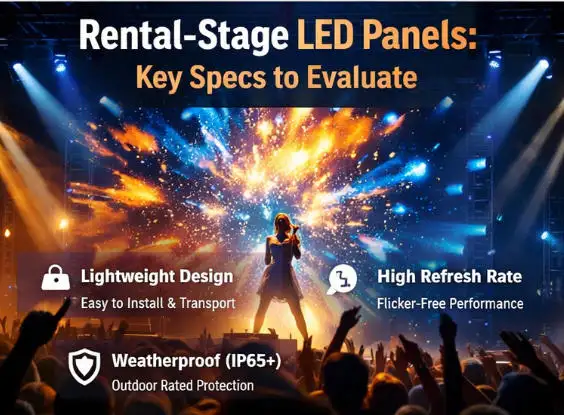
Comparing Rental-Stage LED Panels: Key Specs to Evaluate (Weight, Refresh Rate, IP Rating)
- # rental LED display panels
- # rental stage LED panels
The demand for rental-stage LED panels has grown rapidly with the expansion of concerts, exhibitions, corporate events, and large-scale live productions. Event organizers and rental companies rely on LED video walls to deliver immersive visual experiences while ensuring fast installation, reliability, and flexibility. However, choosing the right rental LED display panels is not as simple as selecting the highest resolution or brightest screen. Professionals must carefully evaluate multiple technical specifications—including panel weight, refresh rate, and IP rating—to ensure optimal performance for both indoor and outdoor events. This guide explains the most important specifications to compare when evaluating rental-stage LED panels, helping event planners, production companies, and AV rental providers make informed decisions. Understanding Rental-Stage LED Panels Rental-stage LED panels are modular LED display cabinets designed for temporary installations, such as: Unlike fixed LED installations, rental panels prioritize lightweight construction, quick assembly systems, and durability for frequent transportation. Many modern rental LED displays use die-casting aluminum cabinets, allowing high structural strength while maintaining low weight and precise alignment. Typical panel sizes include 500 × 500 mm or 500 × 1000 mm, which are easy to combine into large video walls. Manufacturers such as LED Cheer focus on modular rental LED solutions that simplify setup for touring productions, touring stages, and event rental companies. Key Specifications to Compare in Rental LED Panels When comparing rental-stage LED displays, several technical parameters significantly affect performance and usability. The most critical specifications include: Among these, weight, refresh rate, and IP rating are often the most important factors influencing purchasing decisions. 1. Cabinet Weight: Critical for Fast Installation and Transportation Weight is one of the most practical considerations when evaluating rental LED panels. Since rental displays are frequently assembled, dismantled, and transported between venues, lighter panels reduce installation time and labor costs. Typical Weight Range Modern ...
By Cheer
2026-03-12
2026-03-12
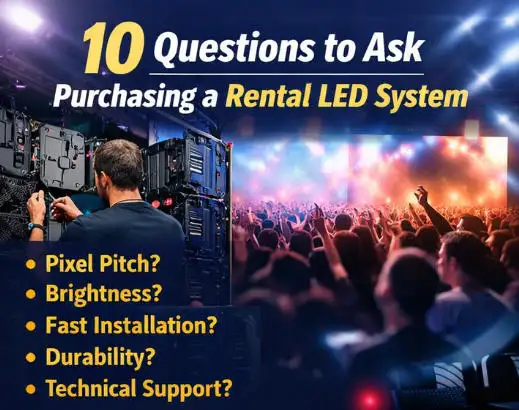
10 Questions to Ask Before Purchasing a Rental LED System
- # LED rental display manufacturer
- # outdoor rental LED screen
- # Rental LED Display
The demand for rental LED systems has grown rapidly in recent years. From concerts and exhibitions to corporate events and trade shows, LED screens have become the centerpiece of modern visual experiences. However, choosing the right rental LED display system requires careful evaluation of several technical and operational factors. Before investing in a rental LED display, buyers should ask the right questions to ensure they select a reliable, high-performance solution that delivers both visual impact and operational efficiency. This guide explores 10 essential questions you should ask before purchasing a rental LED system. 1. What Is the Main Application Scenario? The first question to ask is where and how the rental LED system will be used. Rental LED displays are commonly used for: Different applications require different specifications such as brightness, resolution, and cabinet structure. For example, stage productions require fast installation and creative screen shapes, while outdoor advertising requires higher brightness and weather resistance. Modern rental systems are specifically designed for the stage and event industry, offering high brightness and easy installation for concerts and large conferences. 2. What Pixel Pitch Is Suitable for Your Viewing Distance? Pixel pitch refers to the distance between two LED pixels and directly affects display clarity. General recommendations: Viewing Distance Recommended Pixel Pitch 2–4 meters P2.6 / P2.9 4–6 meters P3.9 6–10 meters P4.8 10m+ P6 or above Smaller pixel pitch provides higher resolution but increases cost. Therefore, choosing the right pixel pitch helps achieve optimal image quality while controlling project budget. 3. Is the LED Screen Designed for Fast Installation? Rental LED displays must support quick installation and dismantling. Important structural features include: These features significantly reduce setup time and labor costs during events. For example, some rental systems weigh less than 7.5 kg per cabinet, allowing technicians to quickly assemble large ...
By Cheer
2026-03-07
2026-03-07
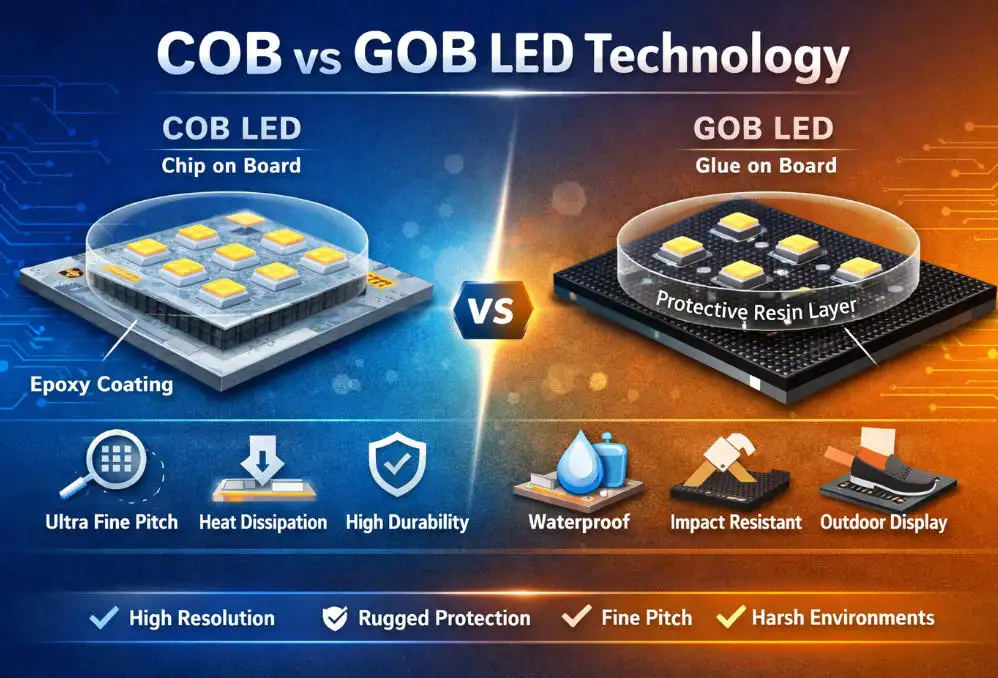
What is COB / GOB LED Technology — Benefits, Trade-offs, and Use Cases
- # COB LED Display
- # COB LED display benefits
- # LED technology comparison
In the world of LED displays, packaging technology is a core determinant of performance, durability, and visual quality. Two advanced techniques that have reshaped LED display solutions — especially for fine-pitch and high-precision applications — are COB (Chip on Board) and GOB (Glue on Board) LED technologies. These innovations represent significant evolution from traditional SMD (Surface Mounted Device) LEDs, addressing limitations in pixel density, protection, and visual uniformity. Understanding the differences between COB and GOB, along with their respective advantages and trade-offs, is vital for choosing the right LED display solution for your project. Understanding COB LED Technology COB (Chip on Board) refers to a packaging process where multiple bare LED chips are mounted directly onto the PCB substrate and sealed with epoxy resin to form an integrated light-emitting surface. This structure eliminates traditional lamp housings, reducing gaps and creating a smooth, continuous light panel. According to LEDCheer’s product information, COB LED displays offer slim design, high contrast, low failure rates, and energy-efficient operation. Key Benefits of COB LED Trade-offs and Considerations While COB LED technology delivers professional-grade performance, it does have trade-offs: Understanding GOB LED Technology GOB (Glue on Board) is a protective enhancement technique applied to LED modules — typically based on SMD components — where a transparent layer of glue or resin is applied over the surface. This layer encapsulates the LED beads and solder joints, offering external protection without fully reengineering the LED packaging. Key Benefits of GOB LED Trade-offs and Considerations COB vs GOB LED: Side-by-Side Comparison Feature COB LED GOB LED Protection Excellent full-surface sealed protection Strong surface protection, especially against moisture & impacts Heat Dissipation Direct, efficient thermal path Slightly reduced due to protective layer Image Smoothness Very high, seamless surface Improved vs. bare SMD, but less smooth than COB Maintenance Module level ...
By Cheer
2026-03-04
2026-03-04
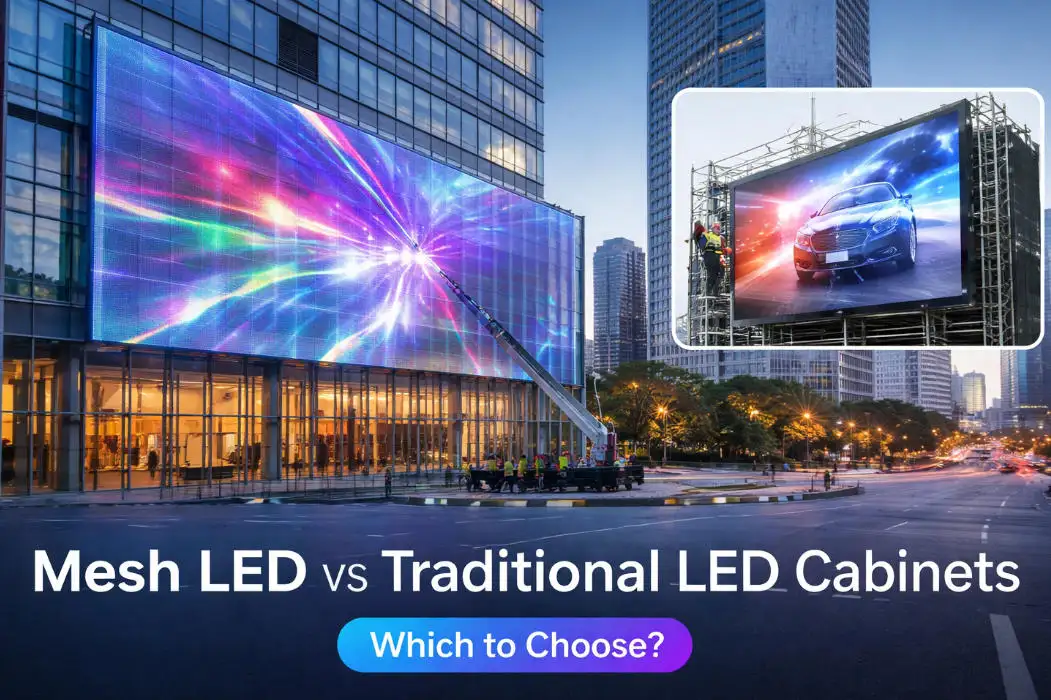
Mesh and Outdoor Mesh LED: When to Choose Them Over Traditional Cabinets
- # LEDCheer outdoor mesh
- # outdoor LED display solutions
- # outdoor mesh LED
In today’s dynamic digital signage and architectural display landscape, LED display technology continues to evolve rapidly. Two standout technologies gaining traction in large-format outdoor installations are mesh LED displays and outdoor mesh LED displays. These differ significantly from traditional LED cabinet systems, offering unique advantages in specific scenarios. Understanding when and why to choose mesh technology can help businesses, designers, and project engineers deliver impactful visual experiences while optimizing installation costs and structural demands. What Is Mesh & Outdoor Mesh LED? Mesh LED displays are large-format digital screens comprised of LED lights arranged in an open grid or strip structure rather than solid LED cabinets. The result is a screen that is highly transparent, lightweight, and airflow-permeable, making it ideal for large façade installations, architectural integrations, and high-impact outdoor media applications. Traditional LED displays typically use solid sealed cabinet panels to house LED modules, which are reliable but often heavy, opaque, and demanding in terms of structural support. The Outdoor Mesh LED Display from LEDCheer is a representative example of modern outdoor mesh LED solutions designed for all-weather outdoor installations with good light transmittance, strong wind resistance, and flexible assembly options. Key Advantages of Mesh LED Over Traditional Cabinets 1. Transparency and Architectural Integration Mesh LED displays offer up to 80–90% transparency, allowing natural light to pass through and maintaining visibility from inside buildings. This is a major benefit for glass façades, malls, airports, and storefronts where preserving daylight and architectural aesthetics is a priority. In contrast, traditional cabinets are opaque and can block sunlight, which may be undesirable in certain architectural scenarios. 2. Lightweight Construction and Reduced Structural Load Mesh LED screens are typically 50-70% lighter than standard cabinets, significantly lowering the load on supporting structures. This makes them ideal for high-rise façades and large outdoor walls where weight ...
By Cheer
2026-03-01
2026-03-01
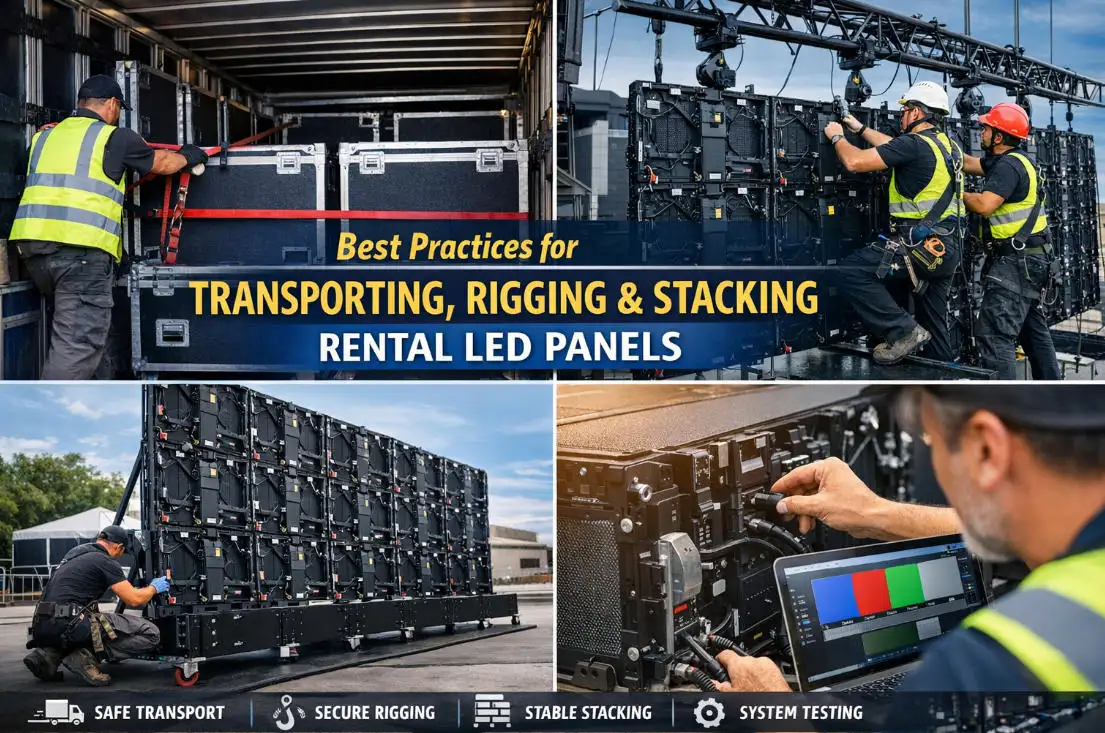
Best Practices for Transporting, Rigging, and Stacking Rental LED Panels
- # rental LED panels
- # rigging LED walls
- # transporting LED panels
Rental LED panels are at the heart of modern live events, concerts, corporate productions, trade shows, and large-scale digital signage. Professional rental LED display systems—like those offered by LedCheer – Rental & Stage LED Displays—are engineered for modular use, quick assembly and disassembly, and repeated transport and handling. However, these advantages also bring logistical responsibilities: without proper transport, rigging, and stacking practices, damage, downtime, and safety risks can arise. This guide outlines best practices every production manager, event technician, or AV rental company should follow to ensure LED rental panels are handled safely, installed efficiently, and protected from costly mishaps. 1. Planning and Preparation: The Foundation of Success Before any move or setup: Conduct a Site and Logistics Survey Inventory and Pre-Check 2. Transporting LED Panels Without Damage Proper transportation protects these precision electronics from shock, humidity, and static. A. Use Quality Protective Cases B. Load Distribution and Handling C. Transport Crew Training 3. Rigging Rental LED Panels Safely and Effectively Whether flying screens overhead or constructing ground stacks, rigging must comply with structural safety standards. A. Follow Industry-Standard Load Calculations B. Use Certified Rigging Hardware C. Mounting Best Practices D. Safety and Compliance 4. Stacking Panels With Stability Ground stacking is common for LED walls used in exhibitions, outdoor stages, and trade shows. A. Stack Upright, Not Flat B. Interlocking and Support Frames C. Front and Rear Access for Maintenance 5. On-Site Assembly and Testing 6. Post-Event Breakdown and Care Transporting, rigging, and stacking rental LED panels is a multi-disciplinary process blending logistics, safety engineering, and technical skill. Following the above practices—reinforced by industry data showing that most transit damage and installation failures are preventable with protective cases, proper stacking, and qualified riggers—will help professionals keep LED rental solutions reliable, safe, and long-lasting.
By Cheer
2026-02-26
2026-02-26
