


 Home » Blog » Comapny News »
2026-02-12



For most event producers, the decision to rent or buy LED screens isn’t about technology first — it’s about economics.
LED displays are now central to live production. Whether it’s a corporate conference, music festival, product launch, or touring show, LED screens shape the audience experience. But behind the visuals sits a practical question: does it make more financial sense to rent LED screens or invest in buying LED screens outright?
The answer depends less on preference and more on usage patterns, capital structure, and long-term operational planning.
Understanding the Real Cost of LED Displays
When comparing renting LED screens and buying LED screens, it’s easy to look only at the headline price. Rental quotes feel manageable. Purchase invoices feel intimidating. But the true comparison lies in total cost of ownership and return on investment.
Buying LED screens involves:
- Initial capital expenditure
- Ongoing maintenance
- Storage and transport logistics
- Technical staffing
- Depreciation
- Eventual upgrades
Renting LED screens, on the other hand, bundles many of these costs into a single event-based fee.
The difference becomes clear when you analyze how often the screens will be used.
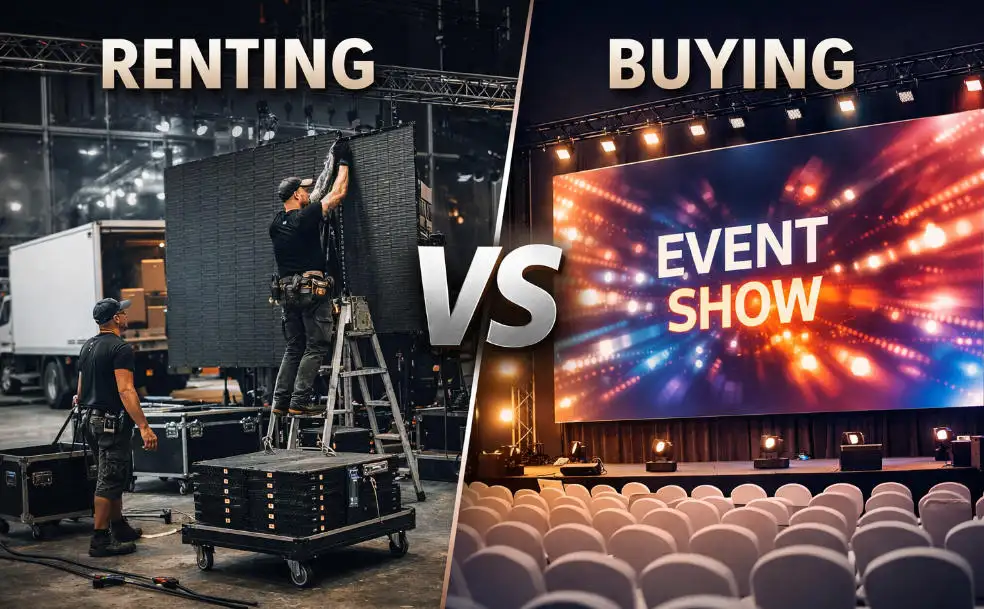
When Renting LED Screens Makes Financial Sense
For producers handling occasional events, renting LED screens is usually the more practical choice.
1. Lower Financial Risk
Rental avoids tying up capital in equipment that may sit idle. For smaller production companies or agencies with fluctuating schedules, preserving liquidity is often more valuable than owning assets.
2. Flexibility Across Event Types
Not every event requires the same LED display configuration. A corporate indoor conference might need a fine-pitch screen, while a music festival demands high-brightness outdoor panels.
Rental gives producers access to different LED display solutions for events without being limited to one inventory type.
3. No Long-Term Technical Burden
LED technology evolves quickly. Pixel pitch, refresh rates, brightness standards, and creative display formats continue to improve. Renting allows producers to use current technology without worrying about obsolescence.
It also eliminates concerns around storage space, repairs, spare modules, or control system updates.
For many companies, the economic advantage of renting LED screens lies in simplicity and predictability.
When Buying LED Screens Becomes the Smarter Investment
Ownership becomes attractive when usage is frequent and consistent.
If a production company is deploying LED screens for dozens of events each year, the rental fees begin to accumulate quickly. At a certain point, buying LED screens produces stronger long-term ROI.
1. High Event Volume
If screens are used 25–35+ times per year, ownership often becomes more cost-effective than ongoing rental. The break-even point varies depending on screen type and scale, but frequent usage significantly shifts LED screen economics for events in favor of ownership.
2. Control Over Inventory
Owning screens allows for consistent setup standards, branding integration, and equipment familiarity. Teams can streamline workflows because they’re working with the same systems each time.
Manufacturers such as LED Cheer, for example, provide rental and stage LED displays designed for durability, fast assembly, and high refresh performance — features that matter whether equipment is rented or purchased for repeated deployment.
3. Asset Value and Repurposing
While LED displays depreciate, they remain tangible assets. Owned screens can be:
- Rented to third parties
- Repurposed for fixed installations
- Used in commercial or semi-permanent display environments
This extends the financial lifecycle beyond event-only usage.
The Hidden Costs Producers Often Overlook
When evaluating LED display cost comparison, there are several overlooked factors:
Storage and Transportation
Large LED cabinets require secure storage and professional transport. Improper handling leads to module damage and higher repair costs.
Maintenance and Spare Parts
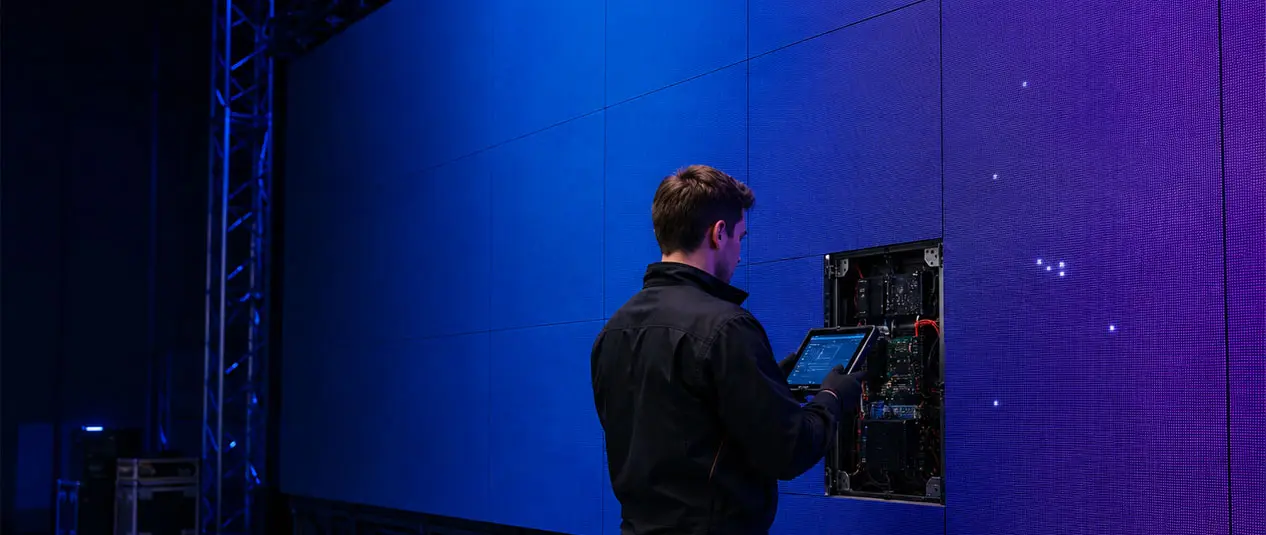
LED panels require calibration, power supply replacements, and periodic servicing. Without technical oversight, performance declines.
Technology Refresh Cycles
An LED screen purchased today may feel dated in three to five years. Renting shifts that upgrade burden to the supplier.
These factors significantly influence LED screen ownership benefits — and whether they truly outweigh rental flexibility.
Strategic Questions to Ask Before Deciding
Instead of asking, “Is renting cheaper?” producers should ask:
- How many events per year will use the screen?
- Is capital better invested in marketing, talent, or logistics?
- Do we have technical staff to manage owned equipment?
- Will screen specifications remain consistent across projects?
The economics of renting vs buying LED screens becomes clearer once these operational realities are mapped out.
Comparative Economic Overview
| Feature | Renting LED Screens | Buying LED Screens |
|---|---|---|
| Initial Investment | Low | High |
| Maintenance/Storage Costs | Included or zero | Owner responsibility |
| Flexibility | High (vary screen types per event) | Medium (fixed inventory) |
| Access to Latest Tech | Yes | Only with upgrades |
| ROI Timeline | Short for infrequent use | Long term (with enough use) |
| Operational Hassle | Minimal | Requires internal or external support |
A Balanced View
There is no universal answer.
Renting LED screens works best for:
- Irregular event schedules
- Variable screen specifications
- Companies prioritizing cash flow flexibility
Buying LED screens works best for:
- High-frequency production schedules
- Standardized screen requirements
- Long-term asset-building strategies
For many mid-sized producers, a hybrid approach also makes sense — owning core inventory while renting specialty panels when needed.
