


2026-02-26



Rental LED panels are at the heart of modern live events, concerts, corporate productions, trade shows, and large-scale digital signage. Professional rental LED display systems—like those offered by LedCheer – Rental & Stage LED Displays—are engineered for modular use, quick assembly and disassembly, and repeated transport and handling. However, these advantages also bring logistical responsibilities: without proper transport, rigging, and stacking practices, damage, downtime, and safety risks can arise.
This guide outlines best practices every production manager, event technician, or AV rental company should follow to ensure LED rental panels are handled safely, installed efficiently, and protected from costly mishaps.
1. Planning and Preparation: The Foundation of Success
Before any move or setup:
Conduct a Site and Logistics Survey
- Assess access points, dock sizes, truck clearance, and terrain at both origin and venue.
- Establish a transport plan based on panel size, weight, and environmental conditions.
- Review rigging points, load capacities, and stacking space with your production or rigging crew.
Inventory and Pre-Check
- Document and label each panel and accessory (cables, frames, rigging bars, spare fasteners).
- Run a pre-shipment functional test to verify modules, power supplies, and connectors are working.
- Cross-check configurations against the venue’s power and network infrastructure.
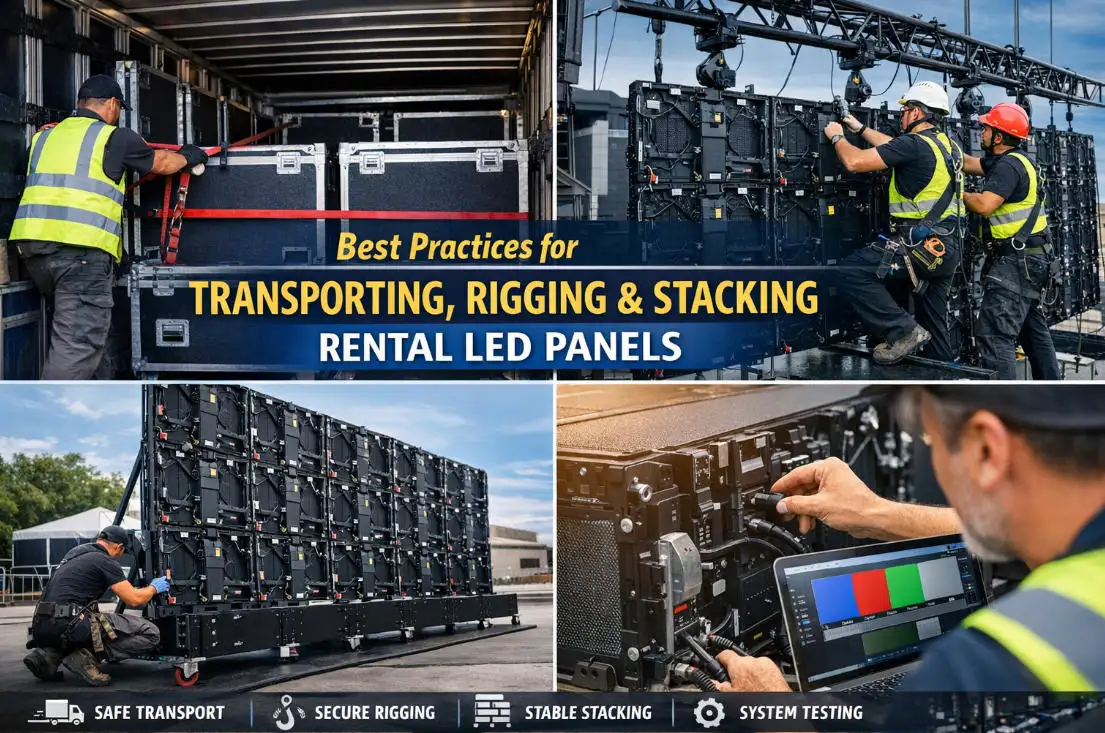
2. Transporting LED Panels Without Damage
Proper transportation protects these precision electronics from shock, humidity, and static.
A. Use Quality Protective Cases
- Hard flight cases with CNC-cut foam inserts are critical. These cradle each cabinet safely and help absorb vibration, significantly reducing transit damage. Without proper protection, even minor impacts can fracture solder joints or scratch surfaces.
- Cases should accommodate the panel’s orientation to avoid stress on connectors.
B. Load Distribution and Handling
- Distribute weight evenly in trucks and avoid stacking panels horizontally unless designed for it. Improper stacking is a leading cause of transit damage.
- Use edge protectors and ISO-compliant strapping to secure loads on pallets or inside cases.
- Climate-controlled docks and humidity management (e.g., desiccant packs) help prevent moisture damage.
C. Transport Crew Training
- Ensure that ground crews handling the load are trained on safe lifting techniques, use of lifting equipment, and panel fragility.
- Use mechanized jigs or carts when possible to reduce manual strain and accidental drops.
3. Rigging Rental LED Panels Safely and Effectively
Whether flying screens overhead or constructing ground stacks, rigging must comply with structural safety standards.
A. Follow Industry-Standard Load Calculations
- Qualified riggers or structural engineers should calculate total system weight, suspension points, and factor safety margins.
- Oversights in weight distribution can overburden motors, trusses, or anchor points, increasing the risk of failure.
B. Use Certified Rigging Hardware
- Panels should integrate with industry-standard hanging beams and quick-lock systems provided by manufacturers like CheerLED (which offers rigging accessories and installation guidance).
- Rigging points should be rigid and uniform, with clamps, shackles, or latches rated for the weight of each cabinet.
C. Mounting Best Practices
- For flying video walls, rig from multiple motor points to spread load evenly.
- Avoid connecting flying and ground-stacked panels to prevent unsafe dynamic stresses between systems.
- Align panels one row at a time using levels and alignment tools to ensure flatness and image integrity (critical on camera surfaces).
D. Safety and Compliance
- Ensure rigging plans meet venue regulations and building codes.
- Redundant safety lines and emergency brakes are recommended for overhead applications.
4. Stacking Panels With Stability
Ground stacking is common for LED walls used in exhibitions, outdoor stages, and trade shows.
A. Stack Upright, Not Flat
- LED panels are designed to stand upright in their intended operating orientation. Long horizontal stacks can warp frames and stress connectors.
- Limit stack height (e.g., no more than 3–4 panels high) per manufacturer guidance to avoid overloading lower units.
B. Interlocking and Support Frames
- Use modular support frames that lock panels securely while maintaining level surfaces.
- Adjustable feet and laser levels ensure consistent vertical alignment, preventing later drift or stress during installation.
C. Front and Rear Access for Maintenance
- LED panels with front/rear serviceability allow quick swaps without pulling entire columns apart—critical in stacked configurations.
5. On-Site Assembly and Testing
- Assemble panel modules row by row, locking each unit securely before proceeding.
- Connect power and data cables after structural alignment to prevent stress on connectors.
- Run a full diagnostics check once assembled to validate color, brightness, and synchronization before showtime.
6. Post-Event Breakdown and Care
- Systematically disassemble in reverse order of installation.
- Clean LED panels and flight cases before storing to prevent dirt or corrosion.
- Track issues in a maintenance log to identify patterns and prevent recurring damage.
Transporting, rigging, and stacking rental LED panels is a multi-disciplinary process blending logistics, safety engineering, and technical skill. Following the above practices—reinforced by industry data showing that most transit damage and installation failures are preventable with protective cases, proper stacking, and qualified riggers—will help professionals keep LED rental solutions reliable, safe, and long-lasting.
