


2026-03-27



I’ve watched enough LED projects fall apart on-site to know one thing: the problem is rarely the screen itself. It’s the install. The wiring. The endless calibration. The last-minute surprises no one budgeted for.
That’s exactly where all-in-one LED displays change the game.
They’re not just a new product category. They’re a correction. A response to years of overcomplicated LED video wall solutions that looked great on paper and turned into a headache in real life.
If you’re evaluating an integrated LED display system—whether for a meeting room, showroom, or commercial deployment—this is what actually matters.
What Is an All-in-One LED Display (And Why It Exists)
Strip away the marketing language, and it’s simple.
An all-in-one LED display is a fully integrated LED display system where:
- The panels
- The control system
- The power supply
- The video processor
…are already built into a single unit.
No external boxes. No rack cabinets. No spaghetti wiring behind the wall.
I like to describe it this way:
A traditional LED wall is a construction project.
An all-in-one LED display is a finished product.
That difference alone is why more buyers are searching for terms like:
- plug and play LED screen for conference room
- easy installation LED display solution
- commercial all-in-one LED display system
They’re not just looking for better visuals. They’re looking for fewer problems.
The Features That Actually Make a Difference
1. Real Integration (Not Just Marketing Talk)
A lot of products claim to be “integrated.” Few actually are.
With a proper all-in-one LED display, integration means:
- Built-in control system (no external sending box)
- Internal power management
- Pre-configured signal routing
- Often dual OS (Android + optional Windows module)
From what I’ve seen, this is where companies like LEDCHEER have focused their engineering—pushing high integration so the system behaves more like a single device, not a collection of parts.
The payoff is obvious the moment you turn it on: it just works.
2. Plug-and-Play Isn’t a Buzzword—It’s a Time Saver
I’m naturally skeptical of anything labeled “plug and play.” In LED, that phrase used to be a stretch.
Here, it’s mostly accurate.
You’re typically dealing with:
- Power in
- HDMI or wireless input
- Done
That’s why searches like fast installation LED screen for office and LED display without complex wiring are climbing. Buyers have learned the hard way that installation cost can quietly exceed hardware cost.
3. Visual Performance That Holds Up
Let’s be honest—ease of installation doesn’t matter if the screen looks bad.
Thankfully, modern all-in-one LED display systems deliver where it counts:
- Fine pixel pitch (often 0.9–1.8mm for indoor use)
- High refresh rate (3840Hz is now standard in good models)
- Strong contrast and color uniformity
Compared to LCD video walls, the absence of bezels still makes a huge difference. Once you notice it, you can’t unsee it.
4. Built for Real Use, Not Just Specs Sheets
This is where experience shows.
The best systems aren’t just high-spec—they’re practical:
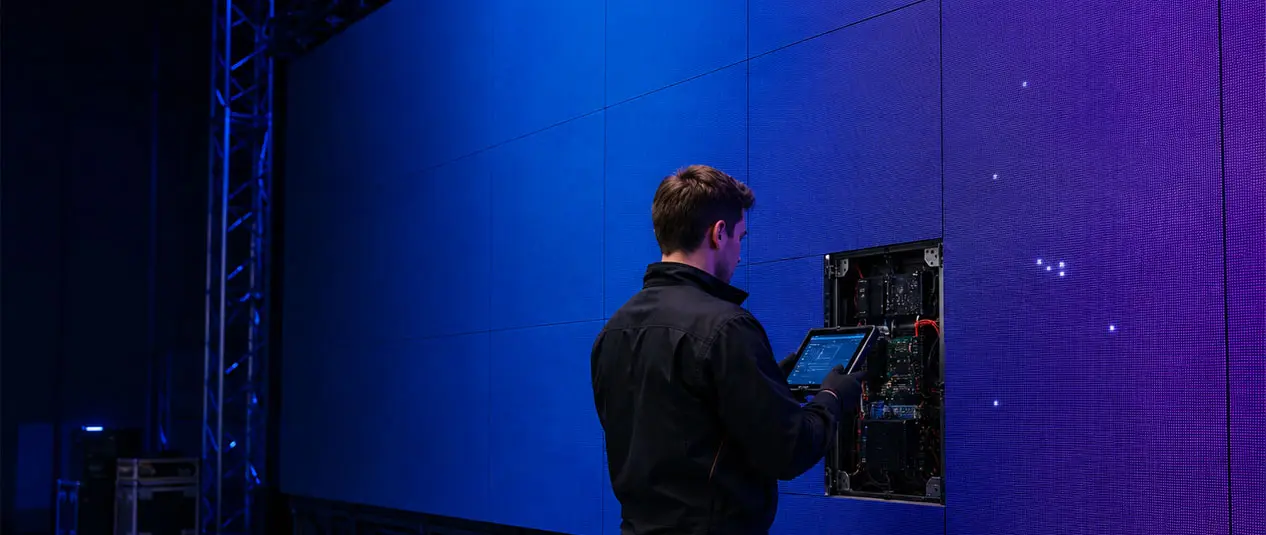
- Front maintenance (no rear access requirement)
- Modular but pre-aligned structure
- Wireless screen sharing that actually connects quickly
LEDCHEER, for example, leans into interactive meeting room LED display solutions, including touch control and wireless collaboration. That aligns perfectly with demand for:
- smart LED display for conference rooms
- interactive all-in-one LED screen for business meetings
These aren’t “nice-to-have” features anymore. They’re expected.
Specifications—What to Pay Attention To (And What to Ignore)
Buyers often get lost here. Too many numbers. Too little context.
Here’s what I focus on when evaluating an OEM all-in-one LED display:
What matters:
- Pixel pitch → determines viewing distance and clarity
- Brightness → 600–1000 nits is plenty for most indoor spaces
- Refresh rate → ≥3840Hz avoids camera flicker
- System integration level → affects long-term reliability
What matters less than you think:
- Peak brightness numbers you’ll never use
- Theoretical lifespan (they’re all long enough)
- Overly complex spec comparisons between similar models
Most LEDCHEER configurations—like 108", 135", 163", and 216"—hit the sweet spot for conference room LED display systems and commercial indoor LED applications.
Installation: Where All-in-One Really Wins
This is the part that sells the product.
1. No More “Build-It-On-Site” Chaos
Traditional LED installs involve:
- Frame construction
- Panel alignment
- Signal calibration
- Cable routing
Every step introduces risk.
An all-in-one LED display removes most of that. It arrives pre-assembled or in large sections designed to lock together quickly.
Less guesswork. Fewer surprises.
2. Cabling Is Finally Under Control
If you’ve ever looked behind a traditional LED wall, you know the mess.
Integrated systems cut it down to:
- One power connection
- Minimal signal input
That’s why low-complexity LED display installation is becoming a serious search trend. People are tired of dealing with cable management issues six months later.
3. Installation Time Drops Dramatically
I’ve seen traditional installs take a week.
I’ve seen all-in-one systems go live the same day.
That difference matters for:
- Retail rollouts
- Corporate upgrades
- Time-sensitive events
It’s one of the main reasons commercial LED display solutions are shifting toward integrated designs.
4. You Don’t Need a Specialist Team
This might be the most underrated benefit.
With a traditional LED wall, you need:
- Skilled technicians
- Calibration tools
- Sometimes manufacturer support on standby
With an all-in-one LED display, a trained AV team—or even a capable IT department—can handle it.
That opens the door for:
- easy-to-install LED display for offices
- plug and play LED screen for corporate environments
And that’s exactly where the market is heading.
Where These Displays Actually Make Sense
Not every project needs an all-in-one system. But when speed and simplicity matter, they’re hard to beat.
They’re a natural fit for:
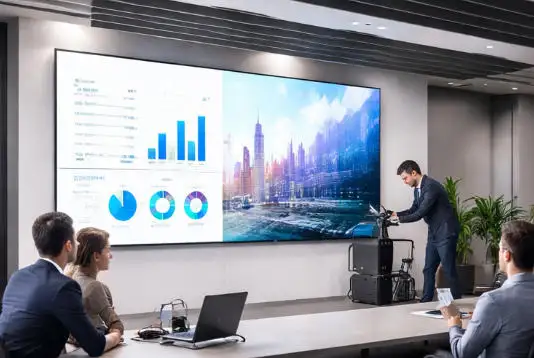
- Corporate meeting rooms
- Training spaces
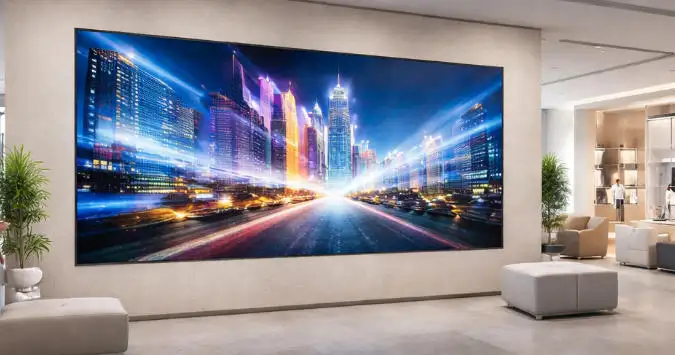
- Showrooms
- Education environments
- Medium-scale event setups
LEDCHEER positions its solutions right in this space—especially where smart LED display systems and interactive collaboration are part of the requirement.
I don’t say this lightly: most buyers don’t need a traditional LED wall anymore.
They think they do. Until they see the install plan.
An all-in-one LED display solves the part of the process that causes the most friction—installation, integration, and usability—without sacrificing visual performance.
That’s why demand for terms like:
- integrated LED display manufacturer China
- OEM all-in-one LED display supplier
- conference room LED display solution
…keeps growing.
The technology didn’t just improve. It got practical.
And in this industry, that’s what really moves the needle.
