



2026-03-29



Choosing the right LED display supplier is not just about price—it’s about long-term reliability, scalability, and technical partnership. Whether you are sourcing for rental LED screens, DOOH advertising, or commercial installations, the supplier you select will directly impact your project quality, maintenance costs, and brand reputation.
This guide breaks down how to evaluate LED suppliers from three critical dimensions: factory capabilities, customization flexibility, and OEM/ODM expertise, while incorporating real-world insights from leading manufacturers such as CheerLED.
1. Factory Capabilities: The Foundation of a Reliable LED Supplier
A supplier’s factory strength determines product consistency, delivery timelines, and quality control.
1.1 Production Scale & Automation
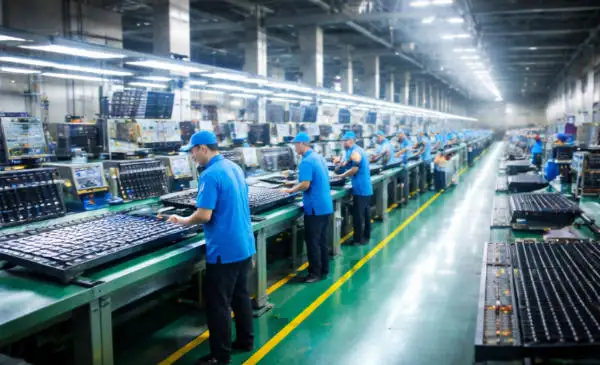
Top-tier LED manufacturers operate automated production lines and large-scale facilities. For example, some factories in Shenzhen exceed 8,000㎡ production areas with automated assembly systems, ensuring precision and stable output.
What to look for:
- SMT (Surface Mount Technology) lines
- Automated calibration & testing equipment
- Monthly production capacity (㎡ of LED panels)
👉 Why it matters: Higher automation = fewer defects and faster delivery.
1.2 R&D Capability and Innovation
A strong R&D team is a key differentiator. Leading suppliers invest heavily in:
- Pixel pitch optimization
- COB/GOB technologies
- Energy-saving designs
For instance, CheerLED emphasizes continuous innovation and dedicated R&D teams to stay ahead of LED technology trends.
Key indicators:
- Number of engineers
- Patents or proprietary technologies
- Ability to develop new display formats (e.g., transparent, flexible, 3D)
1.3 Quality Control System (QC)
Reliable suppliers implement strict QC processes such as:
- Aging tests (48–72 hours)
- Waterproof testing (IP65/IP54)
- Color calibration and brightness uniformity
Manufacturers like CheerLED highlight rigorous QC systems and strict production techniques to ensure high standards.
👉 Red flag: Suppliers without documented QC procedures or certifications.
1.4 Supply Chain Integration
Strong factories control:
- LED chips (Nationstar, Kinglight, etc.)
- Power supplies (Meanwell, Megmeet)
- Control systems (Novastar, Colorlight)
Some suppliers maintain long-term partnerships with key component brands, ensuring stable performance and compatibility.
2. Customization Capabilities: Meeting Real Project Needs
Modern LED projects are rarely standard. Customization is no longer optional—it’s essential.
2.1 Product Customization Scope
A professional supplier should offer:
- Custom sizes (non-standard cabinets)
- Pixel pitch adjustments
- Brightness tuning (indoor vs outdoor)
- Shape customization (curved, spherical, creative designs)
For example, CheerLED provides fully customized LED displays in size, shape, material, and resolution, including creative forms like spheres and flexible modules.
2.2 Application-Based Solutions
Top suppliers don’t just sell products—they deliver solutions:
- Rental & stage LED displays
- DOOH advertising screens
- Retail & commercial LED walls
- XR and immersive environments
A strong supplier understands application scenarios and environmental constraints, not just hardware specs.
2.3 Engineering Support & Documentation
Professional LED suppliers provide:
- CAD drawings
- Installation guides
- Load calculations
- On-site or remote technical support
Some manufacturers even offer global project management and after-sales services, including spare parts planning and diagnostics.
3. OEM vs ODM: What’s the Difference and Why It Matters
Understanding OEM and ODM is critical when building your brand or scaling your business.
3.1 OEM (Original Equipment Manufacturer)
OEM means the supplier produces products based on your design and branding.
Typical OEM services include:
- Logo printing
- Custom packaging
- Branding on software/UI
- Product specification customization
Companies like CheerLED offer OEM services focused on tailored product design and branding solutions for global clients.
Best for:
- Distributors
- System integrators
- Private-label brands
3.2 ODM (Original Design Manufacturer)
ODM goes further—the supplier designs the product for you.
ODM capabilities include:
- Product concept development
- Hardware & structure design
- Software integration
- Full product lifecycle support
Some manufacturers provide complete white-label solutions with custom documentation and branding, enabling faster market entry.
Best for:
- Startups
- Brands without engineering teams
- Companies launching new product lines
3.3 OEM vs ODM: Key Differences
| Feature | OEM | ODM |
|---|---|---|
| Design ownership | Buyer | Supplier |
| Customization level | Medium | High |
| Time to market | Moderate | Fast |
| Cost | Lower upfront | Higher but comprehensive |
| Best for | Branding | Innovation |
4. Key Questions to Ask an LED Supplier
Before finalizing your supplier, ask these critical questions:
Factory & Production
- Do you have in-house production or outsourcing?
- What is your monthly capacity?
- Can you provide factory audit reports?
Technical Capability
- What LED chip brands do you use?
- What is your refresh rate and brightness performance?
- Do you support COB or GOB technology?
Customization
- Can you customize cabinet size and structure?
- Do you support creative LED designs?
OEM/ODM
- Can you provide white-label solutions?
- Do you support branding and packaging customization?
After-Sales Support
- Warranty period (typically 2–5 years)
- Spare parts availability
- Remote or on-site technical support
5. Why Choose a Professional LED Manufacturer Like CheerLED
Based on available information, manufacturers like CheerLED demonstrate several competitive advantages:
- 15+ years of manufacturing experience
- Export to 120+ countries and 1000+ projects completed
- Full OEM/ODM service capability
- Strong R&D and customization support
- Wide product range including rental, creative, transparent, and commercial LED displays
This combination makes such suppliers suitable for both standard and highly customized LED projects.
Choosing an LED supplier is not a transactional decision—it’s a strategic partnership.
The best suppliers combine:
- Strong factory capabilities (automation, QC, R&D)
- Flexible customization options (size, shape, application)
- Robust OEM/ODM services (branding, product development)
If you focus only on price, you risk higher long-term costs. If you prioritize quality, innovation, and support, you build a scalable and reliable LED business.
